Question
A1. Simple Factual Activities:
State whether the following statements are True or False:
(i) The hermit was well known.
(ii) The hermit spoke usually to everyone.
(iii) The hermit dug the ground easily
(iv) The hermit was strong.

   Equally varied were the answers to the second question. Some said, the people, the king most needed,were his councillors; others the priests; others the doctors while some said the warriors were the most necessary.
  To the third question about what was the most important occupation, some replied that the most important thing in the world was science. Others said     it was skill in warfare; and others, again, that it was religious worship. The king was convinced by none of
these answers and gave the reward to none.
   He decided, instead to go to a hermit who was widely renowned for his wisdom. The hermit lived in a small hut in a forest which he never left. He spoke only to common folk. So the king put on simple clothes and approaching the hermit’s cell, dismounted his horse and left his bodyguard behind.
   When the king arrived, the hermit was digging the ground in front of his hut. He greeted the king but went on digging. The hermit was frail and weak, and each time he struck the ground with the spade and turned over a little earth, he breathed heavily. The king went up to him and said, “I have come to you, wise hermit,to ask you to answer three questions-How can I learn to do the right thing at the right time ? Who are the
people I most need, and to whom should I, therefore,pay most attention? And what affairs are the most aimportant and need my first attention?”
    The hermit listened to the king but said nothing. He just spat on his hand and resumed digging. The king watched in silence for a while. 

A2. Complex Factual Activities:
State whether you agree/disagree with the following statements: (March 20)
(i) The hermit was strong and agile.
(ii) The king came to the hermit to ask three questions. 
A3. Activities based on Vocabulary:
(i) From the passage, find the collocations for the following:

(a) frail and .................. .  (b) simple ................. .
(ii) The following compound words from the passage are spelt in jumbled order.
Rearrange the letters to make them meaningful.

(a) d u b g y r o a d      (b) f r a w e r a
A4. Activities based on Contextual Grammar:
Do as directed: (March 20)
(i) When the king arrived the hermit was digging the ground. (Name and identify the subordinate clause.)
(ii) The hermit listened to the king but said nothing. (Rewrite the sentence beginning Though......)
A5. Personal Response:
(i) The learned people were sometimes divided in their opinions, different people giving quite different answers; at other times, none of them gave an answer. They all suggested ways to look for an answer. Can you point out one example of each?
Answer

A1. Simple Factual Activities:
(i) True
(ii) False
(iii) False
(iv) False
A2. Complex Factual Activities:
(i) disagree
(ii) agree
A3. Activities based on Vocabulary:
(i) (a) frail and weak   (b) simple clothes.
(ii) (a) bodyguard   (b) warfare
A4. Activities based on Contextual Grammar:
(i) When the king arrived Subordinate clause. Adverb clause of time.
(ii) Through the hermit listened to the king, he said nothing. Adverb clause of time.
A5. Personal Response:
(i) To know the right time for every action: Draw up in advance a table of days, months and years and live strictly according to it.
The people the king most needed: Councillors
The most important occupation: Science.

Need a full question paper?

Generate a complete, print-ready paper with questions like this in minutes — across 16+ boards, with answer keys.

Start Generating Free

Similar questions

A1. Simple Factual Activities :
Choose the correct alternatives from the given options and rewrite the sentences:
(appealing, casually, flattery, well-otled)
(i) I followed __________.
(ii) Anil talked about the __________ wrestlers.
(iii) I gave him my most __________ smile.
(iv) A little __________ helps in making friends.

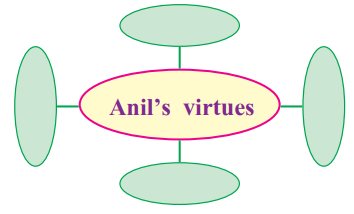
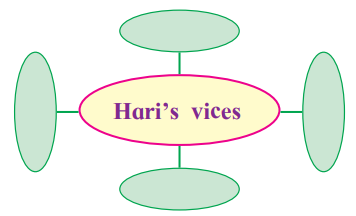
   I was still a thief when I met Anil. And though only only 15. I was an experienced and fairly successful hand.
   Anil was watching a wrestling match when I approached him. He was about 25 a tall, lean fellow - and he looked easy-going, kind and simple enough for my purpose. I hadn't had much luck of late and thought I might be able to get into the young man's confidence.
   "You look a bit of a wrestler yourself." I said. A little flattery helps in making friends.
   "So do you," he replied, which put me off for a moment because at that time I was rather thin.
   "Well," I said modestly, "I do wrestle a bit."
   "What's your name?"
   "Hari Singh," I lied. I took a new name every month. That kept me ahead of the police and my former employers.
    After this introduction, Anil talked about the well-oiled wrestlers who were grunting, lifting and throwing each other about. I didn't have much to say. Anil walked away. I followed casually.
   "Hello again," he said.
    I gave him my most appealing smile. "I want to work for you," I said.
   "But I can't pay you."
    I thought that over for a minute. Perhaps I had misjudged my man.
    I asked, "Can you feed me?"
    "Can you cook?"
    "I can cook." I lied again.
    "If you can cook, then may be I can feed you."

A2. Complex Factual Activities:
Complete the web diagrams:
(i) 

Image
(ii)
Image

A3. Activities based on Vocabulary:
Find similar meanings from the passage for the following:
(i) endearing
(ii) miscalculated
(iii) humbly
(iv) awful
A4. Do as directed:
(i) I can't pay you. (Rewrite making it affirmative.)
(ii) "I want to work for you," I said. (Change into Indirect speech.)
A5. Personal Response:
(i) Why did Anil employ Hari as a cook, even though he could not afford to pay him?

A1.Simple Factual Activities:
Complete the web :
Image

    The asparagus appeared. I watched her thrust them down her throat in large mouthfuls. At last, she finished.
   “Coffee ?” I said.
   “Yes, just an ice cream and coffee,” she answered. I was past caring now, so I ordered coffee for myself and an ice cream and coffee for her.
   “You know, there’s one thing I thoroughly believe in,” she said, as she ate the ice cream. “One should always get up from a meal feeling one could eat a little more.”
   “Are you still hungry?” I asked faintly.
   “Oh, no, I’m not hungry. You see, I don’t eat luncheon. I have a cup of coffee in the morning and then dinner, but I never eat more than one thing for luncheon. I was speaking for you.”
   “Oh, I see.” Then a terrible thing happened. While we were waiting for the coffee, the head waiter came up to us bearing a large basket full of huge peaches. But surely peaches were not in season then? Lord knew what they cost! I knew a little later, for my guest going on with her conversation, absent-mindedly took one.

A2. Complex Factual Activity:

(i) 'Then a terrible thing happened.' Describe the narrator's emotions at this point in the story. Why does he not express this emotion?.
A3. Activity based on Vocabulary:
Mateh the columns :

'A''B'
(i) bead(a) peaches
(ii) terrible(b) mouthfuls
(iii) huge(c) waiter
(iv) large(d) thing

A4. Activities based on Contextual Grammar:
Rewrite the following in reported speech :
(i) "I'm not in the least hungry," my guest sighed, "but if you insist, I don't mind having some asparagus."
A5. Personal Response:
(i) " 'I was past caring now'. Explain why, in your view, the narrator feels this way.

A1. Simple Factual Activities:
Write True or False for these statements:
(i) Steve Jobs slept in his dorm room.
(ii) Steve took his required courses as a registered student of Reed College.
(iii) During Steve's College days, one had to pay 5 cents deposit for a Coke bottle.
(iv) Steve had comfortable college experiences.

   Today I want to tell you three stories from my life. That’s it. Just three stories. The first story is about connecting the dots. I dropped out of Reed College after the first 6 months, but then stayed around as a drop-in for another 18 months before I really quit.
Looking back, it was one of the best decisions I ever made. I could stop taking the required classes that didn’t interest me, and begin dropping in on the ones that looked interesting.
   I didn’t have a dorm room, so I slept on the floor in friends’ rooms. I returned Coke bottles for the 5 cent deposits to buy food with, and I would walk seven miles across town every Sunday night to get one good meal a week at the Hare Krishna temple. I loved it. And much of what I stumbled into by following my curiosity and intuition turned out to be priceless later on. Here’s one example : Reed College offered perhaps the best calligraphy instruction in the country. Because I had to take a calligraphy class, I learned about serif and san serif typefaces, about what makes great typography great.

A2. Complex Factual Activities:
(i) What did Steve Jobs do for two years after he joined Reed College?
A3. Activities based on Vocabulary:
Use the following idioms/phrases in sentences of your own:
(i) drop in
(ii) drop out
(iii) turned out to be
(iv) stumbled into
A4. Activities based on Contextual Grammar:
Name the tense of the underlined verbs to include time and aspect:
(i) I shall be telling you three stories.
(ii) I slept on the floor.
A5. Personal Response:
(i) What impression of Steve Jobs do you get from this passage?
A1.Simple Factual Activities:
Complete the following :
(i) Della had the good habit   ____________ .
(ii) Jim stared at Della   __________ .
(iii) Della took pride in the beauty of her hair __________ .
(iv) Della was a bit apprehensive after she had sold her hair because __________ .

   At 7 o’clock the coffee was made and the fryingpan was on the back of the stove hot and ready to cook the chops.
  Jim was never late. Della doubled the fob chain in her hand and sat on the corner of the table near the door that he always entered. Then she heard his step on the stair away down on the first flight, and she turned white for just a moment. She had a habit of saying little silent prayer about the simplest everyday things, and now she whispered: “Please God, make him think I am still pretty.”
  The door opened and Jim stepped in and closed it. He looked thin and very serious. Poor fellow, he was only twenty-two—and to be burdened with a family! He needed a new overcoat and he was without gloves.
  Jim stopped inside the door, as immovable as a setter at the scent of quail. His eyes were fixed upon Della, and there was an expression in them that she could not read, and it terrified her. It was not anger, nor surprise, nor disapproval, nor horror, nor any of the sentiments that she had been prepared for. He simply stared at her fixedly with that peculiar expression on his face.
   Della wriggled off the table and went for him.
   “Jim,” she cried, “don’t look at me that way. I had my hair cut off and sold because I couldn’t have lived through Christmas without giving you a present. It’ll grow out again—you won’t mind, will you? I just had to do it. My hair grows awfully fast. Say `Merry
Christmas!’ Jim, and let’s be happy. You don’t know what a nice—what a beautiful, nice gift I’ve got for you.”
 
A2. Complex Factual Activity:
Complete the web with words to describe Jim.
Image
A3. Activity based on Vocabulary:
Match the adjectives in column 'A' with the nouns in column 'B' :

'A''B'
 (i) new (a) prayer
 (ii) silent (b) overcoat
 (iii) first (c) expression
 (iv) peculiar (d) flight

A4. Activities based on Contextual Grammar:
(i) Frame a Wh-question to get the underlined part as the answer:
At 7 o'clock the the coffee was made.
(ii) Add appropriate question tags :
I just had to do it, ________?
A5. Personal Response:
(i) Give your opinion: 'It is important to give gifts'.

A1. Simple Factual Activities:
State whether the following statements are True or False:
(i) The king got irritated with the hermit. 
(ii) The hermit answered all the questions of the king.
(iii) It was evening when the king met the hermit.
(iv) The hermit was full of energy.

   The hermit listened to the king but said nothing. He just spat on his hand and resumed digging. The king watched in silence for a while.Then, feeling sorry for the hermit, he said, “You are tired, let me take the spade and work a while for you.” The hermit silently handed over the spade and sat down on the ground. When he had dug two beds, the king stopped and repeated his questions. The hermit again gave no answer, but rose, stretched out his hand for the spade,and said, “Now rest a while and let me work a bit”.But the king did not give him the spade and continued to dig.
   One hour passed and another. The sun began to sink behind the trees and the king at last stuck the spade into the ground and said, “I came to you, wise one, for an answer to my questions. If you can give me none, please say so, and I will go home”. “Here
comes someone running,” said the hermit, “let us see who it is.”
   The king turned round and saw a bearded man come running out of the forest. The man held his hands pressed against his stomach, and blood was flowing from under them. When he reached the king, he fainted and fell to the ground, moaning feebly. The king and the hermit unfastened the man’s clothing. There was a large wound in his stomach. The king washed it as well as he could, and bandaged it with his handkerchief
and a towel the hermit had. But the blood would not stop flowing, and the king again and again removed the bandage soaked with warm blood and washed and rebandaged the wound. When at last the blood stopped flowing, the man revived and asked for something to drink. The king brought some fresh water and gave it to him.

A2. Complex Factual Activities:
(i) How did the hermit respond to the king's questions?
A3. Activities based on Vocabulary:
Choose adverbs/adjectives that collocate with these words:

(i) moaning:
(a) profusely (b) heavily (c) feebly (d) sadly.
(ii) blood:
(a) profuse (b) warm (c) fresh (d) bandaged.
A4. Activities based on Contextual Grammar:
Pick out the finite and non-finite verbs from the sentences:
(i) The king continued to dig.
(ii) The sun began to sink.
A5. Personal Response:
(i) Though the hermit did not say anything to the king for some time, he did not ignore the king or treat him rudely in any way. Do you agree? What evidence of his politeness can you point out? What shows that he listened and responded  to the king's words?
A1. Simple Factual Activities:
Complete the following:

(i) Arjan Singh became a Squadron Leader at the age of ...................... .
(ii) Arjan Singh was the first Indian pilot to be awarded the ...................... .

   Commending his role in the war, Y B Chavan, the then Defence Minister had written: “Air Marshal Arjan Singh is a jewel of a person, quite efficient and firm; unexcitable but a very able leader.”
   In 1944, the Marshal had led a squadron against the Japanese during the Arakan Campaign, flying close air support missions during the crucial Imphal Campaign and later assisted the advance of the Allied Forces to Yangoon (formerly Rangoon).
   In recognition of his feat, he was awarded the Distinguished Flying Cross (DFC) on the spot by the Supreme Allied Commander of South East Asia, the first Indian pilot to have received it. Singh was selected for the Empire Pilot training course at Royal Air Force
(RAF) Cranwell in 1938 when he was 19 years old. He retired from service in 1969.
   Singh was born on April 15, 1919, in Lyalpur (now Faislabad, Pakistan), and completed his education at Montgomery (now Sahiwal, Pakistan). His first assignment on being commissioned was to fly Westland Wapiti biplanes in the North-Western Frontier Province
as a member of the No.1 RIAF Squadron.
   After a brief stint with the newly formed No. 2 RIAF Squadron where the Marshal flew against the tribal forces, he later moved back to No.1 Sqn as a Flying Officer to fly the Hawker Hurricane. He was promoted to the rank of Squadron Leader in 1944.

A2. Complex Factual Activities:
(i) Explain what enabled Arjan Singh to win the DFC award.
A3. Activities based on Vocabulary:
Complete the table:

 VerbAdjectiveNoun
(1) recognise................ ................
(2) educate ................ ................
(3) promote ................ ................
(4) move ................ ................

A4. Activities based on Contextual Grammar: 
(i) In 1944, the Marshal had led a squadron against the Japanese during the Arakan Campaign. (Change the voice.)
(ii) His first assignment on being commissioned was to fly Westland Wapiti biplanes in the North- Y Western Frontier Province.(Rewrite as a complex sentence.)
A5. Personal Response:
(i) Name any four qualities that you think a leader must have.

A1.Simple Factual Activities:
Complete the following :
(i) The cost of the fob chain was  ____________ .
(ii) Della went through the goods in the stores when  __________ .
(iii) Jim avoided checking the time on his gold watch in a public place because __________ .
(iv) The gift Della bought for Jim was  __________ .

   Oh, and the next two hours tripped by on rosy wings. Forget the hashed metaphor. She was ransacking the stores for Jim’s present.
   She found it at last. It surely had been made for Jim and no one else. There was no other like it in any of the stores, and she had turned all of them inside out. It was a platinum fobchain simple and chaste in design, properly proclaiming its value by substance alone and not by meretricious ornamentation—as all good things should do. It was even worthy of The Watch. As soon as she saw it she knew that it must be Jim’s. It was like him. Quietness and value—the description applied to both. Twenty-one dollars they took from her for it, and she hurried home with the 87 cents. With that chain on his watch Jim might be properly anxious about the time in any company. Grand as the watch was, he sometimes looked at it on the sly on account of the old leather strap that he used in place of a chain.
   When Della reached home her intoxication gave way a little to prudence and reason. She got out her curling irons and lighted the gas and went to work repairing the ravages made by generosity added to love which is always a tremendous task, dear friends--a mammoth task.
   Within forty minutes her head was covered with tiny, close-lying curls that made her look wonderfully like a truant schoolboy. She looked at her reflection in the mirror-long, carefully, and critically.
    “If Jim doesn’t kill me,” she said to herself, “before he takes a second look at me, he’ll say I look like a Coney Island chorus girl. But what could I do—oh! what could I do with a dollar and eighty seven cents?”
 
A2. Complex Factual Activity:

(i) Explain why Della looked at her reflection critically.
A3. Activity based on Vocabulary:
Pick out from the story words that mean the following, and state if it is a Noun, Verb or Adjective :

PhraseWord From the
 passage
Part of Speech
 (i) wisdom  
 (ii) very huge  

A4. Activities based on Contextual Grammar:
(i) Frame a Wh-question to get the underlined part as the answer:
She was ransacking the store for Jim's present.
(ii) Rewrite the following sentence using 'No sooner.. than..':
As soon as she saw it she knew that it must be Jim's.
A5. Personal Response:
(i) How beautiful was the watch chain? Would you have liked to own it?

A1.Simple Simple l Factual Activities:
Complete the following sentences:
(i) The narrator was not happy about the concert because ........................ .
(ii) When the narrator turned to look at his neighbour ......................... .

 When I was a very young man, I was invited to dine at the house of a philanthropist. After a wonderful dinner, our hostess took us to a large drawing room. Chairs were being arranged. “I’m arranging the chairs for a concert”, my hostess said, “We’re going to listen to a very good pianist.”
  Though everyone else was very happy, I was not. I did not understand classical music. I thought I was tone-deaf. I sat down so that I would not be impolite and waited for the concert to begin. I did not pay attention to the music after it began.
   After a while, I heard everyone clapping, so I realised that the piece was over. Just then I heard a gentle, but firm voice saying, “You’re fond of Bach?”
   I knew as much about Bach as I did about nuclear physics. I was going to say something ordinary so that I could get out of the situation. I turned in order to look at my neighbour and I saw a very famous face.It was someone with a shock of white hair and a pipe.

A2. Complex Factual Activity:
Who said to whom?

StatementWhoTo Whom Effect on the listener
(i) "We are going to listen to       a very good pianist."   
(ii) "You're fond of Bach?"   

A3. Activities based on Vocabulary:
Rewrite the following sentences using the phrases given in the brackets:
(to pay attention to, to be fond of, to get out of. shock of hair)
(i) Sachin ............... playing cricket.
(ii) The teacher asked her students ............... their studies,
(iii) The rabbit trapped in the snare was trying to ................ it.
(iv) He moved and I saw a ............... gleaming in the sun.
A4. Activities based on Contextual Grammar:
Write what the underlined auxiliaries indicate:

(i) Chairs were being arranged.(Change to the active voice.)
(ii) I heard a gentle, but firm, voice saying, "You're fond of Bach?"(Rewrite using the indirect form of narration.)
A5. Personal Response:
(i) Point out some differences among light music, classical music and folk music.

A1. Simple Factual Activities:
Match the years with the events in the life of Arjan Singh:

 EventYear
(1) Appointed Deputy Chief of Air Staff (a) 1947
(2) Selected for the Empire Pilot Training Course (b) 1962
(3) Promoted to the rank of Air Commodore (c) 1949
(4) Led a fly-past over the Red Fort (d) 1963

   For his role in successfully leading the squadron in combat, he was awarded the Distinguished Flying Cross (DFC) in 1944. On August 15, 1947, he achieved the unique honour of leading a fly-past of over a hundred IAF aircraft over the Red Fort in Delhi.
   After his promotion to the rank of Wing Commander, he attended the Royal Staff College at the UK.Immediately after Indian independence, he commanded Ambala in the rank of Group Captain. In 1949, he was promoted to the rank of Air Commodore and took over as Air Officer Commanding (AOC) of an operational command, which later came to be known as Western Air Command.
   Singh had the distinction of having the longest tenure as AOC of an operational base, initially from 1949-1952 and then again from 1957-1961. After his promotion to the rank of Air Vice Marshal, he was appointed as the AOC-in-C of an operational command.
  Towards the end of the 1962 war, he was appointed as the Deputy Chief of the Air Staff and he became the Vice Chief of the Air Staff in 1963. He was the overall
commander of the joint air training exercise “Shiksha” held between IAF, RAF (Royal Air Force) and RAAF (Royal Australian Air Force)."
   On August 1, 1964, in the rank of Air Marshal, the Marshal of the Air Force Arjan Singh took over reins of IAF, at a time when it was still rebuilding itself and was gearing up to meet new challenges.

A2. Complex Factual Activities:
Complete the following:
(i) On 15th August 1947, Arjan Singh achieved the unique honour of .................... .
(ii) He had the distinction of having the longest tenure as ...................... .
(iii) Immediately after Indian independence, he commanded ....................... .
(iv) He was the overall commander of the joint air .................... .
A3. Activities based on Vocabulary:
Replace the underlined words/phrases with the appropriate ones, to retain the proper meaning:
(be the epitome of. gear up, a brief stint, play a major role, in recognition of, take over reins)
(i) Our school cricket team got ready for the final match against P.Q.R.High School.
(ii) After the murder of King Duncan, Macbeth took over the control of Scotland.
A4. Activities based on Contextual Grammar: 
(i) After his promotion to the rank of Wing Commander, he attended the Royal Staff College at the UK. (Rewrite using the verb form of the underlined word.)
(ii) He was the overall commander of the joint air training exercise 'Shiksha'.(Rewrite using the noun 'command".)
A5. Personal Response:
(i) Describe briefly a brave person whom you have met.

A1.Simple Factual Activities:
Fill in the blanks:

(i) For 30 years, Stephen Hawking held the post of ..................... .
(ii) Stephen Hawking selected his words with a ...................... .
(iii) Stephen Hawking failed to appear at the conference because of a .................. .
(iv) ................ remains a constant anxiety.

   The predicament caught the attention of a California computer programmer, who had developed a speaking program that could be directed by head or eye movement. The invention allowed Hawking to select words on a computer screen that were then passed through a speech synthesizer. At the time of its introduction, Hawking, who still had use of his fingers,selected his words with a handheld clicker. Today, with virtually all control of his body gone, Hawking directs the program through a cheek muscle attached to a
sensor.
   Through the program, and the help of assistants, Stephen Hawking has continued to write at a prolific rate. His work has included numerous scientific papers,of course, but  also information for the non-scientific community.
   Hawking’s health, of course, remains a constant concern - a worry that was heightened in 2009 when he failed to appear at a conference in Arizona because of a chest infection. In April, Hawking, who had already announced he was retiring after 30 years from the post of Lucasian Professor of Mathematics at Cambridge, was rushed to the hospital for being what university officials described as “gravely ill.” It was later announced that he was expected to make a full recovery.

A2. Complex Factual Activity:
Explain the life of Stephen Hawking with reference to the following statement:
(i) Hawking's health, of course, remains a constant concern.
A3. Activity based on Vocabulary:
Choose three synonyms for each of the following:

(i) Write the adjective forms of:
(a) infection  (b) office.
(ii) Write from the last paragraph phrases that give an indication of Stephen Hawking's health situation.
A4. Activities based on Contextual Grammar:
Underline the determiners:

Today, with virtually .............. control of ............ body gone. Hawking directs ............. program through ............. cheek muscle attached to .............. sensor.
A5. Personal Response:
Do you agree or disagree with the following statement? Justify your stand/answer by quoting a line from the passage.
(i)  Though Hawking lost control over his body, he writes at a prolific rate with the help of assistants.