MCQ
Aldehydes and ketones can be reduced to corresponding hydrocarbons by
  • A
    Refluxing with water
  • B
    Refluxing with strong acids
  • C
    Refluxing with soda amalgam and water
  • Refluxing with zinc amalgam and concentrated $HCl$

Answer

Correct option: D.
Refluxing with zinc amalgam and concentrated $HCl$
d
(d) $RCHO + 4H\xrightarrow{{Zn - Hg/HCl}}R - C{H_3} + {H_2}O$

Need a full question paper?

Generate a complete, print-ready paper with questions like this in minutes — across 16+ boards, with answer keys.

Start Generating Free

Similar questions

The electric potential at any point as a function of distance $(x)$ in meter is given by  $V = 5x^2 + 10x -9 \,(volt)$ Value of electric field at $x = 1$ is......$Vm^{-1}$
A charge of $1$ coulomb is located at the centre of a sphere of radius $10 \,cm$ and a cube of side $20 \,cm$. The ratio of outgoing flux from the sphere and cube will be
A convex lens is put $10\, cm$ from a light source and it makes a sharp image on a screen, kept $10\, cm$ from the lens. Now a glass block (refractive index $1.5$) of $1.5\, cm$ thickness is placed in contact with the light source. To get the sharp image again, the screen is shifted by a distance $d$. Then $d$ is
A source simultaneously emitting light at two wavelengths $400 \,nm$ and $800 \,nm$ is used in the Young's double slit experiment. If the intensity of light at the slit for each wavelength is $I_{0}$, then the maximum intensity that can be observed at any poin on the screen is
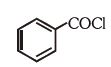
Consider the following reaction

(image) $\frac{{{H_2}}}{{pd - BaS{O_4}}}\,'A'$

The product $'A'$ is
A beam of monochromatic blue light of wavelength $4200\, \mathring A$ in air travels in water ($\mu = 4/3$). Its wavelength in water will be.......$\, \mathring A$
The frequency of a sonometer wire is $100 Hz$. When the weights producing the tensions are completely immersed in water, the frequency becomes $80 Hz$ and on immersing the weights in a certain liquid, the frequency becomes $60 Hz$. The specific gravity of the liquid is 
If a ball of steel (density $\rho=7.8 \;gcm ^{-3}$) attains a terminal velocity of $10 \;cms ^{-1}$ when falling in a tank of water (coefficient of viscosity $\eta_{\text {water }}=8.5 \times 10^{-4} \;Pa - s$ ) then its terminal velocity in glycerine $\left(\rho=12 gcm ^{-3}, \eta=13.2\right)$ would be nearly
A particle is moving with speed $6\,m/s$ along the direction of  $\vec A = 2\hat i + 2\hat j - \hat k,$ then its velocity is
Two identical coherent sources placed on a diameter of a circle of radius $R$ at separation $x(<< R)$ symmetrically about the centre of a circle. The sources emit identical wavelength $\lambda $ each. The number of points on the circle with maximum intensity is $(x = 5 \lambda )$