Question
An electromagnetic wave transports linear momentum as it travels through space. If an electromagnetic wave transfers a total energy U to a surface in time t, then total linear momentum delivered to the surface is $\text{p}=\frac{\text{U}}{\text{c}}.$ When an electromagnetic wave falls on a surface, it exerts pressure on the surface. ln 1903, the American scientists Nichols and Hull succeeded in measuring radiation pressures of visible light where other had failed, by making a detailed empirical analysis of the ubiquitous gas heating and ballistic effects.
  1. The pressure exerted by an electromagnetic wave of intensity I $(Wm^{-2})$ on a non-reflecting surface is (c is the velocity of light).
  1. $\text{Ic}$
  2. $\text{Ic}^2$
  3. $\frac{\text{I}}{\text{c}}$
  4. $\frac{\text{I}}{\text{c}^2}$
  1. Light with an energy flux of $18\frac{\text{W}}{\text{cm}^2}$ falls on a non-reflecting surface at normal incidence. The pressure exerted on the surface is:
  1. $3\frac{\text{N}}{\text{m}^2}$
  2. $2\times10^{-4}\frac{\text{N}}{\text{m}^2}$
  3. $6\frac{\text{N}}{\text{m}^2}$
  4. $6\times10^{-4}\frac{\text{N}}{\text{m}^2}$
  1. Radiation of intensity $0.5Wm^{-2}$ are striking a metal plate. The pressure on the plate is:
  1. $0.166 \times 10^{-8}Nm^{-2}$
  2. $0.212 \times 10^{-8}Nm^{-2}$
  3. $0.132 \times 10^{-8}Nm^{-2}$
  4. $0.083 \times 10^{-8}Nm^{-2}$
  1. A point source of electromagnetic radiation has an average power out-put of 1500W. The maximum value of electric field at a distance of 3m from this source $($in $Vm^{-1})$ is:
  1. $500$
  2. $100$
  3. $\frac{500}{3}$
  4. $\frac{250}{3}$
  1. The radiation pressure of the visible light is of the order of,
  1. $10^{-2}\frac{\text{N}}{\text{m}^2}$
  2. $10^{-4}\frac{\text{N}}{\text{m}}$
  3. $10^{-6}\frac{\text{N}}{\text{m}^2}$
  4. $10^{-8}\text{N}$

Answer

  1. (c) $\frac{\text{I}}{\text{c}}$
Explanation:
Pressure exerted by an electromagnetic radiation, $\text{P}=\frac{\text{I}}{\text{c}}.$
  1. (d) $6\times10^{-4}\frac{\text{N}}{\text{m}^2}$
Explanation:
$\text{p}_\text{rad}=\frac{\text{Energy flux}}{\text{Speed of light}}=\frac{18\frac{\text{W}}{\text{cm}^2}}{3\times8^8\frac{\text{m}}{\text{s}}}$
$=\frac{18\times10^4\frac{\text{W}}{\text{cm}^2}}{3\times8^8\frac{\text{m}}{\text{s}}}=6\times10^{-4}\frac{\text{N}}{\text{m}^2}$
  1. (a) $0.166 \times 10^{-8}Nm^{-2}$
Explanation:
$\text{p}=\frac{\text{I}}{\text{c}}=\frac{0.5}{3\times10^8}=0.166\times10^{-8}\text{Nm}^{-2}$
  1. (b) $100$
Explanation:
Intensity of EM wave is given by $\text{I}=\frac{\text{P}}{4\pi\text{R}^2}$
$\text{V}_\text{av}=\frac{1}{2}\in_0\text{E}_0^2\times\text{c}$
$\Rightarrow\text{E}_0=\sqrt{\frac{\text{P}}{2\pi\text{R}^2\in_0\text{c}}}=\sqrt{\frac{1500}{2\times3.14(3)^2\times8.85\times10^{-12}\times3\times18^8}}$
$=\sqrt{10,000}=100\text{Vm}^{-1}$
  1. (c) $10^{-6}\frac{\text{N}}{\text{m}^2}$
Explanation:
The radiation pressure of visible light $=7\times10^{-6}\frac{\text{N}}{\text{m}^2}$

Need a full question paper?

Generate a complete, print-ready paper with questions like this in minutes — across 16+ boards, with answer keys.

Start Generating Free

Similar questions

The electron mobility characterises how quickly an electron can move through a metal of semiconductor when pulled by an electric field. There is an analogous quality for holes, called hole mobility. A block of pure silicon at 300K has a length of 10cm and an area of $1.0cm^2.$ A battery of emf 2V is connected across it. The mobility of electron is $0.14m^2 V^{-1}s^{-1}$ and their number density is $1.5 \times 10^{16}m^{-3}.$ The mobility of holes is $0.05m^2 V^{-1}s^{-1}.$
  1. The electron current is:
  1. $6.72 \times 10^{-4}A$
  2. $6.72 \times 10^{-5}A$
  3. $6.72 \times 10^{-6}A$
  4. $6.72 \times 10^{-7}A$
  1. The hole current is:
  1. $2.0 \times 10^{-7}A$
  2. $2.2 \times 10^{-7}A$
  3. $2.4 \times 10^{-7}A$
  4. $2.6 \times 10^{-7}A$
  1. The number density of donor atoms which are to be added up to pure silicon semiconductor to produce an n-type semiconductor of conductivity $6.4\Omega^{-1}\text{cm}^{-1}$ is approximately (neglect the contribution of holes to conductivity).
  1. $3 \times 10^{22}m^{-3}$
  2. $3 \times 10^{23}m^{-3}$
  3. $3 \times 10^{24}m^{-3}$
  4. $3 \times 10^{21}m^{-3}$
  1. When the given silicon semiconductor is doped with indium, the hole concentration increases to $4.5 \times 10^{23}m^{-3}.$ The electron concentration in doped silicon is:
  1. $3 \times 10^9m^{-3}$
  2. $4 \times 10^9m^{-3}$
  3. $5 \times 10^9m^{-3}$
  4. $6 \times 10^9m^{-3}$
  1. Pick out the statement which is not correct.
  1. At a low temperature, the resistance of a semiconductor is very high.
  2. Movement of holes is restricted to the valence band only.
  3. Width of the depletion region increases as the forward bias voltage increases in case of a p-n junction diode.
  4. ln a forward bias condition, the diode heavily conducts.
A metal rod is placed along the axis of a solenoid carrying a high-freqμency alternating current. It is found that the rod gets heated. Explain why the rod gets heated.
After a good meal at a party you wash your hands and find that you have forgotten to bring your handkerchief. You shake your hands vigorously to remove the water as much as you can. Why is water removed in this process?
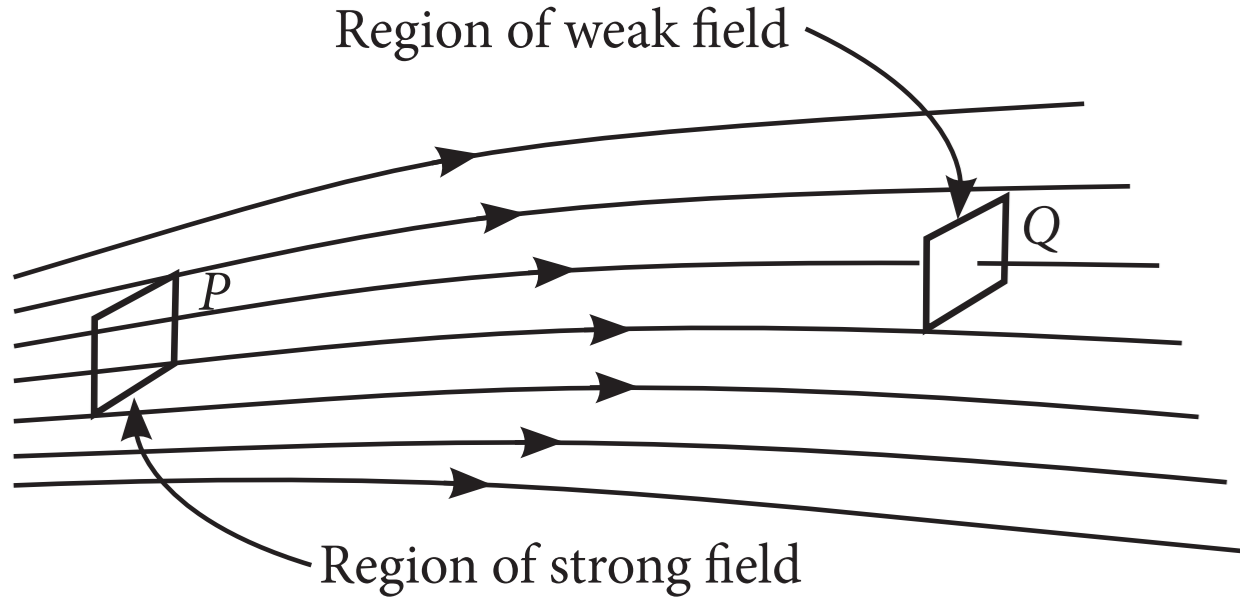
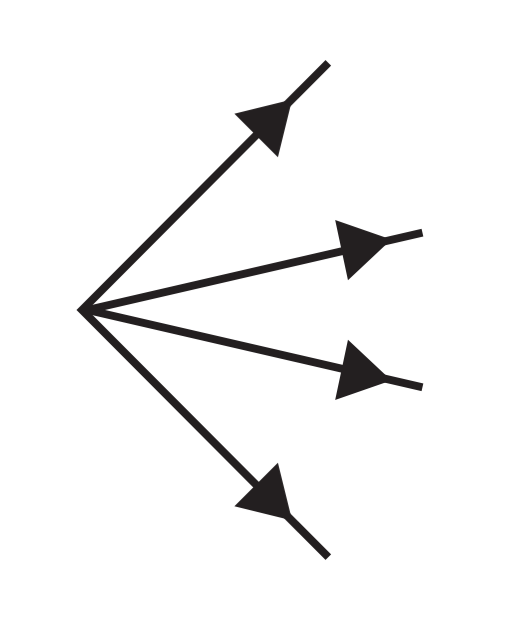
Electric field strength is proportional to the density of lines of force i.e., electric field strength at a point is proportional to the number of lines of force cutting a unit area element placed normal to the field at that point. As illustrated in the given figure, the electric field at P is stronger that at Q.
  1. Electric lines of force about a positive point charge are:
  1. Radially outwards.
  2. Circular clockwise.
  3. Radially inwards.
  4. Parallel straight lines.
  1. Which of the following is false for electric lines of force?
  1. They always start from positive charges and terminate on negative charges.
  2. They are always perpendicular to the surface of a charged conductor.
  3. They always form closed loops.
  4. They are parallel and equally spaced in a region of uniform electric field.
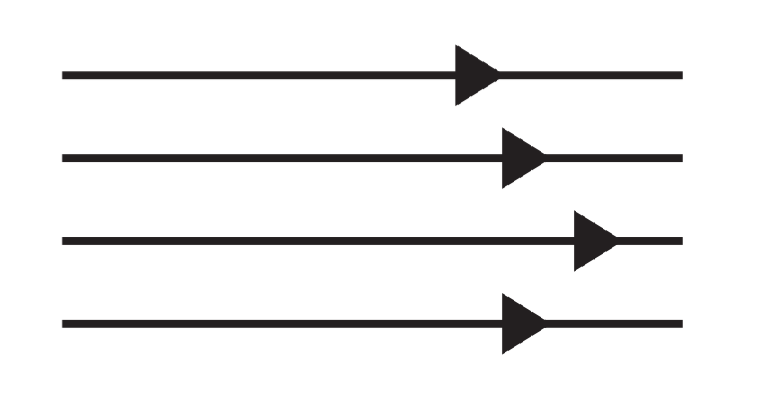
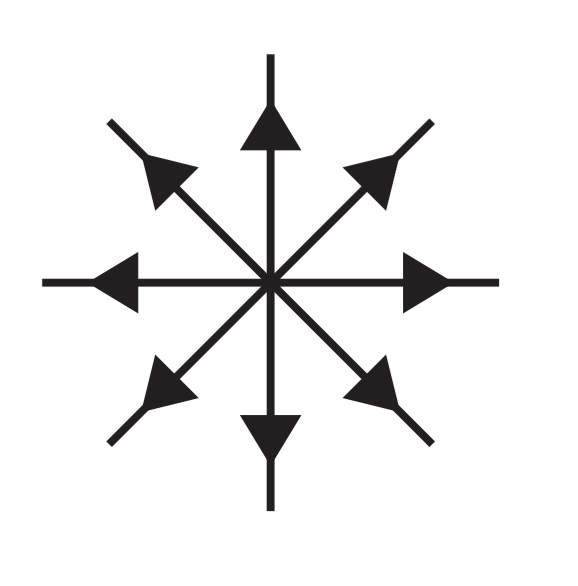
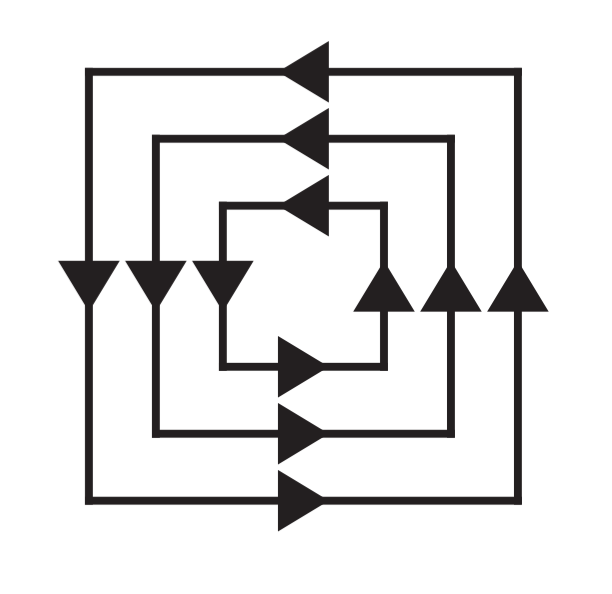
  1. Which one of the following pattern of electric line of force in not possible in filed due to stationary charges?
  1.  
  1.  
  1.  
  1.  
  1. Electric lines of force are curved:
  1. In the field of a single positive or negative charge.
  2. In the field of two equal and opposite charges.
  3. In the field of two like charges.
  4. Both (b) and (c).
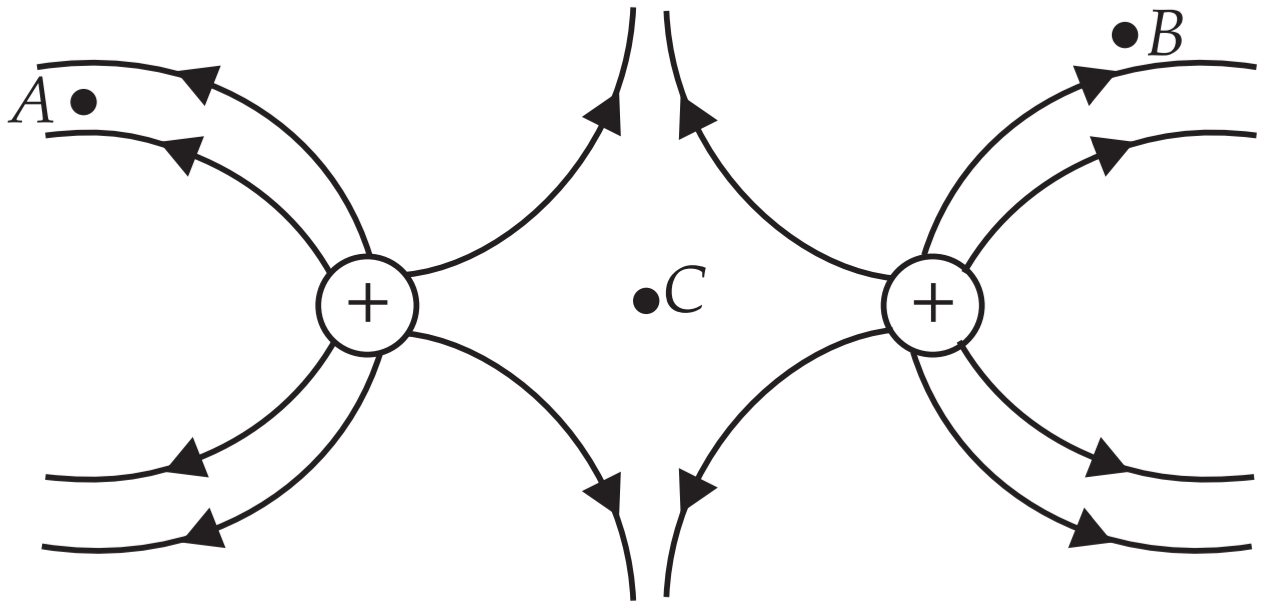
  1. The figure below shows the electric field lines due to two positive charges. The magnitudes $E_A, E_B$ and $E_C$ of the electric fields at points A, Band C respectively are related as:
  1. $E_A > E_B > E_C$
  2. $E_B > E_A > E_C$
  3. $E_A = E_B > E_C$
  4. $E_A > E_B = E_C$

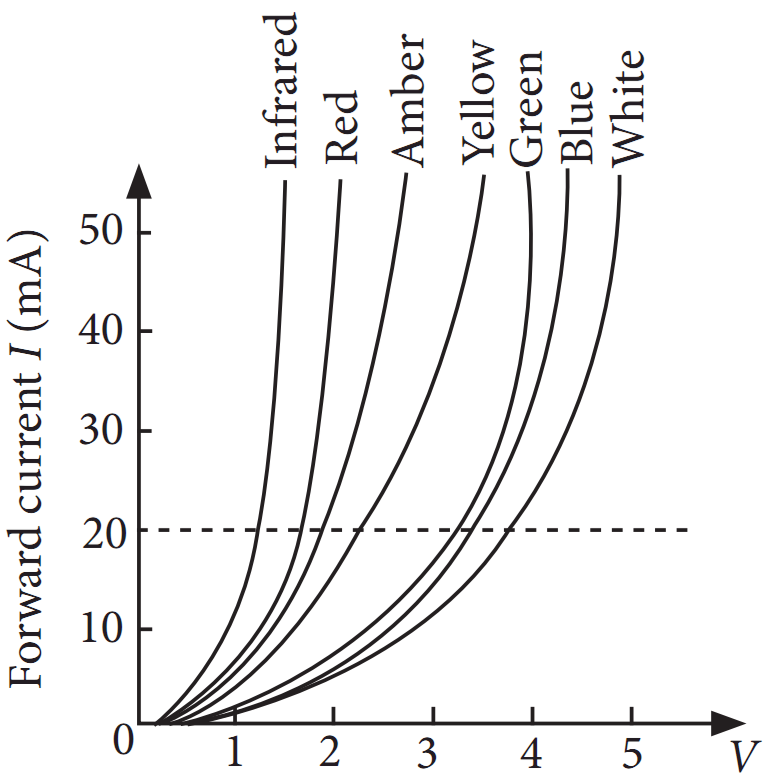
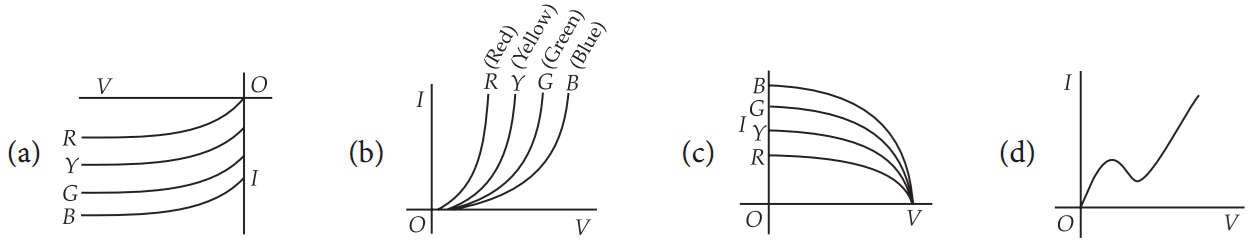
Light emitting diode is a photoelectric device which converts electrical energy into light energy. It is a heavily doped p-n junction diode which under forward biased emits spontaneous radiation. The general shape of the I-V characteristics of an LED is similar to that of a normal p-n junction diode, as shown. The barrier potentials are much higher and slightly different for each colour.
  1. The I-V characteristic of an LED is:
  1. The schematic symbol of light emitting diode is (LED).
  1. An LED is constructed from a p-n junction based on a certain Ga-As-P semiconducting material whose energy gap is 1.9eV. Identify the colour of the emitted light.
  1. Blue.
  2. Red.
  3. Violet.
  4. Green.
  1. Which one of the following statement is not correct in the case of light emitting diodes?
  1. It is a heavily doped p-n junction.
  2. It emits light only when it is forward biased.
  3. It emits light only when it is reverse biased.
  4. The energy of the tight emitted is less than the energy gap of the semiconductor used.
  1. The energy of radiation emitted by LED is:
  1. Greater than the band gap of the semiconductor used.
  2. Always less than the band gap of the semiconductor used.
  3. Always equal to the band gap of the semiconductor used.
  4. Equal to or less than the band gap of the semiconductor used.
A fat person is standing on a light plank floating on a calm lake. The person walks from one end to the other on the plank. His friend sitting on the shore watches him and finds that the person hardly moves any distance because the plank moves backward about the same distance as the person moves on the plank. Explain.
Some washing machines have cloth driers. It contains a drum in which wet clothes are kept. As the drum rotates, the water particles get separated from the cloth. The general description of this action is that "the centrifugal force throws the water particles away from the drum". Comment on this statement from the viewpoint of an observer rotating with the drum and the observer who is washing the clothes.
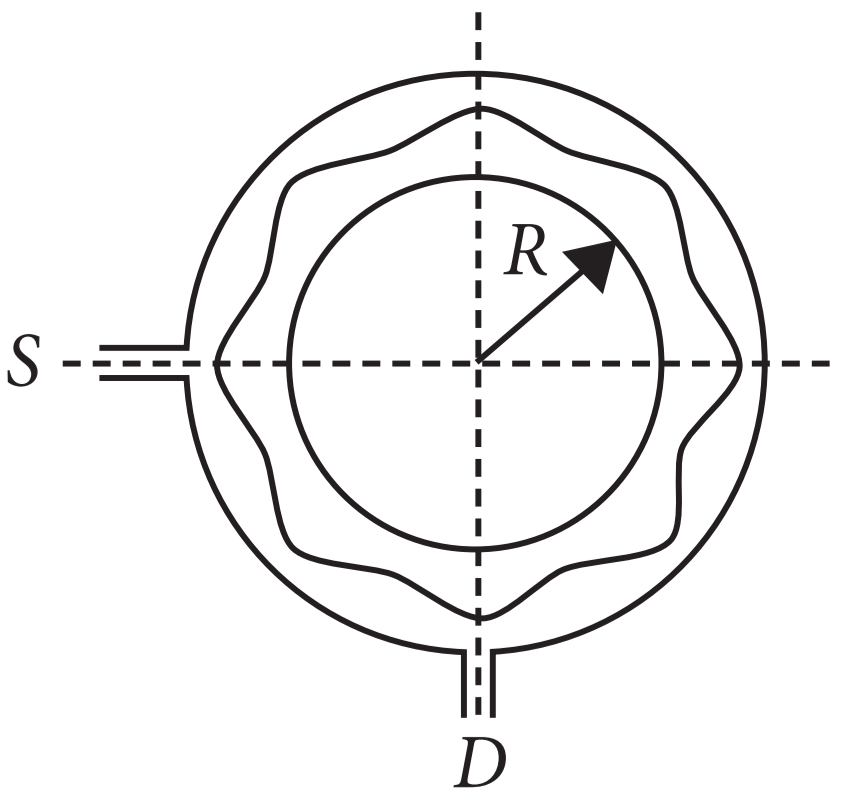
A narrow tube is bent in the form of a circle of radius R, as shown in figure. Two small holes S and D are made in the tube at the positions at right angle to each other. A source placed at S generates a wave of intensity $I_0$ which is equally divided into two parts: one part travels along the longer path, while the other travels along the shorter path. Both the waves meet at point Dwhere a detector is place
  1. If a maxima is formed at a detector, then the magnitude of wavelength $\lambda$ of the wave produced is given by:
  1. $\pi\text{R}$
  2. $\frac{\pi\text{R}}{2}$
  3. $\frac{\pi\text{R}}{4}$
  4. All of these.
  1. If the in tensity ratio of two coherent sources used in Young's double slit experiment is 49 : 1, then the ratio between the maximum and minimum intensities in the interference pattern is:
  1. $1 : 9$
  2. $9 : 16$
  3. $25 : 16$
  4. $16 : 9$
  1. The maximum intensity produced at D is given by:
  1. $4I_0$
  2. $2I_0$
  3. $I_0$
  4. $3I_0$
  1. ln a Young's double slit experiment, the intensity at a point where the path difference is $\frac{\lambda}{6}$ ($\lambda$ - wavelength of the light) is I. If $I_0$ denotes the maximum intensity, then $I/I_0$ is equal to:
  1. $\frac{1}{2}$
  2. $\frac{\sqrt3}{2}$
  3. $\frac{1}{\sqrt2}$
  4. $\frac{3}{4}$
  1. Two identical light waves, propagating in the same direction, have a phase differenced. After they superpose the intensity of the resulting wave will be proportional to:
  1. $\cos\delta$
  2. $\cos\Big(\frac{\delta}{2}\Big)$
  3. $\cos^2\Big(\frac{\delta}{2}\Big)$
  4. $\cos^2\delta$
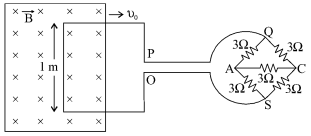
A square loop of a metallic wire of side 10 cm whose resistance is 1 ohm is moving with a constant velocity of as shown in the figure in a uniform magnetic field of $200 Wb / m ^2$. The magnetic field is normal to the plane of paper inwards. This loop is connected to a network of resistors of magnitude 3 ohms. Resistance of wire OS and PQ are negligible. What will be the magnitude of velocity, $v_0$ to flow one ampere of direct current in the loop? Also, what will be the direction of current?
Image
A short magnet makes 40 oscillations per minute when used in an oscillation magnetometer at a place where the earth's horizontal magnetic field is $2\mu\text{T.}$ Another short magnet of magnetic moment $1.6A-m^2$ is placed 20cm east of the oscillating magnet. Find the new frequency of oscillation if the magnet has its north pole:
  1. Towards north.
  2. Towards south.