Question
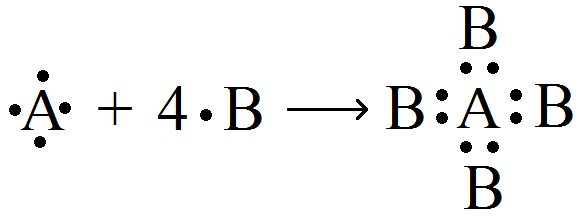
An element A has 4 valence electrons in its atom whereas element B has only one valence electron in its atom. The compound formed by A and B does not conduct electricity. What is the nature of chemical bond in the compound formed? Give its electron-dot structure.
Answer

Covalent bond will be formed since covalent compounds are non conductors of electricity.

Need a full question paper?

Generate a complete, print-ready paper with questions like this in minutes — across 16+ boards, with answer keys.

Start Generating Free

Similar questions

Give the IUPAC names for the following:
  1. $ \ \ \ \ \ \ \ \ \ \ \ \ \text{H}\\ \ \ \ \ \ \ \ \ \ \ \ \ \ \text{|}\\ \text{CH}_3-\text{C}-\text{CH}_3\\ \ \ \ \ \ \ \ \ \ \ \ \ \ \text{|} \\ \ \ \ \ \ \ \ \ \ \ \text{CH}_3$
  2.  
  1. $ \ \ \ \ \ \ \ \ \text{H} \ \ \ \ \ \text{H} \ \ \ \ \ \text{H}\\ \ \ \ \ \ \ \ \ \ \text{|} \ \ \ \ \ \ \ \text{|} \ \ \ \ \ \ \ \text{|}\\ \text{H}-\text{C}=\text{C}-\text{C}-\text{H}\\ \ \ \ \ \ \ \ \ \ \ \ \ \ \ \ \ \ \ \ \ \ \ \ \ \ \text{|}\\ \ \ \ \ \ \ \ \ \ \ \ \ \ \ \ \ \ \ \ \ \ \ \ \ \text{H}$
  2. $ \ \ \ \ \ \ \ \ \text{H}\\ \ \ \ \ \ \ \ \ \ \text{|}\\ \text{H}-\text{C}-\text{C}\equiv\text{C}-\text{H}\\ \ \ \ \ \ \ \ \ \ \text{|}\\ \ \ \ \ \ \ \ \ \text{H}$
Define translocation with respect to transport in plants. What is it essential for plants? Where in plants are the following synthesized?
  1. Sugar.
  2. Hormone.
Give an example of characteristics being used to determine how close two species are in evolutionary terms.
What is atmospheric refraction?What causes atmospheric refraction?
What happens when a concentrated solution of sodium chloride (brine) is electrolysed? Write the equation of the reaction involved.
What is a tendril? Name the two types of tendrils. What does a tendril do in response to the touch of a support ? What is this phenomenon known as?
A radio set draws a current of 0.36A for 15 minutes. Calculate the amount of electric charge that flows through the circuit.
Explain why, iron sheets are coated with zinc.
A person needs a lens of power –5.5 dioptres for correcting his distant vision. For correcting his near vision he needs a lens of power +1.5 dioptre. What is the focal length of the lens required for correcting (i) distant vision, and (ii) near vision?
What is a chemical equation? Explain with the help of an example.