Questions · Page 1 of 2

[2 Mark Questions]

🎯

Test yourself on this topic

50 questions · timed · auto-graded

Question 12 Marks
Draw the electron-dot structure of a hydrogen chloride molecule:
  1. Which inert gas does the H atom in HCl resemble in electron arrangement?
  2. Which inert gas does the Cl atom in HCl resemble in electron arrangement?
Answer
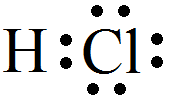
  1. Helium.
  2. Argon.
View full question & answer
Question 22 Marks
The atomic number of an element X is 12.
  1. What must an atom of X do to attain the nearest inert gas electron configuration?
  2. Which inert gas is nearest to X?
Answer
  1. An atom of X loses 2 electrons to attain the nearest gas electron configuration (2, 8).
  2. Neon.
View full question & answer
Question 32 Marks
Explain how, mercury is extracted from its sulphide ore (cinnabar). Give equations of the reactions involved.
Answer
Mercury (II) sulphide ore is roasted in air when mercury (II) oxide is formed.
$\ \ \ \ \ \ \ \ \ \ 2\text{HgS}\text{(s)}\ \ \ \ \ \ \ \ \ \ \ \ \ +\ \ \ \ \ \ \ \ \ \ \ 3\text{O}_2\text{(g)}\xrightarrow{\ \ \ \ \text{Rcesting}\ \ \ }2\text{Hg(l)}\ \ \ \ \ \ \ \ \ \ \ +\ \ \ \ \ \ \ \ \ \ \ \ \text{2SO}_2\text{(g)}\\\text{Mercury (II) Sulphide}\ \ \ \ \ \ \ \ \ \ \ \ \ \ \text{Oxygen}\ \ \ \ \ \ \ \ \ \ \ \ \text{Mercury (II) Oxide}\ \ \ \ \ \ \ \ \text{Sulphur dioxide}$
When this mercury (II) oxide is hearted to about 300°C, it decomposes to form mercury metal.
$\ \ \ \ \ \ \ \ \ \ 2\text{HgS}\text{(s)}\ \ \ \ \ \ \ \ \ \ \ \ \xrightarrow[\ \ \ \ \text{Rcesting}\ \ \ ]{\text{Heat}}\ \ \ \ \ 2\text{Hg(l)}\ \ \ \ \ \ \ \ \ \ \ +\ \ \ \ \ \ \ \ \ \ \ \ \text{O}_2\text{(g)}\\\text{Mercury (II) oxide}\ \ \ \ \ \ \ \ \ \ \ \ \ \ \ \ \ \ \ \ \ \ \ \text{Mercury metal}\ \ \ \ \ \ \ \ \ \ \ \ \ \ \ \ \ \ \ \text{Oxygen}$
View full question & answer
Question 42 Marks
What is meant by 22 carat gold? Name the metals which are usually alloyed with gold to make it harder.
Answer
It means that 22 parts pure gold is alloyed with 2 parts of either silver or copper for making ornaments; Silver and copper are usually alloyed with gold to make it harder.
View full question & answer
Question 52 Marks
What happens when calcium reacts with chlorine? Write an equation for the reaction which takes place.
Answer
Calcium reacts vigorously with chlorine to form an ionic chloride called calcium chloride.
$\text{Ca(s)}\ \ \ \ \ \ +\ \ \ \ \ \ \text{Cl}_2(\text{g})\xrightarrow{\ \ \ \ \ \ \ \ \ \ \ \ \ \ }\text{CaCl}_2(\text{s})\\\text{Calciam}\ \ \ \ \ \ \ \ \ \text{Cholorine}\ \ \ \ \ \ \ \ \ \text{Calcium chloride}$
View full question & answer
Question 62 Marks
What is meant by saying that the metals are malleable and ductile? Explain with examples.
Answer
Metals are malleable i.e. they can be beaten into thin sheets with a hammer.
Example: Aluminium.
Metals are ductile i.e. they can be drawn into thin wires.
Example: Copper.
View full question & answer
Question 82 Marks
Name two ores of zinc. Write the names of the chemical compounds present in them and give their chemical formulae.
Answer
i. Calamine; Zinc carbonate, $ZnCO _3$.
ii. Zinc blende; Zinc sulphide, ZnS.
View full question & answer
Question 92 Marks
The electronic configurations of two elements A and B are given below:
A 2, 6
B 2, 8, 1
What type of chemical bond is formed between the two atoms of A?
What type of chemical bond will be formed between the atoms of A and B?
Answer
  1. Covalent bond.
  2. Ionic bond.
View full question & answer
Question 102 Marks
Which of the following will conduct electricity and which not? $MgCl _2, CCl _4, NaCl , CS _2, Na _2 S$ Give reasons for your choice.
Answer
Conduct electricity: $MgCl _2, NaCl , Na _2 S$ (Ionic compounds) Do not con duct electricity: $CCl _4, CS _2$ ( Covalent compounds).
View full question & answer
Question 112 Marks
Name one ionic compound containing chlorine and one covalent compound containing chlorine.
Answer
Ionic co mpound: Sodium chloride, NaCl.
Cova lent c ompound: Carbon tetrachloride, $CCl_4$.
View full question & answer
Question 122 Marks
Explain why, carbon cannot reduce oxides of sodium or magnesium.
Answer
Carbon cannot reduce oxides of sodium or magnesium because carbon is less reactive than magnesium or sodium. Carbon, which is a non-metal, is more reactive than zinc and can be placed just above Zn in the reactivity series. Hence, carbon can reduce the oxides of zinc and all other metals below zinc to form metals.
View full question & answer
Question 132 Marks
In a solution of lead acetate, a strip of metal M was dipped. After some time, lead from the solution was deposited on the metal strip. Which metal is more reactive, M or lead?
Answer
The metal M is more reactive than lead because M displaces lead from lead acetate solution, which can be done only by an element that is more reactive lead.
View full question & answer
Question 142 Marks
Why are aqueous solutions of ionic compounds able to conduct electricity?
Answer
An aqueous solution of an ionic compound conducts electricity because there are plenty of free ions in the solution which are able to conduct electric current.
View full question & answer
Question 152 Marks
Give one example, with equation, of the displacement of hydrogen by a metal from an acid.
Answer
Magnesium reacts with very dilute nitric acid to form magnesium nitrate and hydrogen gas.
$\text{Mg(s)}\ \ \ \ \ +\ \ \ \ \ 2\text{HNO}_3\text{(aq)}\xrightarrow{\ \ \ \ }\text{Mg(NO}_3)_2\text{(aq)}\ \ \ \ \ +\ \ \ \ \text{H}_2\text{(g)}\\\text{Magnesium}\ \ \ \ \ \text{Nitric acid}\ \ \ \ \ \ \ \text{Magnesiumnitrate}\ \ \ \ \ \ \ \text{Hydrogen}$
View full question & answer
Question 162 Marks
With the help of examples, describe how metal oxides differ from non-metal oxides.
Answer
Metal oxides are basic in nature and turn red litmus blue. For example: Magnesium oxide. Non-metal oxides are acidic or neutral in nature. The acidic oxides turn blue litmus red.
For example: Carbon dioxide.
View full question & answer
Question 172 Marks
  1. Copper.
  2. Zinc.
  3. Nickel.
  4. Gold.
  5. Silver.
Answer
Anode – Thick block of i mpure metal M.
Cathode – Thin strip of p ure metal M.
Electrolyte – Water soluble salt (of metal M).
View full question & answer
Question 182 Marks
What is an alloy? Give two examples of alloys.
Answer
An alloy is a homogeneous mixture of two or more metals (or a metal and small amounts of non-metals).
Steel and Brass are examples of alloys.
View full question & answer
Question 192 Marks
Giving one example each, state what are (i) ionic compounds, and (ii) covalent compounds.
Answer
  1. The compounds containing ionic bonds are known as ionic compounds. They are formed by the transfer of electrons from one atom to another.
Example: Sodium chloride, NaCl.
  1. The compounds containing covalent bonds are known as covalent compounds. They are formed by the sharing of electrons between atoms.
Example: Methane, $CH_4$.
View full question & answer
Question 202 Marks
How does the painting of an iron object prevent its rusting?
Answer
When a coat of paint is applied to the surface of an iron object, it prevents air and moisture to come in contact with the object; hence no rusting takes place.
View full question & answer
Question 212 Marks
Four elements A, B, C and D have the following electron arrangements in their atoms:
A 2, 8, 6
B 2, 8, 8
C 2, 8, 8, 1
D 2, 1
  1. What type of bond is formed when element C combines with element D?
  2. Which element is an inert gas?
  3. What will be the formula of the compound between A and C?
Answer
  1. Ionic bond will be formed; element C donates its electron to element D.
  2. B is an inert gas; has complete octet configuration.
  3. C 2 A; element A needs two electrons to complete its octet.
View full question & answer
Question 222 Marks
Why has sodium chloride a high melting point?
Answer
Sodium chloride has a high melting point because it is an ionic compound and these compounds are made of up of positive and negative ions. There is a strong force of attraction between the oppositely charged ions, so, a lot of heat energy is required to break this force of attraction and melt or boil the ionic compound.
View full question & answer
Question 232 Marks
Explain why, metals usually do not liberate hydrogen gas with dilute nitric acid.
Answer
Metals do not liberate hydrogen gas with nitric acid because nitric acid is a strong oxidizing agent. So, as soon as hydrogen gas is formed in the reaction between a metal and dilute nitric acid, the nitric acid oxidises this hydrogen to water.
View full question & answer
Question 242 Marks
Why does aluminium not corrode right through?
Answer
Aluminium does not corrode right through because aluminium is more reactive than iron and it forms a layer of aluminium oxide as soon as it comes in contact with moist air.
This aluminium oxide layer is very tough and prevents the aluminium underneath from corroding.
View full question & answer
Question 252 Marks
Why does a new aluminium vessel lose shine so soon after use?
Answer
A new aluminium vessel lose shine so soon after use due to the corrosion of aluminium metal when exposed to moist air. This happens because the oxygen of air reacts with aluminium toform a thin, dull layer of aluminium oxide all over the vessel.
View full question & answer
Question 262 Marks
Which one of the methods given in column I is applied for the extraction of each of the metals given in column II:
Column I
Column II
Electrolytic reduction.
Aluminium.
Reduction with Carbon.
Zinc.
Reduction with Aluminium.
Sodium.
 
Iron.
 
Manganese.
 
Tin.
Answer
Column I
Column II
Electrolytic reduction.
Aluminium and Sodium.
Reduction with Carbon.
Zinc, Iron and Tin.
Reduction with Aluminium.
Manganese.
View full question & answer
Question 272 Marks
$\text{CuSO}_4\text{(aq)}+\text{Fe(s)}\xrightarrow{\ \ \ \ }\text{FeSO}_4\text{(aq)}+\text{Cu(s)}$
$\text{FeSO}_4\text{(aq)}+\text{Zn(s)}\xrightarrow{\ \ \ \ \ }\text{ZnSO}_4\text{(aq)}+\text{Fe(s)}$
On the basis of the above reactions, indicate which is most reactive and which is least reactive metal out of zinc, copper and iron.
Answer
 In the first reaction, Fe displaces Cu from $CuSO _4$ solution. So Fe is more reactive than Cu . In the second reaction, Zn displaces Fe from $FeSO _4$ solution. So Zn is more reactive than Fe . Hence it can be concluded that Zn is the most reactive metal and Cu is the least reactive metal out of zinc, copper and iron.
View full question & answer
Question 282 Marks
What is meant by the ‘concentration of ore’?
Answer
Before extracting metal from an ore, it is necessary to remove these impurities (gangue) from it. By removing the gangue, we get a concentrated ore containing a much higher percentage of metal. This is called concentration of ore; also known as enrichment of ore.
View full question & answer
Question 292 Marks
Silver metal does not combine easily with oxygen but silver jewellery tarnishes after some time. How?
Answer
The silver articles combine slowly with the hydrogen sulphide gas present in air to form a black coating of silver sulphide. The tarnishing of the silver objects is due to this silver sulphide coating on the object’s surface.
View full question & answer
Question 302 Marks
What is the nature of the oxide SO? What happens when it is dissolved in water ? Write the chemical equation of the reaction involved.
Answer
$SO _2$ is acidic in nature. When dissolved in water, it produces sulphurous acid.
$\text{SO}_2(\text{g})\ \ \ \ \ \ \ \ \ \ \ \ \ \ +\ \ \ \ \ \ \ \ \ \ \ \ \ \text{H}_2\text{O(l)}\ \ \ \xrightarrow{\ \ \ \ \ \ \ }\ \ \ \ \ \text{H}_2\text{SO}_3\text{(aq)}\\\text{Sulphurdioxide}\ \ \ \ \ \ \ \ \ \ \ \ \ \ \ \ \ \ \text{Water}\ \ \ \ \ \ \ \ \ \ \ \ \ \ \ \ \text{Sulphurcus acid}\\\text{(Acidic oxide)}\ \ \ \ \ \ \ \ \ \ \ \ \ \ \ \ \ \ \ \ \ \ \ \ \ \ \ \ \ \ \ \ \ \ \ \ \ \ \ \ \ \ \ \ \ \ \ \ \ \ \ \ \ \ \ \text{(Acid)}$
View full question & answer
Question 312 Marks
Which of the following elements would yield:
  1. An acidic oxide.
  2. A basic oxide.
  3. A neutral oxide.
Na, S, C, K, H
Answer
  1. Acidic oxide: S, C
  2. Basic oxide: Na, K
  3. Neutral oxide: H
View full question & answer
Question 322 Marks
What is an ionic bond? What type of bond is present in oxygen molecule?
Answer
The chemical bond formed by the transfer of electrons from one atom to another is known as an ionic bond.
Covalent bond is present in an oxygen molecule.
View full question & answer
Question 332 Marks
What is the nature of the oxide $Na _2 O$? What happens when it is dissolved in water ? Write the chemical equation of the reaction inolved.
Answer
$Na _2 O$is basic in nature. When dissolved in water, it forms an alkali called sodium hydroxide.$\text{Na}_2\text{O(s})\ \ \ \ \ \ \ \ \ \ \ \ \ \ +\ \ \ \ \ \ \ \ \ \ \ \ \ \text{H}_2\text{O(l)}\ \ \ \xrightarrow{\ \ \ \ \ \ \ }\ \ \ \ \ \text{NaOH}_\text{(aq)}\\\text{Sodium Oxide}\ \ \ \ \ \ \ \ \ \ \ \ \ \ \ \ \ \ \ \ \ \ \text{Water}\ \ \ \ \ \ \ \ \ \ \ \ \ \ \ \ \text{Sodium hydroxide}\\\text{(Basic oxide)}\ \ \ \ \ \ \ \ \ \ \ \ \ \ \ \ \ \ \ \ \ \ \ \ \ \ \ \ \ \ \ \ \ \ \ \ \ \ \ \ \ \ \ \ \ \ \ \ \ \ \ \ \ \ \ \text{(Alkali)}$
View full question & answer
Question 342 Marks
Explain why, iron sheets are coated with zinc.
Answer
Zinc is a quite reactive metal. The action of air on zinc metal forms a very thin coating of zinc oxide all over it, which is hard and impervious to air and hence prevents the further corrosion of zinc metal as well as the iron below it.
View full question & answer
Question 352 Marks
Explain why, the galvanised iron article is protected against rusting even if the zinc layer is broken.
Answer
The galvanized iron object remains protected against rusting even if a break occurs in the zinc layer because zinc is more easily oxidised than iron. Hence, the zinc continues to corrode but iron object does not corrode or rust.
View full question & answer
Question 362 Marks
How do metals react with hydrogen? Explain with an example.
Answer
Most of the metals do not react with hydrogen. Only a few reactive metals react with hydrogen to form metal hydrides. For example: When hydrogen gas is passed over heated sodium, then sodium hydride is formed.
View full question & answer
Question 372 Marks
Non-metals react with oxygen to form acidic oxides or neutral oxides. Carbon burns in air to form carbon dioxide.
$\text{C(s)}+\text{O}_2\text{(g)}\rightarrow\text{CO}_2\text{(g)}$
The nature of the product formed is acidic. When carbon dioxide dissolves in water, it forms carbonic acid. It turns blue litmus to red which shows it is acidic in nature.
Answer
Carbon (Diamond).
View full question & answer
Question 382 Marks
Explain why, though aluminium is more reactive than iron, yet there is less corrosion of aluminium when both are exposed to air.
Answer
There is less corrosion of aluminium than iron when both are exposed to air because aluminium forms a layer of aluminium oxide on its surface as soon as it comes in contact with moist air.
This aluminium oxide is very tough and prevents it from corroding right through.
View full question & answer
Question 392 Marks
Why is white phosphorus kept immersed under water?
Answer
White phosphorus is kept immersed in water because it reacts spontaneously with oxygen of air to form phosphorus pentoxide but does not react with water.
View full question & answer
Question 402 Marks
What is an alloy? How is an alloy made?
Answer
An alloy is a homogeneous mixture of two or more metals (or a metal and small amount of non-metals). An alloy is prepared by mixing the various metals in molten state in required proportions, and then cooling their mixture to the room temperature.
View full question & answer
Question 412 Marks
Describe the extraction of zinc metal from its sulphide ore (zinc blende). Write equations of the reactions involved.
Answer
Zinc sulphide (zinc blende ore) is strongly heated in air (roasted), it forms zinc oxide and sulphur dioxide. This process is called roasting.
$2\text{ZnS(s)}+3\text{O}_2\text{(g)}\xrightarrow{\ \ \ \text{Roasting}\ \ \ }2\text{ZnO(s)}+2\text{SO}_2\text{(g)}$
Then zinc oxide is heated with carbon to form zinc metal.
This process is termed as reduction.
$\text{ZnO(s)}+\text{C(s)}\rightarrow\text{Zn(s)}+\text{CO(g)}$
View full question & answer
Question 422 Marks
In nature, metal A is found in a free state while metal B is found in the form of its compounds. Which of these two will be nearer to the top of the activity series of metals?
Answer
The metal B will be nearer to the top of the activity series of metals because this metal is so reactive that it reacts with most elements to form its compounds. But metal A is less reactive as it exists in free state without reacting with other elements.
View full question & answer
Question 432 Marks
Explain why, when a copper object remains in damp air for a considerable time, a green coating is formed on its surface. What is this process known as?
Answer
When a copper object remains in damp air for a considerable time, then copper reacts slowly with the carbon dioxide and water of air to form a green coating of basic copper carbonate on the surface of the object. The formation of this green coating of basic copper carbonate corrodes it. This process is known as corrosion of copper.
View full question & answer
Question 442 Marks
In the formation of a compound $X Y$ atom $X$ gives one electron to each $Y$ atom. What is the nature of bond in $X Y_2$ ? Give two properties of $X Y_2$.
Answer
$XY _2$ has ionic bonds.
i. $X Y_2$ would conduct electricity when dissolved in water.
ii. $X Y_2$ would have high melting and boiling point.
View full question & answer
Question 452 Marks
What type of oxides are formed when metals combine with oxygen? Explain with the help of an example.
Answer
When metals combine with oxygen, they form basic oxides.
Example: Sodium reacts with oxygen to form a basic oxide called sodium oxide.
View full question & answer
Question 462 Marks
Write one reaction in which aluminium oxide behaves as a basic oxide and another in which it behaves as an acidic oxide.
Answer
$\text{Al}_2\text{O}_3\text{(s)}+6\text{HCl(aq)}\rightarrow2\text{AlCl}_3\text{(aq)}+3\text{H}_2\text{O(l)}$
In this reaction, aluminium oxide behaves as a basic oxide because it reacts with an acid to form sait and water.
$\text{Al}_2\text{O}_3\text{(s)}+2\text{NaCH(aq)}\rightarrow2\text{NaAlO}_2\text{(aq)}+\text{H}_2\text{O(l)}$
In this reaction, aluminium oxide behaves as an acidic oxide because it reacts with a base to form sait and water.
View full question & answer
Question 472 Marks
Why do gold ornaments look new even after several years of use?
Answer
Gold ornaments look new even after several years of use because gold does not corrode when exposed to atmosphere. It is a highly unreactive metal which remains unaffected by air, water vapour and other gases in the atmosphere.
View full question & answer
Question 482 Marks
An element ‘A’ has two electrons in the outermost shell of its atom and combines with an element ‘B’ having seven electrons in the outermost shell, forming the compound $AB_2$. The compound when dissolved in water conducts electric current. Giving reasons, state the nature of chemical bond in the compound.
Answer
$AB_2$ forms ionic bonds because an aqueous solution of an ionic compound conducts electricity because there are plenty of free ions in the solution which are able to conduct electric current.
View full question & answer
Question 492 Marks
Write the chemical equation of the reaction which takes place when iron reacts with dilute sulphuric acid. What happens when the gas produced is ignited with a burning matchstick?
Answer
When iron reacts with dilute sulphuric acid, it forms iron sulphate and hydrogen gas.
$\text{Fe}\text{(s)}+2\text{H}_2\text{SO}_4\text{(aq)}\rightarrow\text{FeSO}_4\text{(aq)}+\text{H}_2\text{(g)}$
When hydrogen gas is ignited with a burning matchstick, it produces a ‘pop’sound.
View full question & answer
Question 502 Marks
Metals X and Y can be recovered from the anode mud left behind after the electrolytic refining of copper metal. The coins made of metal X look new even after several years of use but the coins made of metal Y lose their shine gradually and get blackened soon. When metal X is alloyed with a small amount of metal Y, it becomes hard and hence suitable for making ornaments. What are metals X and Y ? Also state the colour of metal X.
Answer
Metal X is gold and Metal Y is silver; The colour of metal X (gold) is yellow.
View full question & answer
[2 Mark Questions] - Science STD 10 Questions - Vidyadip