Question
An element X (atomic number 17) reacts with an element Y (atomic number 20) to form a divalent halide.
  1. Where in the periodic table are elements X and Y placed?
  2. Classify X and Y as metal (s), non-metal (s) or metalloid (s)
  3. What will be the nature of oxide of element Y? Identify the nature of bonding in the compound formed.
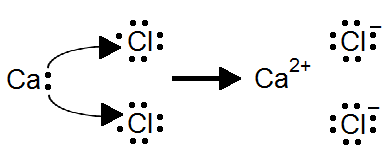
  4. Draw the electron dot structure of the divalent halide.
Answer

  1. X is in Group 17, period 3 and Y is in group 2, period 4.
  2. X is a non-metal, While Y is a metal.
  3. Oxide of element Y would be basic. This compound is formed by ionic bond.
  4.  

Need a full question paper?

Generate a complete, print-ready paper with questions like this in minutes — across 16+ boards, with answer keys.

Start Generating Free

Similar questions

  1. To construct a ray diagram we use two light rays which are so chosen that it is easy to know their directions after reflection from the mirror. List these two rays and state the path of these rays after reflection. Use these two rays to locate the image of an object placed between infinity and the centre of curvature of a concave mirror.
  2. Draw a ray diagram to show the formation of image of an object placed between the pole and principal focus of a concave mirror. How will the nature and size of the image formed change, if the mirror is replaced by a converging lens of same focal length?
The metal M reacts vigorously with water to form a solution S and a gas G. The solution S turns red litmus to blue whereas gas G, which is lighter than air, burns with a pop sound. Metal M has a low melting point and it is used as a coolant in nuclear reactors.
  1. What is metal M?
  2. What is solution S? Is it acidic or alkaline?
  3. What is gas G?
  4. Write a balanced chemical equation for the reaction which takes place when metal M reacts with water.
  5. Is this reaction exothermic or endothermic?
Write laws of refraction. Explain the same with the help of ray diagram, when a ray of light passes through a rectangular glass slab.
Given below are certain situations. Analyze and describe its possible impact on a person :
a) Testes of a male boy are not able to descend into scrotum during his embryonic development.
b) Vas deferens of a man is plugged.
c) Prostate and seminal vesicles are not functional.
d) Egg is not fertilised in a human female.
e) Placenta does not attach to the uterus optimally.
Draw the diagram of a flower and label the four whorls. Write the names of gamete producing organs in the flower.
There are five animals P, Q, R, S and T. The animal P always lives in water and has gills for breathing. The animal Q can stay in water as well as on land and can breathe both, through moist skin and lungs. The animal R lives in soil and breathes only through its skin. The animal S lives on land and breathes through spiracles and tracheae. And animal T lives in water and breathes through its cell membrane.
  1. Which of the animals could be Amoeba?
  2. Which of the animals could be frog?
  3. Which animal could be fish?
  4. Which animal could be grasshopper?
  5. Which animal could be earthworm?
Plants do not have any nervous or muscle tissue, still, they have the ability to sense touch. How?
Describe the process of fertilisation in humans and development of embryo briefly.
How are evolutionary relations between organisms traced?
Form the image in case an object is moved from infinity to the concave mirror.