Question
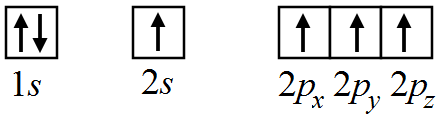
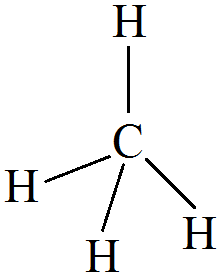
Apart from tetrahedral geometry, another possible geometry for CH4 is square planar with the four H atoms at the corners of the square and the C atom at its centre. Explain why CH4 is not square planar?

Need a full question paper?

Generate a complete, print-ready paper with questions like this in minutes — across 16+ boards, with answer keys.

Start Generating Free

Similar questions

What is the effect of the following processes on the bond order in N-, and O2?
  1. N2 → N+2 + e
  2. O2 → O+2 + e
Calculate the wavelength for the emission transition if it starts from the orbit having radius 1.3225nm and ends at 211.6pm. Name the series to which this transition belongs and the region of the spectrum.
What sorts of informations can you draw from the following reaction?
(CN)2(g) + 2OH-(aq) → CN-(aq) + CNO-(aq) + H2O(l)
Classify the elements on basis of electronic configuration.
The first ionization enthalpy values (in kJ mol–1) of group 13 elements are:
B Al Ga In Tl
801 577 579 558 589
How would you explain this deviation from the general trend?
Illustrate by taking examples of transition elements and non-transition elements that oxidation states of elements are largely based on electronic configuration.
  1. Write outer electronic configuration of Cr atom. Why are half filled orbitals more stable?
  2. An electron has a velocity of 50ms-1, accurate upto 99.99%. Calculate the uncertainty in locating its position. (Mass of electron = 9.1 × 10⁻³¹kg, h = 6.6 × 10⁻³⁴Js)
  3. Write the atomic number of the element in which filling of 3d sub-shell in the atom just starts.
  1. Define solubility product. Write solubility product expression for Zr3(PO4)4.
  2. Calculate the pH of 0.01 M CH3COOH solution. [Ka(CH2COOH) = 1.74 × 10-51
  3. Explain why NaCl is precipitated when HCl(g) is passed through the saturated solution of NaCl.
Derive the formula required to find the energy of the electron in Bohr orbital.
  1. Use the following reactions to arrange the elements A, B, C and D in order of their redox reactivity:
  1. A + B+ → At + B
  2. B + D+ → B+ +D
  3. C+ + D → No reaction
  4. B+C+ → B+ + C
  1. On the basis of above redox activity series, predict which of the following reactions would you expect to occur?
  1. A+ + C → A+ C+
  2. A+ + D → A+ D+