Question
Are matter waves electromagnetic?

Answer

Matter waves are not electromagnetic. The reason is that electromagnetic waves are produced by accelerated charges while matter waves or de Broglie waves are associated with neutral particles. In fact de Broglie waves are the probability waves; they tell the probability of location of particle in a certain region of space.

Need a full question paper?

Generate a complete, print-ready paper with questions like this in minutes — across 16+ boards, with answer keys.
Start Generating Free

Similar questions

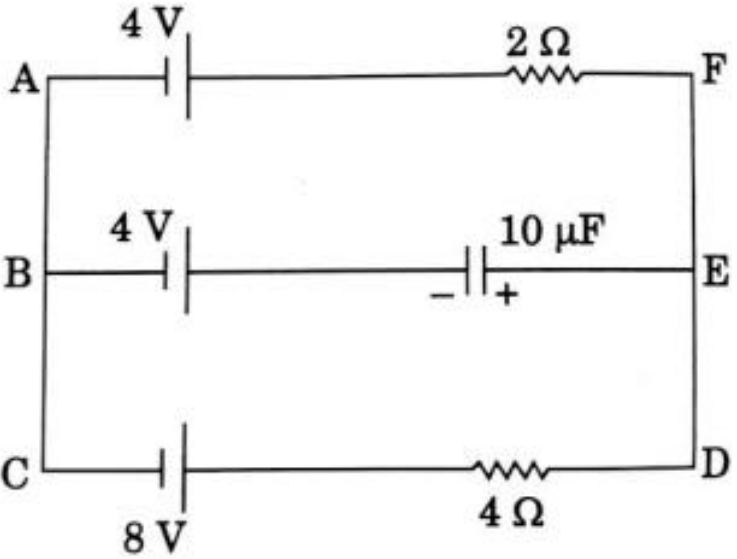
In the given circuit, with steady current, calculate the potential drop across the capacitor and the charge stored in it.
  1. At what distance should the lens be held from the figure in Exercise 9.29 in order to view the squares distinctly with the maximum possible magnifying power?
  2. What is the magnification in this case?What is the magnification in this case?
  3. Is the magnification equal to the magnifying power in this case? Explain.
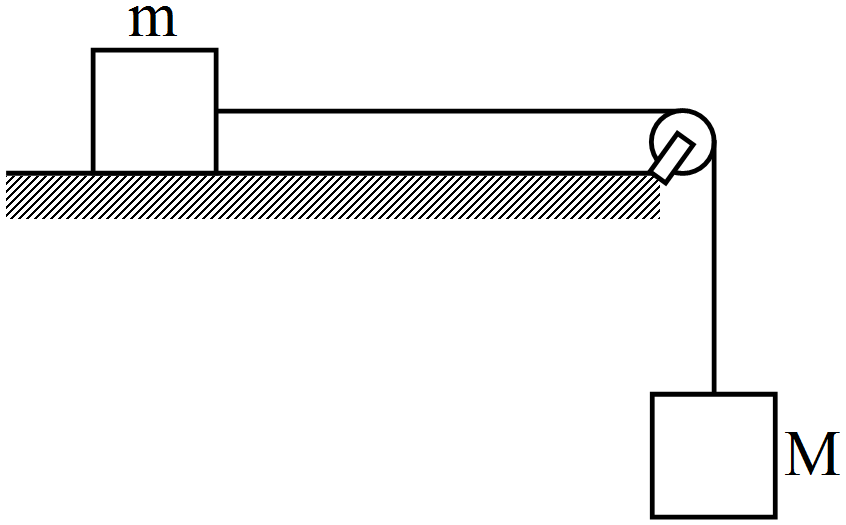
Figure shows two blocks of masses m and M connected by a string passing over a pulley. The horizontal table over which the mass m slides is smooth. The pulley has a radius r and moment of inertia I about its axis and it can freely rotate about this axis. Find the acceleration of the mass M assuming that the string does not slip on the pulley.
Find the time required for a 50Hz alternating current to change its value from zero to the rms value.
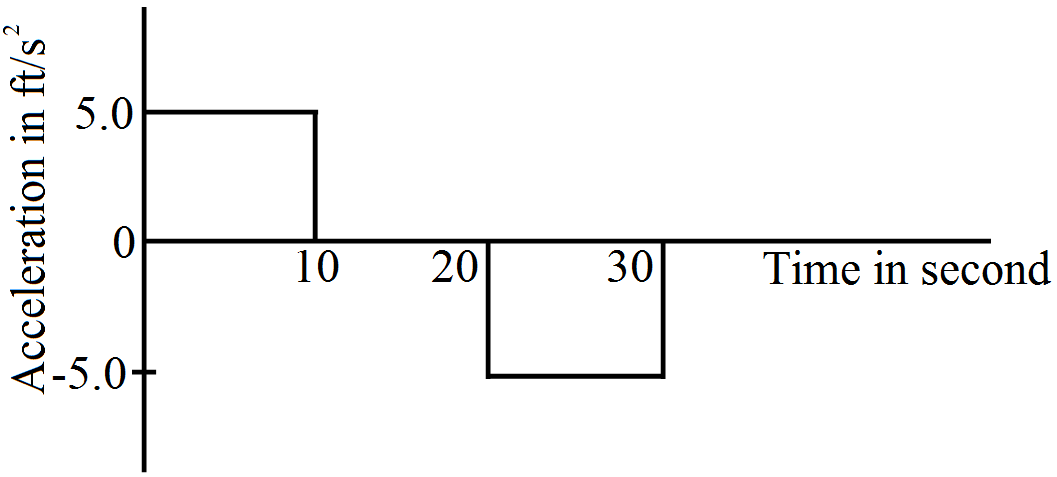
The acceleration of a cart started at $t = 0,$ varies with time as shown in figure. Find the distance travelled in $30$ seconds and draw the position$-$time graph.
Three resistors $1\ \Omega,\ 2\ \Omega$ and $3\ \Omega$ are combined in series. What is the total resistance of the combination?
If the combination is connected to a battery of emf $12 V$ and negligible internal resistance, obtain the potential drop across each resistor.
Theory of relativity reveals that mass can be converted into energy. The energy E so obtained is proportional to certain powers of mass m and the speed c of light. Guess a relation among the quantities using the method of dimensions.
If this telescope is used to view a $100 m$ tall tower $3 \ km$ away, what is the height of the image of the tower formed by the objective lens?
The focal lengths of a convex lens for red, yellow and violet rays are 100cm, 98cm and 96cm respectively. Find the dispersive power of the material of the lens.
When a capacitor is connected in series $LR$ circuit, the alternating current flowing in the circuit increases. Explain why.