Question
  1. Arrange the following in decreasing order of stability.
$\text{PH}_3,\text{NH}_3,\text{AlH}_3,\text{SbH}_3,\text{BiH_3}$

$\text{CH}_4,\text{H}_2\text{O},\text{NH}_3,\text{HF}$
  1. Which negative catalyst prevent decomposition of $H_2O^2$?
  2. What happens when.
  1. $H_2O_2$ is added to acidified $K_2Cr_2O_7$?
  2. Benzene reacts with $H_2O_2$ in presence of $FeSO_4$ as catalyst.
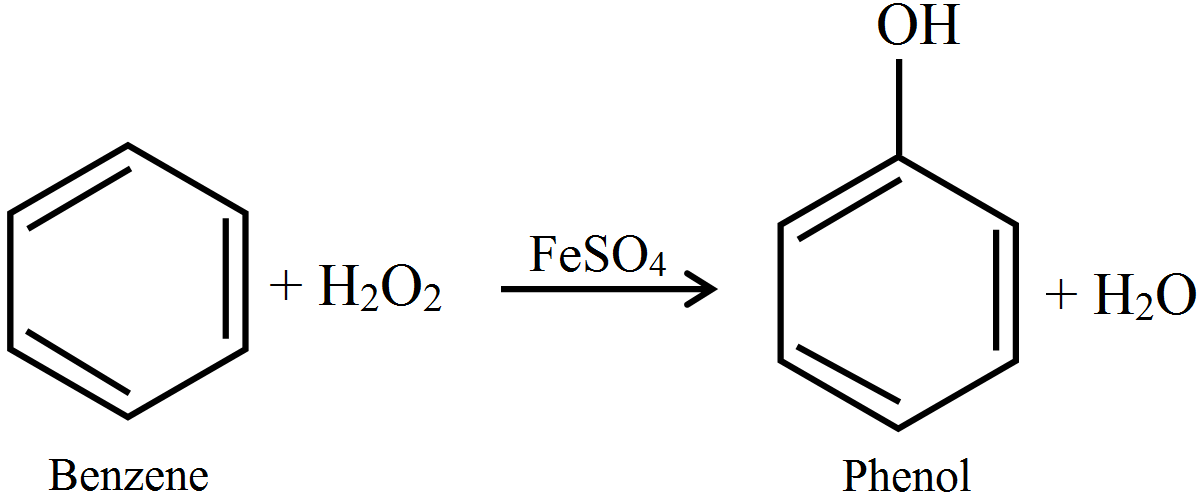
Write chemical reactions involved.

Answer

  1.  
  1. $NH_3 > PH_3 > AsH_3 > SbH_3 > BiH_3$
As atomic size of central atom increases, stability of hydrides decreases.
  1. $CH_3 NH_3< H_2O < HF$
As atomic size of central atom decreases electronegative increases, stability increase
  1. Acetanilide or phosphoric acid or glycerol prevent decomposition of $H_2O_2$.
  2. Blue coloured chromium peroxide, $CrO_5$ is formed.
  1. $\text{K}_2\text{Cr}_2\text{O}_7+\text{H}_2\text{SO}_4+4\text{H}_2\text{O}\\\xrightarrow{\ \ \ \ \ \ \ \ }2\text{CrO}_5+\text{K}_2\text{SO}_4+5\text{H}_2\text{O}$
  2. Phenol is formed.

Need a full question paper?

Generate a complete, print-ready paper with questions like this in minutes — across 16+ boards, with answer keys.

Start Generating Free

Similar questions

Prove that solubility of salts of weak acids increases by decreasing the pH.
$\mathrm{BCl}_3$ exists as monomer whereas $\mathrm{AlCl}_3$ is dimerised through halogen bridging. Give reason. Explain the structure of the dimer of $\mathrm{AlCl}_3$ also.
Boron fluoride exists as $\mathrm{BF}_3$ but boron hydride doesn't exist as $\mathrm{BH}_3$. Give reason. In which form does it exist? Explain its structure.
Classify the following reactions in one of the reaction type studied in this unit.
i. $\mathrm{CH}_3 \mathrm{CH}_2 \mathrm{Br}+\mathrm{HS}^{-} \rightarrow \mathrm{CH}_3 \mathrm{CH}_2 \mathrm{SH}+\mathrm{Br}^{-}$
ii. $(\mathrm{CH})_2 2 \mathrm{C}=\mathrm{CH} 2+\mathrm{HCl} \rightarrow\left(\mathrm{CH}_3\right)_2 \mathrm{ClC}-\mathrm{CH}_3$
iii. $\mathrm{CH}_3 \mathrm{CH}_2 \mathrm{Br}+\mathrm{HO}^{-} \rightarrow \mathrm{CH}=\mathrm{CH}_2+\mathrm{H}_2 \mathrm{O}+\mathrm{Br}^{-}$
iv. $\left(\mathrm{CH}_3\right)_3 \mathrm{C}-\mathrm{CH}_3 \mathrm{OH}+\mathrm{HBr} \rightarrow\left(\mathrm{CH}_3\right)_2 \mathrm{CBrCH}_2 \mathrm{CH}_2 \mathrm{CH}+\mathrm{H}_2 \mathrm{O}$
Explain the formation of a chemical bond.
The reaction of cyanamide, $NH _2 CN ( s )$, with dioxygen was carried out in a bomb calorimeter, and $\Delta U$ was found to be $-742.7 kJ mol ^{-1}$ at 298 K . Calculate enthalpy change for the reaction at 298 K .
$NH_2 CN(g)+\frac{3}{2} O_2(g) \longrightarrow N_2(g)+CO_2(g)+H_2 O(l)$
For the reaction: $\text{N}_2(\text{g})+3\text{H}_2(\text{g})\rightleftharpoons2\text{NH}_3(\text{g})$at 400K, $K_p = 41$. Find the value of $K_p$ for each of the following reactions at the same temperature.
  1. $\text{2NH}_3(\text{g})\rightleftharpoons\text{N}_2(\text{g})+3\text{H}_2(\text{g})$
  2. $\frac{1}{2}\text{Na}(\text{g})+\frac{3}{2}\text{H}_2(\text{g})\rightleftharpoons\text{NH}_3(\text{g})$
  3. $2\text{N}_2(\text{g})+6\text{H}_2(\text{g})\rightleftharpoons4\text{NH}_3(\text{g})$
Match the species in Column I with the type of hybrid orbitals in Column II.
 
Column I
 
Column II
i.
$H_3O^+$
a.
Linear
ii.
$HC = CH$
b.
Angular
iii.
$\text{ClO}^{-}_{2}$
c.
Tetrahedral
iv.
$\text{NH}^{+}_{4}$
d.
Trigonal bipyramidal
 
 
e.
Pyramidal
What is quantum mechanics? Explain the Schrodinger wave equation for hydrogen.
What is Gibbs energy? How does this explain spontaneity?