MCQ
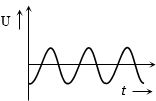
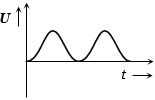
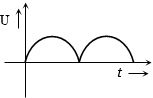
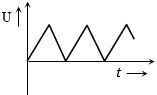
As a body performs $S.H.M.$, its potential energy $U.$ varies with time as indicated in
  • A


  • C

  • D

Answer

Correct option: B.

b
(b) $PE$ varies from zero to maximum. It is always positive sinusoidal function.

Need a full question paper?

Generate a complete, print-ready paper with questions like this in minutes — across 16+ boards, with answer keys.
Start Generating Free

Similar questions

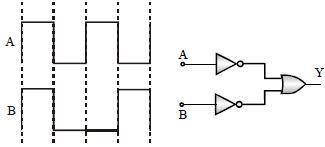
In the given circuit as shown the two input waveform $A$ and $B$ are applied  simultaneously. The resultant waveform $Y$ is
In materials like aluminium and copper, the correct order of magnitude of various elastic modulii is 
A large number of bullets are fired in all directions with same speed $v$. What is the maximum area on the ground on which these bullets will spread
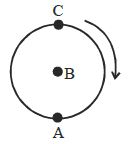
A sphere is rolling without slipping on a fixed horizontal plane surface. $A$ is the point of contact, $B$ is the centre of the sphere and $C$ is top most point.Then
A polyatomic gas with six degrees of freedom does $25\,\,J$ of work when it is expanded at constant pressure. The heat given to the gas is ..... $J$
What is the value of $\frac{R}{{{C_P}}}$ for diatomic gas
Given below are two statements:

statement$-I$ : The reactance of an ac circuit is zero. It is possible that the circuit contains a capacitor and an inductor.

Statement$-II$ : In $ac$ circuit, the average power delivered by the source never becomes zero.

In the light of the above statements, choose the correct answer from the options given below

Electric field strength due to a point charge of $5\,\mu C$ at a distance of $80\, cm$ from the charge is
A rectangular, a square, a circular and an elliptical loop, all in the $(x-y)$ plane, are moving out of a uniform magnetic field with a constant  velocity, $\vec V = v\hat i$. The magnetic field is directed along the negative $z$ axis direction. The induced emf, during the passage of these loops, out of the field region, will not remain constant for 
A ray of light is incident on the surface of a glass plate at an angle of incidence equal to Brewster's angle $\phi  $. If $\mu $ represents the refractive index of glass with respect to air, then the angle between reflected and refracted rays is