MCQ
Assertion : Bohr had to postulate that the electrons in stationary orbits around the nucleus do not radiate.
Reason : According to classical physics all moving electrons radiate
  • A
    If both Assertion and Reason are correct and the Reason is a correct explanation of the Assertion.
  • If both Assertion and Reason are correct but Reason is not a correct explanation of the Assertion.
  • C
    If the Assertion is correct but Reason is incorrect.
  • D
    If both the Assertion and Reason are incorrect.
Answer

Correct option: B.
If both Assertion and Reason are correct but Reason is not a correct explanation of the Assertion.
b
According to classical physics all moving electrons around the nucleus will radiate because an accelerated electron in electric field will radiate e.m. wave. So Reason is correct. But Reason does not explain the Assertion. Bohr's postulates that the electron in stationary orbits do not radiate. His postulate was based not out of compulsion but on the quantum theory. So Assertion is also correct but Reason does not explain Assertion

Need a full question paper?

Generate a complete, print-ready paper with questions like this in minutes — across 16+ boards, with answer keys.

Start Generating Free

Similar questions

If vectors $\overrightarrow {A} = cos\omega t\hat i + sin\omega t\hat j$ and $\overrightarrow {B} = cos\frac{{\omega t}}{2}\hat i + sin\frac{{\omega t}}{2}\hat j$ are functions of time, then the value of $t$ at which they are orthogonal to each other is 
For a rolling spherical shell, the ratio of rotational kinetic energy and total kinetic energy is $\frac{x}{5}$. The value of $x$ is ................
The force required to stretch a steel wire of $1\,c{m^2}$ cross-section to $1.1$ times its length would be $(Y = 2 \times {10^{11}}\,N{m^{ - 2}})$
The binding energy per nucleon for $C^{12}$ is $7.68\, MeV$ and that for $C^{13}$ is $7.5\, MeV.$ The energy required to remove a neutron from $C^{13}$ is ......... $MeV$
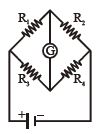
The resistances in $WSB$ circuit shown in the diagram all are different and the current through the galvanometer is zero. If all thermal effects are negligible, the current through the galvanometer will not be zero, when
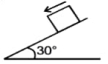
A block of mass $10 \,kg$ is released on rough incline plane. Block start descending with acceleration $2 \,m / s ^2$. Kinetic friction force acting on block is ..... $N$ (take $g=10 \,m / s ^2$ )
A whistle producing sound waves of frequencies $9500\ Hz$ and above is approaching a stationary person with speed $v\ ms^{-1}$. The velocity of sound in air is $300\ ms^{-1}$. If the person can hear frequencies upto a maximum of $10,000\ Hz$, the maximum value of $v$ upto which he can hear whistle is ... $ms^{-1}$
The angle of a prism is $A$. One of its refracting surfaces is silvered. Light rays falling at an angle of incidence $2A$ on the first surface returns back through the same path after suffering reflection at the silvered surface. The refractive index $\mu$, of the prism is
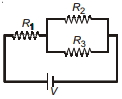
Three identical resistors $R_1=R_2=R_3$ are connected as shown to a battery of constant e.m.f. The power dissipated is ...........
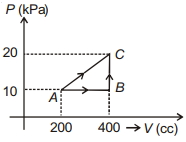
If a gas is taken from $A$ to $C$ through $B$ then heat absorbed by the gas is $8 \,J$. Heat absorbed by the gas in taking it from $A$ to $C$ directly is ............. $J$