Question
Briefly explain how does Bernoulli's principle help in explaining blood flow in human beings. What is the cause of a heart attack?

Answer

The blood flow in artery of a human being can be easily explained on the basis of Bernoulli's principle. The heart applies a pressure to maintain blood flow through the arteries.
In persons suffering with advanced heart condition, the artery gets constricted due to the accumulation of plaque on its inner walls. In order to drive the blood through this constriction a greater activity of the heart is required. The speed of the flow of the blood in this region is raised which lowers the pressure inside, and the artery may collapse due to this external pressure.
The heart exerts further pressure to open this artery and forces the blood through. As the blood rushes through the opening, the internal pressure once again drops leading to a repeat collapse. This may result in heart attack.
Need a full question paper?

Generate a complete, print-ready paper with questions like this in minutes — across 16+ boards, with answer keys.

Start Generating Free

Similar questions

A person travelling by a car moving at 100km/h finds that his wristwatch agrees with the clock on a tower A. By what amount will his wristwatch lag or lead the clock on another tower B, 1000km (in the earth's frame) from the tower A when the car reaches there?
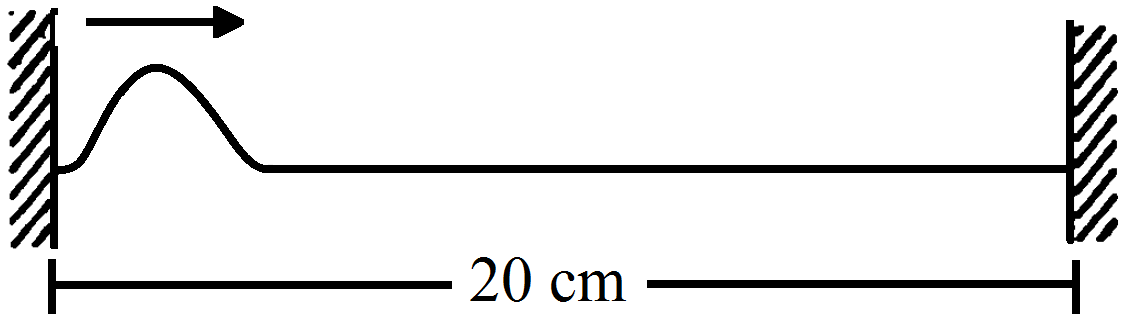
A string of length $20\ cm$ and linear mass density $0.40g/cm$ is fixed at both ends and is kept under a tension of $16N.$ A wave pulse is produced at $t = 0$ near an end as shown in figure, which travels towards the other end.
  1. When will the string have the shape shown in the figureagain
  2. Sketch the shape of the string at a time half of that found in part $(a)$.
A simple pendulum of length (l) is pulled aside to make an angle $\theta$ with the vertical. Find the magnitude of the torque of the weight (w) of the bob about the point of suspension. When is the torque zero?
How many astronomical units (A.U.) make 1 parsec?
If $\vec{\text{A}},\vec{\text{B}},\vec{\text{C}}$ are mutually perpendicular, show that $\vec{\text{C}}\times(\vec{\text{A}}\times\vec{\text{B}})=0.$ Is the converse true?
A trolley of mass $20kg$ rests on a horizontal surface. A massless string tied to the trolley passes over a frictionless pulley and a load of $5kg$ is suspended from other end of string. If coefficient of kinetic friction between trolley and surface be $0.1$, find the acceleration of trolley and tension in the string. (Take $g = 10ms^{-2}$).
A cylinder rotating at an angular speed of $50rev/s$ is brought in contact with an identical stationary cylinder. Because of the kinetic friction, torques act on the two cylinders, accelerating the stationary one and decelerating the moving one. If the common magnitude of the acceleration and deceleration be one revolution per second square, how long will it take before the two cylinders have equal angular speed?
Calculate the force required to punch a hole $2cm$ square in a steel sheet $2mm$ thick whose shearing strength is $3.5 \times 10^8Nm^{-2}$.
Two stars each of one solar mass ($= 2 \times 10^{30}kg$) are approaching each other for a head on collision. When they are a distance $10^9km$, their speeds are negligible. What is the speed with which they collide? The radius of each star is $10^4km.$ Assume the stars to remain undistorted until they collide. (Use the known value of G).
Derive an expression for the work done in an isothermal process.