Question
Briefly explain in steps the method of creating a query, using wizard.

Answer

The following are the steps involved in creating a query using the wizard method.
  1. In the Database window, select ‘Queries’ from Object list given on the Left Hand Side (LHS) of the Database window.
  2. Double click at ‘Create Query’ by using wizard given on the Right Hand Side (RHS) of the window. With this ‘Simple Query Wizard’ will be shown on the screen. Now, the user is required to select a field name from a table or from an existing query which should be included in the query being created.
  3. Click ‘Next’ after the desired fields have been selected. In case, a number or currency field is included in the selected field, the user is asked to choose an option button to specify whether the query to be created is a summary or detail query.
  4. Click ‘Next’ after the desired fields have been selected. In case, a number or currency field is included in the selected field, the user is asked to choose an option button to specify whether the query to be created is a summary or detail query.

Need a full question paper?

Generate a complete, print-ready paper with questions like this in minutes — across 16+ boards, with answer keys.
Start Generating Free

Similar questions

Following incomplete information is available from records maintained by Mr. X:

During the year Mr. X introduced in the business the amount realised on sale of ₹ 10,000 investments at the premium of 5%. Personal expenses of Mr. X paid from business account amounted to ₹ 1,250 per month. Prepare a statement to calculate Profit (or Loss) during the year.
Distinguish between the Straight Line Method and Written Down Value Method of providing Depreciation.
​​From the following information supplied by Mr. D.H., prepare his Bank Reconciliation Statement as on 31st March, 2019:
   
(i) Bank overdraft as per Pass Book. 33,000
(ii) Cheques issued but not presented for payment. 17,500
(iii) Cheques deposited but not collected. 21,000
(iv) Cheques recorded in the Cash Book but not sent to the bank for collection. 4,000
(v) Payment received from customers directly by the bank. 7,000
(vi) Bank charges debited in the Pass Book. 40
(vii) Premium of Life Insurance Policy of Mr. D.H. paid by the bank on standing instructions. 360
(viii) A bill for ₹ 6,000 dishonoured on 30th March, 2019 and bank paid Noting charges ₹ 20. This bill was discounted on 30th January, 2019.  
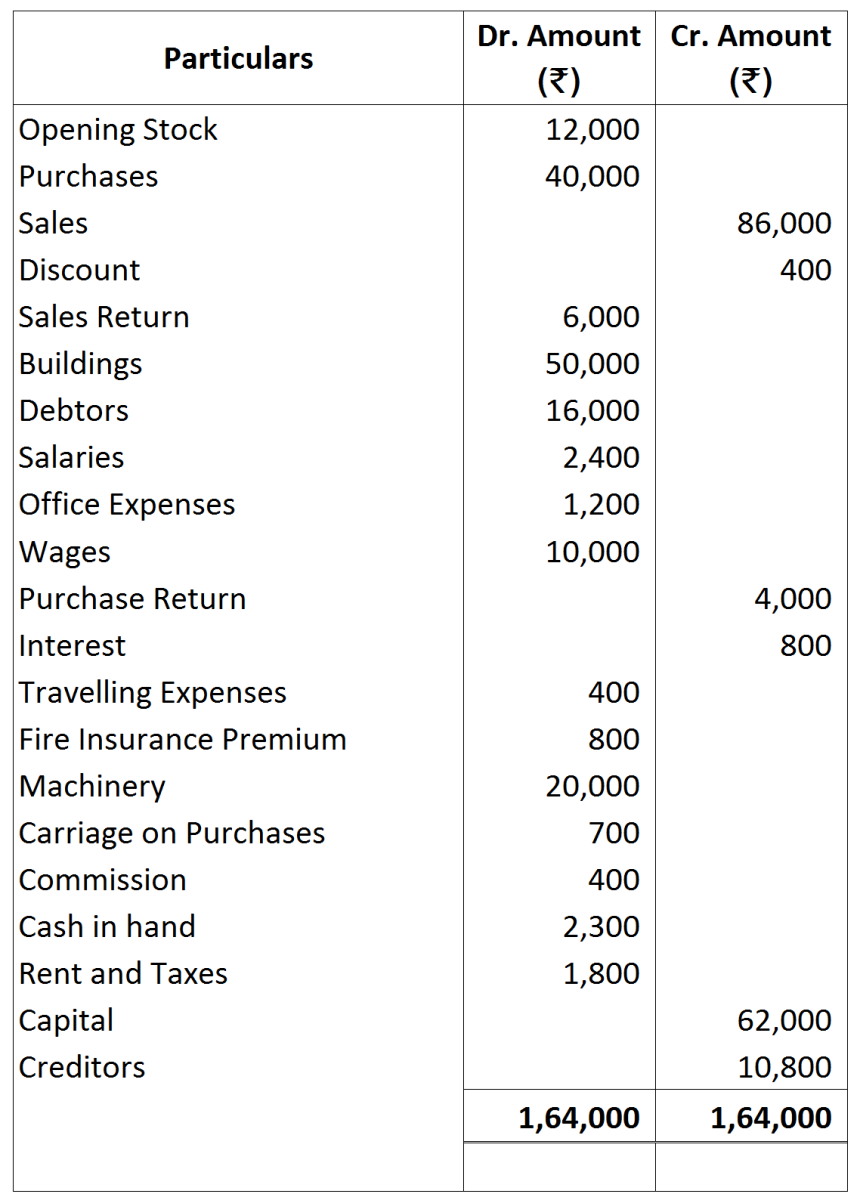
The following are the balances extracted from the books of Raghunath Ji as on 31st March, 2019. From these balances, prepare his Trading and Profit & Loss Account and Balance Sheet as at that date:

Adjustments:
  1. Closing Stock was valued at ₹ 16,000.
  2. Wages ₹ 2,000 and salaries ₹ 1,200 are outstanding.
  3. Rent for two months at the rate of ₹ 500 per month is outstanding.
  4. Depreciate Buildings by 5% and machinery by 10%.
  5. Prepaid Insurance ₹ 200.
Write a detailed comparison between Manual Accounting and Computerised Accounting.
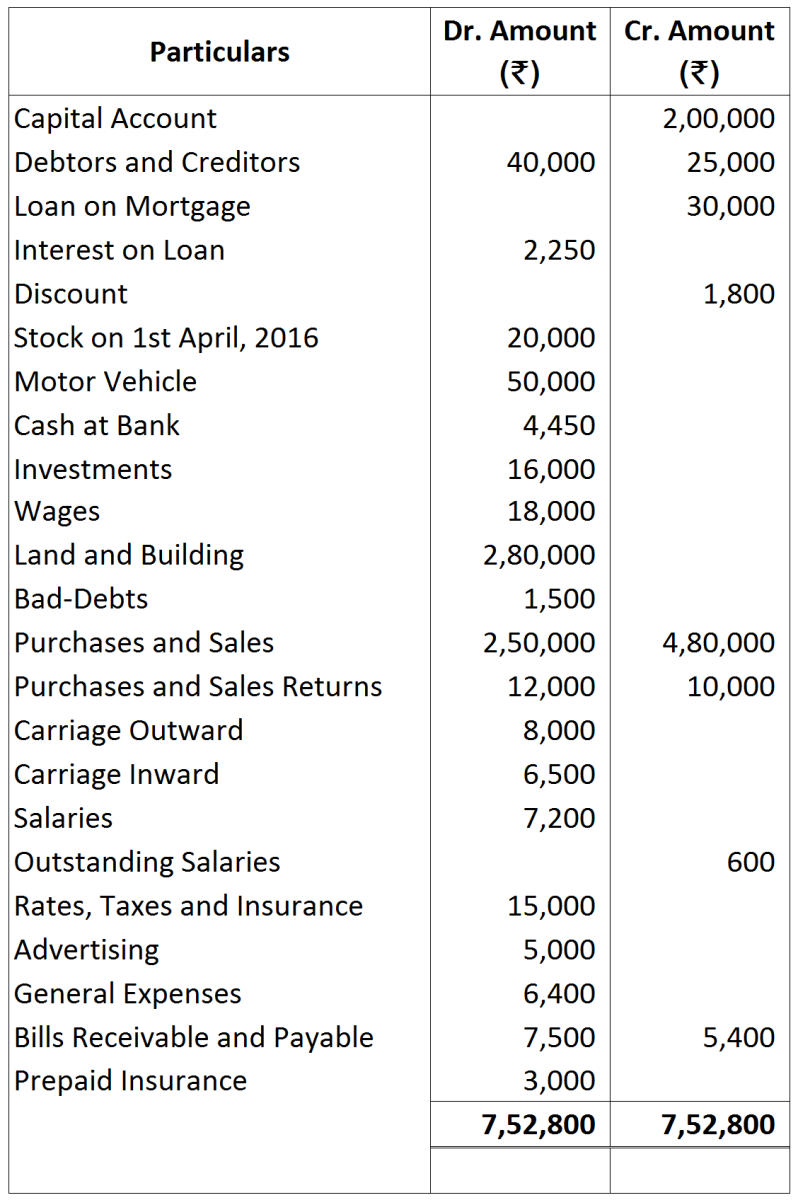
On 31st March, 2017 the following Trial Balance was extracted from the books of Sh. Ghanshyam Das:

Prepare Trading and Profit & Loss Account for the year ended 31st March, 2017 and Balance Sheet as at that date, after making adjustments for the following matters:
  1. Depreciate Land and Building at 2.5% and Motor Vehicles at 20%.
  2. Interest on Loan at 15% p.a. is unpaid for six months.
  3. Ghanshyam Das withdrew ₹ 2,000 for his private use. This amount was included in general expenses.
  4. Interest on Investments is receivable for full year @ 10%.
  5. Provide for Manager's Commission at 10% on Net Profit after charging such commission.
  6. Stock in hand on 31st March, 2017 was valued at ₹ 25,000 (Realisable value ₹ 22,000).
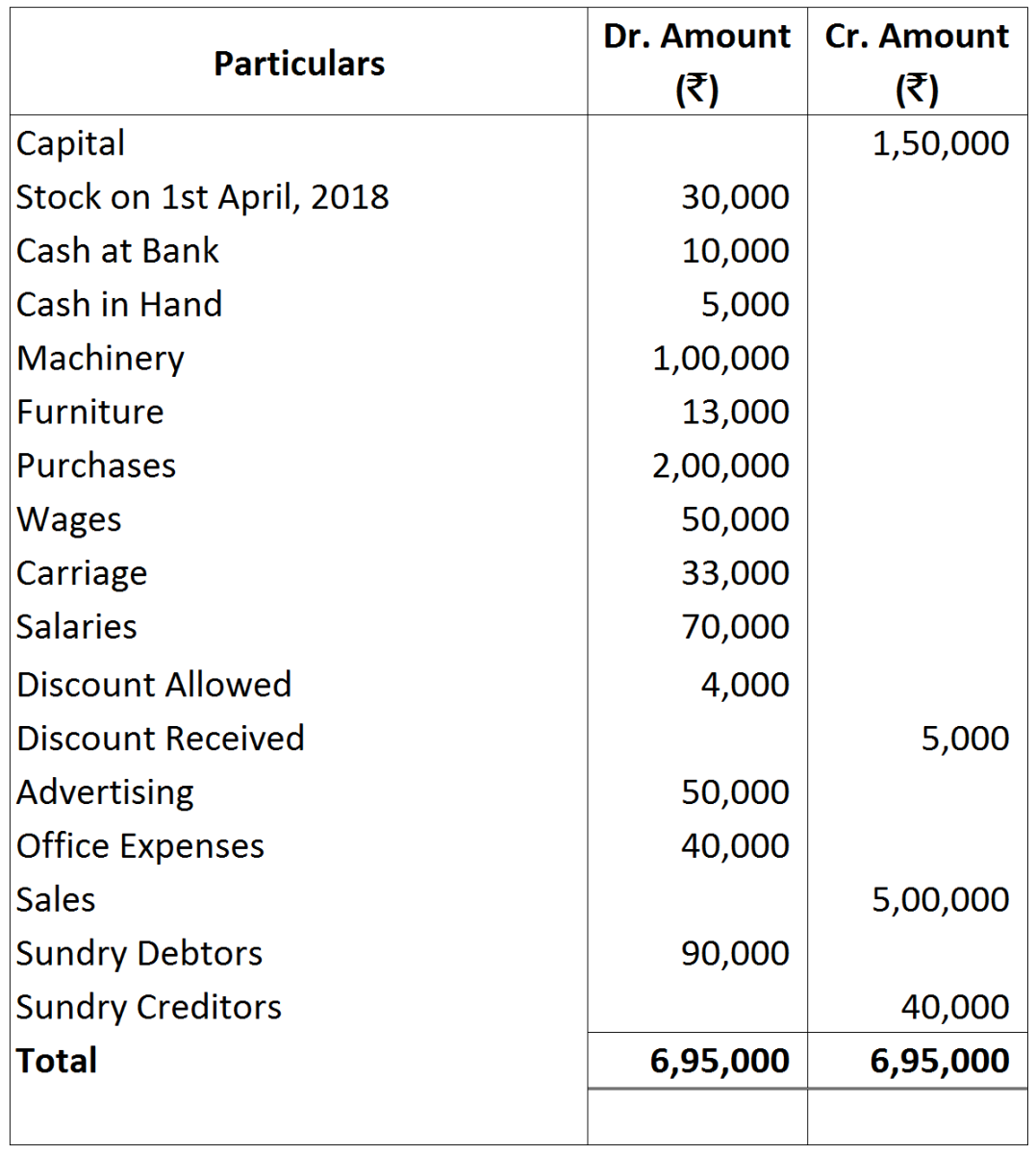
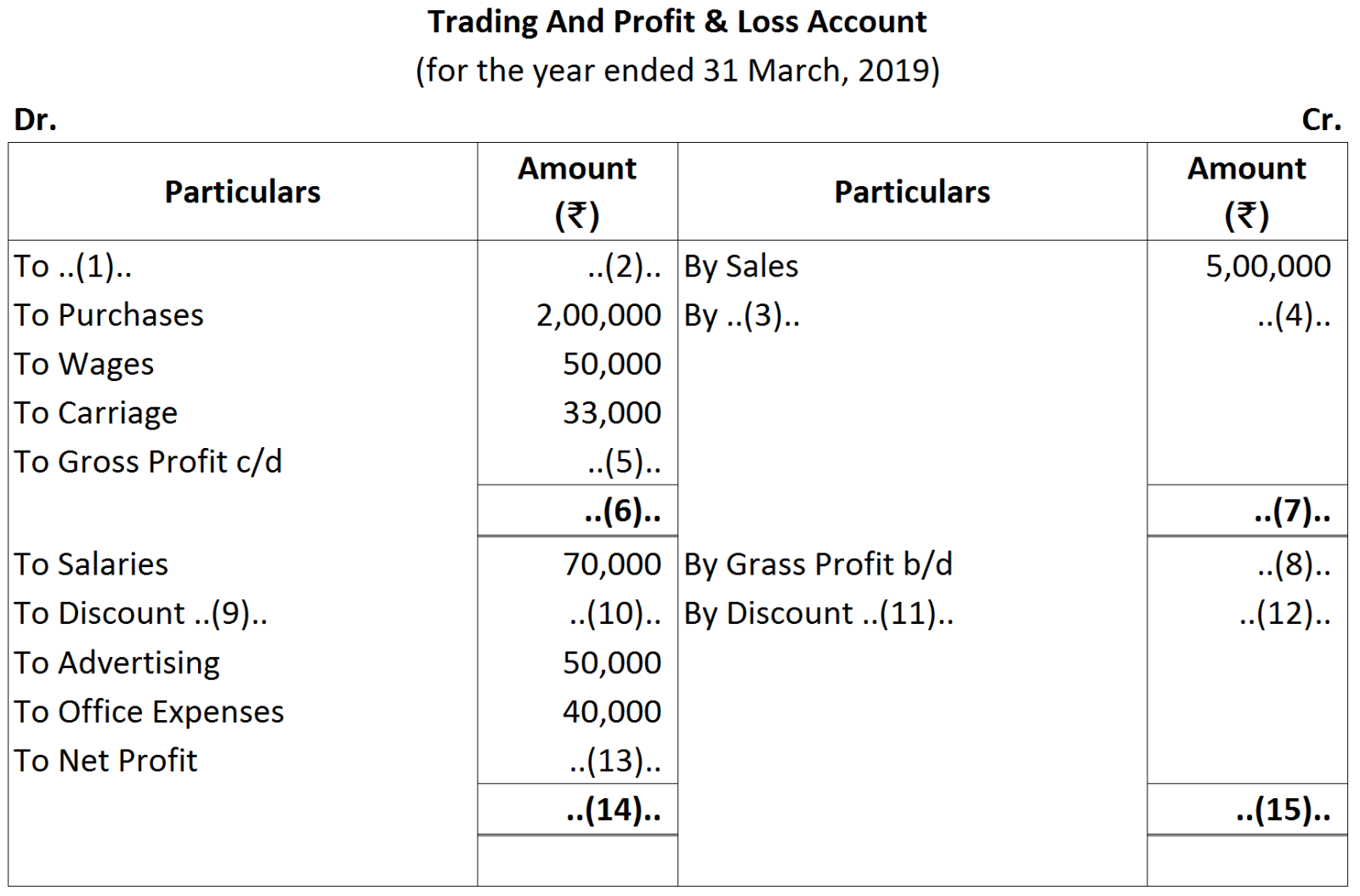
Trial Balance of Mr. Joe shows the following balance as on $31^{st}$ March,$ 2019:$
Value of Closing Stock on $31^{st}​​​​​​​$​​​​​​​ March,$ 2019:$ was ₹ 50,000.
Distinguish between a Balance Sheet and Trial Balance. (Any five points)
Manu started business with a capital of ₹ 4,00,000 on 1st October, 2005. He borrowed from his friend a sum of ₹ 1,00,000. He brought further ₹ 75,000 as capital on 31st March, 2006, his position was:
Cash: ₹ 30,000; Stock: ₹ 4,70,000; Debtors: ₹ 3,50,000 and Creditors: ₹ 3,00,000.
He withdrew ₹ 8,000 per month during this period. Calculate profit on loss for the period.
From the following balances of M/s Jyoti Exports, prepare trading and profit and loss account for the year ended March 31, 2017 and balance sheet as on this date.

Closing stock ₹ 10,000.
  1. To provision for doubtful debts is to be maintained at 5 per cent on sundry debtors.
  2. Wages amounting to ₹ 500 and salary amounting to ₹ 350 are outstanding.
  3. Factory rent prepaid ₹ 100.
  4. Depreciation charged on Plant and Machinery @ 5% and Building @ 10%.
  5. Outstanding insurance ₹100.