Question
Briefly explain the formation of trade wind.

Answer

Trade winds are steady surface winds on the earth due to the natural convection phenomenon. The equatorial and polar regions of the earth receive unequal solar heat. The equatorial region receives more heat than the polar region. So air at the earth's surface near the equator is hotter than the air in the upper atmosphere of the poles, due to which a convection current would be set up, with the hot air at the equatorial surface rising and moving out towards the poles and in turn, colder air at poles descending and streaming in towards the equator. Because of earth's rotation about its own axis, the air close to the equator region has an eastward speed of $1600 km h ^{-1}$, while it is zero close to the polar region. As a result, the hot air from the equator descends not at the poles but at $30^{\circ} N$ latitude and returns to the equator. So in this way trade winds are formed.

Need a full question paper?

Generate a complete, print-ready paper with questions like this in minutes — across 16+ boards, with answer keys.

Start Generating Free

Similar questions

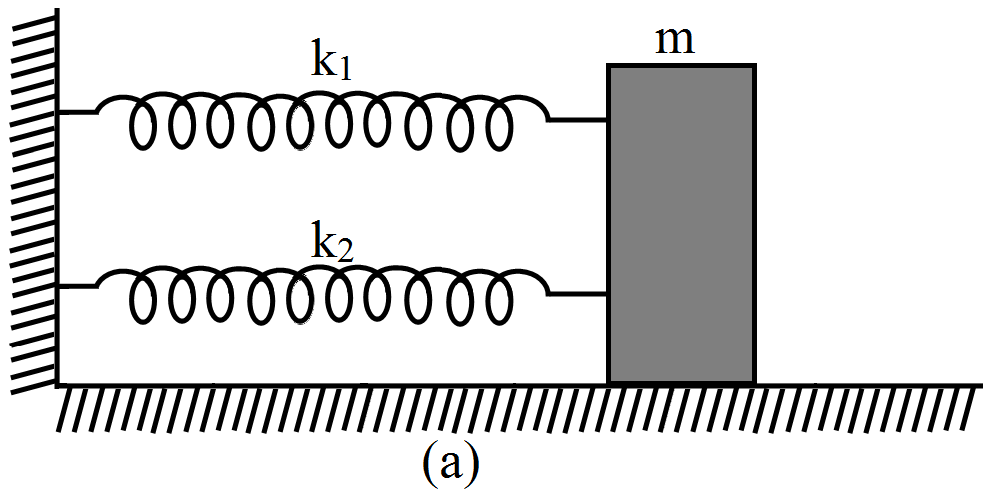
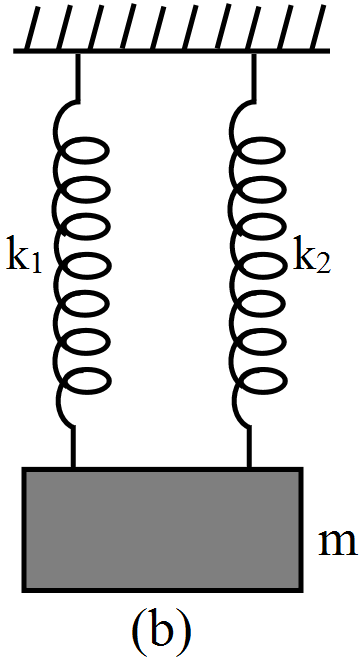
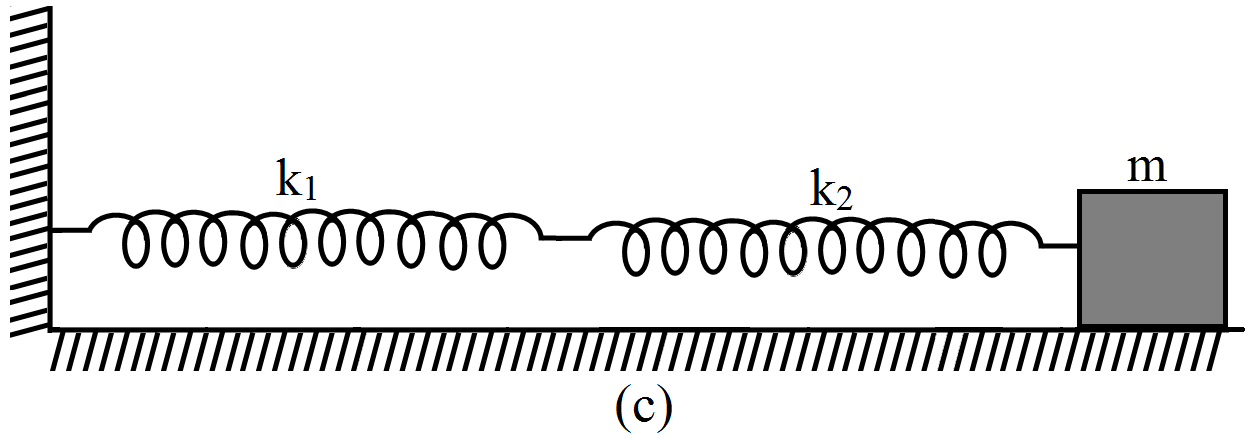
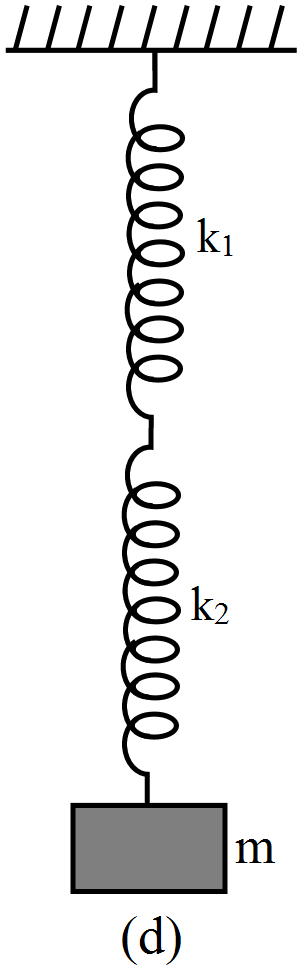
Figure below shows four different spring arrangements. If the mass in each arrangement is displaced from its equilibrium position and released, what is the resulting frequency of vibration in each case? Neglect the mass of the spring. (Fig. (a) and (b) represent an arrangement of springs in parallel, and (c) and (d) represent springs in series)


A mercury drop of radius 1.0 cm is sprayed into $10^6$ droplets of equal size. Calculate the energy expended. The surface tension of mercury $=32 \times 10^{-2} Nm ^{-1}$.
Molar volume is the volume occupied by 1mol of any (ideal) gas at standard temperature and pressure:
(STP: 1 atmospheric pressure, 0°C). Show that it is 22.4 litres.
To what depth must a rubber ball be taken in deep sea so that its volume is decreased by 0.1%.
(The bulk modulus of rubber is 9.8 × 10⁸N m-2, and the density of sea water is 103kg m-3.)
A short magnet is moved along the axis of a conducting loop. Show that the loop repels the magnet if the magnet is approaching the loop and attracts the magnet if it is going away from the loop.
The equation of trajectory of an oblique projectile is,
$\text{y}=\sqrt{3}\text{x}-\frac{\text{gx}^2}{2}$
What is the initial velocity and the angle of projection of the projectile?
Just as precise measurements are necessary in science, it is equally important to be able to make rough estimates of quantities using rudimentary ideas and common observations. Think of ways by which you can estimate the following (where an estimate is difficult to obtain, try to get an upper bound on the quantity):
The mass of an elephant.
The bottom of a dip on a road has a radius of curvature R. A rickshaw of mass M left a little away from the bottom oscillates about this dip. Deduce an expression for the period of oscillation.
When 0.2kg of a body at 100°C is dropped into 0.5kg of water at 10°C, the resulting temperature is 16°C. Find the specific heat of the body. Specific heat of water is 4.2 × 10³J/ kg/ °C.
An engine is attached to a wagon through a shock absorber of length 1.5m. The system with a total mass of 50,000kg is moving with a speed of 36km h-1 when the brakes are applied to bring it to rest. In the process of the system being brought to rest, the spring of the shock absorber gets compressed by 1.0m. If 90% of energy of the wagon is lost due to friction, calculate the spring constant.