Questions

3 Marks Question

Take a timed test

8 questions · self-marked practice — reveal the answer and mark yourself.

Question 13 Marks
Describe Camot's cycle.
View full question & answer
Question 23 Marks
Briefly explain the formation of trade wind.
Answer
Trade winds are steady surface winds on the earth due to the natural convection phenomenon. The equatorial and polar regions of the earth receive unequal solar heat. The equatorial region receives more heat than the polar region. So air at the earth's surface near the equator is hotter than the air in the upper atmosphere of the poles, due to which a convection current would be set up, with the hot air at the equatorial surface rising and moving out towards the poles and in turn, colder air at poles descending and streaming in towards the equator. Because of earth's rotation about its own axis, the air close to the equator region has an eastward speed of $1600 km h ^{-1}$, while it is zero close to the polar region. As a result, the hot air from the equator descends not at the poles but at $30^{\circ} N$ latitude and returns to the equator. So in this way trade winds are formed.
View full question & answer
Question 33 Marks
Briefly explain the cause of special cylindrical shape of bullets.
Answer
A special cylindrical shape is given to the bullets to ensure that when a bullet is fired form revolver/rifle/gun, it does not bend from trajectory due to Magnus effect. When we trigger of a rifle, the bullet requires a translational motion as well as spinning motion and the bullet, if spherical in shape, may deviate from its path. But in case of bullet of special cylindrical shape the axis of spinning motion is parallel to that of translational motion. Consequently, the pressure on the sides of cylindrical bullet remains uniform throughout and hence the bullet will not bend from its trajectory.
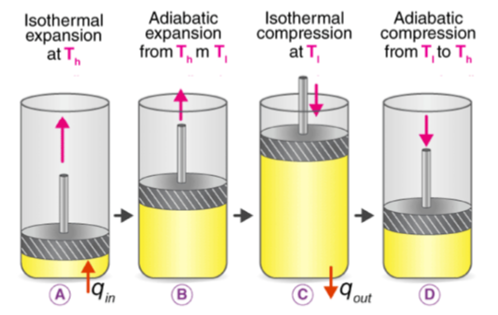
View full question & answer
Question 43 Marks
A soap bubble of radius 4 cm and surface tension 30 dyne $cm ^{-1}$ is blown at the end of a tube of length 10 cm and internal radius 0.20 cm . If the viscosity of air is $1.89 \times 10^{-4}$ poise, find the time taken by the bubble to be reduced to a radius of 2 cm .
Answer
Let R be the radius of the bubble at any instant. Its volume is
$
V=\frac{4}{3} \pi R^3
$
$\therefore$ Rate of flow of air
$
=\frac{d V}{d t}=\frac{4}{3} \pi \times 3 R^2 \frac{d R}{d t}=4 \pi R^2 \frac{d R}{d t}
$
But $\frac{d V}{d t}=\frac{\pi p r^4}{8 \eta l}$ and for a soap bubble, $p =\frac{4 \sigma}{R}$
$
\therefore \frac{d V}{d t}=\frac{\pi r^4}{8 \eta l} \cdot \frac{4 \sigma}{R}=4 \pi R^2 \frac{d R}{d t} \text { or } dt=\frac{8 \ln }{\sigma r^4} R^3 dR
$
Time taken by the bubble when its radius changes from $R_1$ to $R_2$ is
$
t=\int d t=\frac{8 \ln }{\sigma r^4} \int_{R_2}^{R_1} R^3 d R=\frac{8 \ln }{\sigma r^4}\left(\frac{R_1^4-R_2^4}{4}\right)
$
But $R _1=4 cm, R _2=2 cm, \sigma=30$ dyne $cm ^{-1}, l =10 cm, r =0.2 cm, \eta=1.85 \times 10^{-4}$ poise
$
\therefore t=\frac{8 \times 10 \times 1.85 \times 10^{-4}}{30 \times(0.2)^4} \times\left(\frac{4^4-2^2}{4}\right)=296 s
$
View full question & answer
Question 53 Marks
A body of mass 15 kg is hung by a spring balance in a lift. What would be the reading of the balance when
i. the lift is ascending with an acceleration of $2 ms^{-2}$
ii. descending with the same acceleration
iii. descending with a constant velocity of $2 ms^{-1}$ ?
Take $g =10 ms^{-2}$.
View full question & answer
Question 63 Marks
Eight rain drops of radius 1 mm each falling down with terminal velocity of $5 cms ^{-1}$ coalesce to form a bigger drop. Find the terminal velocity of the bigger drop.
Answer
Radius of each small drop, $r=1 mm=0.1 cm$
Terminal velocity of each small drop, $v =5 cms ^{-1}$
Volume of bigger drop $=$ Volume of 8 small drops $\frac{4}{3} \pi R^3=8 \times \frac{4}{3} \pi r^3$
or $R =2 r =2 \times 0.1 cm=0.2 cm$
Terminal velocity of each small drop is given by
$
v==\frac{2}{9} \frac{r^2}{\eta}\left(\rho-\rho^{\prime}\right) g\ldots(i)
$
Terminal velocity of bigger drop is given by
$
V=\frac{2}{9} \frac{R^2}{\eta}\left(\rho-\rho^{\prime}\right) g\ldots(ii)
$
Dividing equation (ii) by (i), we get
$
\begin{aligned}
& \frac{V}{v}=\frac{R^2}{r^2} \\
& \text { or } V=v \times \frac{R^2}{r^2}=5 \times \frac{(0.2)^2}{(0.1)^2} \\
& =5 \times 4=20 cms^{-1}
\end{aligned}
$
View full question & answer
Question 73 Marks
a. State impulse-momentum theorem.
b. A ball of mass 0.1 kg is thrown against a wall. It strikes the wall normally with a velocity of $30 m / s$ and rebounds with a velocity of $20 m / s$. Calculate the impulse of the force exerted by the ball on the wall.
Answer
a. The impulse-momentum theorem states that the change in momentum of an object equals the impulse applied to it Impulse= $m(v-u)=\bar{P}_2-\bar{P}_1$
b. $m =0.1 kg, u =30 m / s , v=-20 m / s$
$
\begin{aligned}
& \text { Impulse }=\bar{P}_2-\bar{P}_1=m(v-u) \\
& \text { Impulse }=m(v-u) \\
& \text { Impulse }=m(-20-30)=-5 Ns
\end{aligned}
$
View full question & answer
Question 83 Marks
A police jeep on a patrol duty on national highway was moving with a speed of $54 km / hr$. It finds a thief rushing up in a car at a rate of $126 km / hr$ in the same direction. Police sub-inspector fired at the car of the thief with his service revolver with a muzzle speed of $100 m / s$. With what speed will the bullet hit the car of thief?
Answer
Velocity of the police jeep, $V _{ PJ }=54 km / hr =\frac{(54 \times 5)}{18}=15 m / s$
Velocity of the thief car, $V _{ TC }=126 km / hr =\frac{(126 \times 5)}{18}=35 m / s$
Muzzle speed of the bullet $V_B=100 m / s$.
Now velocity of the thief car, $V_{T C}$ with respect to the police jeep $\left(V_{P J}\right), V_{C P}=V_{T C}-V_{P J}=35-15=20 m / s$.
$
V_{B C}=V_B-V_{C P}=100-20=80 m / s
$
Where, $V _{ BC }=$ Velocity of bullet, $V _{ B }$ w.r.t the relative velocity of the thief car, $V _{ CP }$
Thus bullet will hit the car with a velocity of $80 m / s$.
View full question & answer
3 Marks Question - Physics STD 11 Science Questions - Vidyadip