Question
Briefly state the purpose of functions in SQL environment.

Answer

In the access environment a function is named and followed by parenthesis ( ). The function takes some inputs as its argument and in turn sends a value. These functions act as a part of the expression for a computer field. In the SQL environment, following are the main types of functions that are used along with their respective purposes.
  1. Domain Aggregate Functions: These functions are used to perform calculation that are based on the values in a field of a table or query. A domain aggregate function uses the syntax as- DFunction (“Fld Name”, “Tbl Name” or Qry Name, “Srch Cond”)
where,

DFunction represents Domain Aggregate Function

Fld Name represents Name of the field to be searched

Tbl Name or Qry Name represents Name of the table or query that contains the above field.

Srch Cond represents Search Condition with the help of which relevant record is searched.
  1. SQL Aggregate Functions: These functions are used in those SQL statements that provide the underlying record source of forms and reports. All these functions when used in SQL statement require GROUP BY clause.
  1. Other Functions: Apart from Domain Aggregate Function and SQL Aggregate Function, there are some other functions also that are used in SQL. These are mentioned below.
  1. IIF: These functions are used to provide a value to the field from a mutually exclusive set of values.
  1. Abs: These functions are used to provide the absolute value in return of a numeric value. It takes the absolute value as its input argument and gives back an absolute value.
  1. Val: These functions are used to provide numbers contained in a string as a numeric value of appropriate type.

Need a full question paper?

Generate a complete, print-ready paper with questions like this in minutes — across 16+ boards, with answer keys.
Start Generating Free

Similar questions

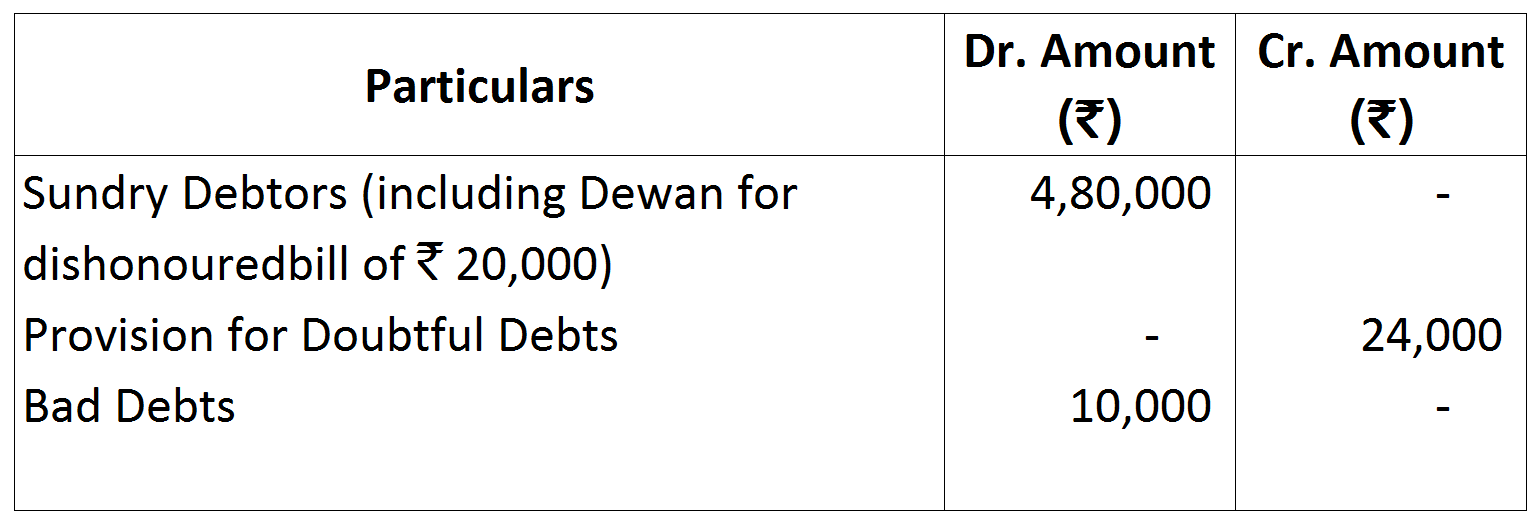
Extracts of Trial Balance as at 31st March, 2017:

Adjustments:
  1. $\frac{3}{4}\text{th}$ of Dewan's bill is irrecoverable.
  2. Create a provision of 6% on Sundry Debtors.
Show the effect on Profit and Loss Account and Balance Sheet.
Give Journal entries for the following adjustments in final Accounts:
  1. New Machinery was purchased for ₹ 1,00,000, paid as follows:
  1. An old machine valued at ₹ 10,000 (Book Value Nil) was given in exchange.
  2. Balance amount by cheque.
New machine was recorded at net amount.
  1. New furniture was purchased for ₹ 50,000 and in exchange old furniture valued at ₹ 5,000 (Book Value ₹ 2,000) was given. Entry for purchase was recorded at ₹ 45,000 in the books of account.
  2. New car for ₹ 5,00,000 was purchased and Amar (proprietor) gave his personal car valued at ₹ 1,00,000 in exchange. Car was recorded in the books of account at ₹ 4,00,000.
  3. Advance of ₹ 50,000 for purchase of a building remained unadjusted.
  4. An old discarded asset was sold for ₹ 5,000 against cash which was used by the proprietor for his personal use. ₹ 5,000 was included in Cash-in-Hand.
  5. Amrish, proprietor of Amrish & Co. sold his old car for ₹ 2,00,000 against cheque which is deposited in his savings account.
Prepare Bank Reconciliation Statement as on 30th September, 2016 from the following particulars:
 
 
(i)
Bank Balance as per Pass Book.
10,000
(ii)
Cheque deposited into bank but no entry was passed in Cash Book.
500
(iii)
Cheque received and entered in Cash Book but not sent to bank.
1,200
(iv)
Insurance premium paid directly by the bank.
800
(v)
Bank charges entered twice in the Cash Book.
20
(vi)
Cheque received entered twice in Cash Book.
1,000
(vii)
Bill discounted dishonoured not recorded in the cash book.
5,000
Give three features of a Computer.
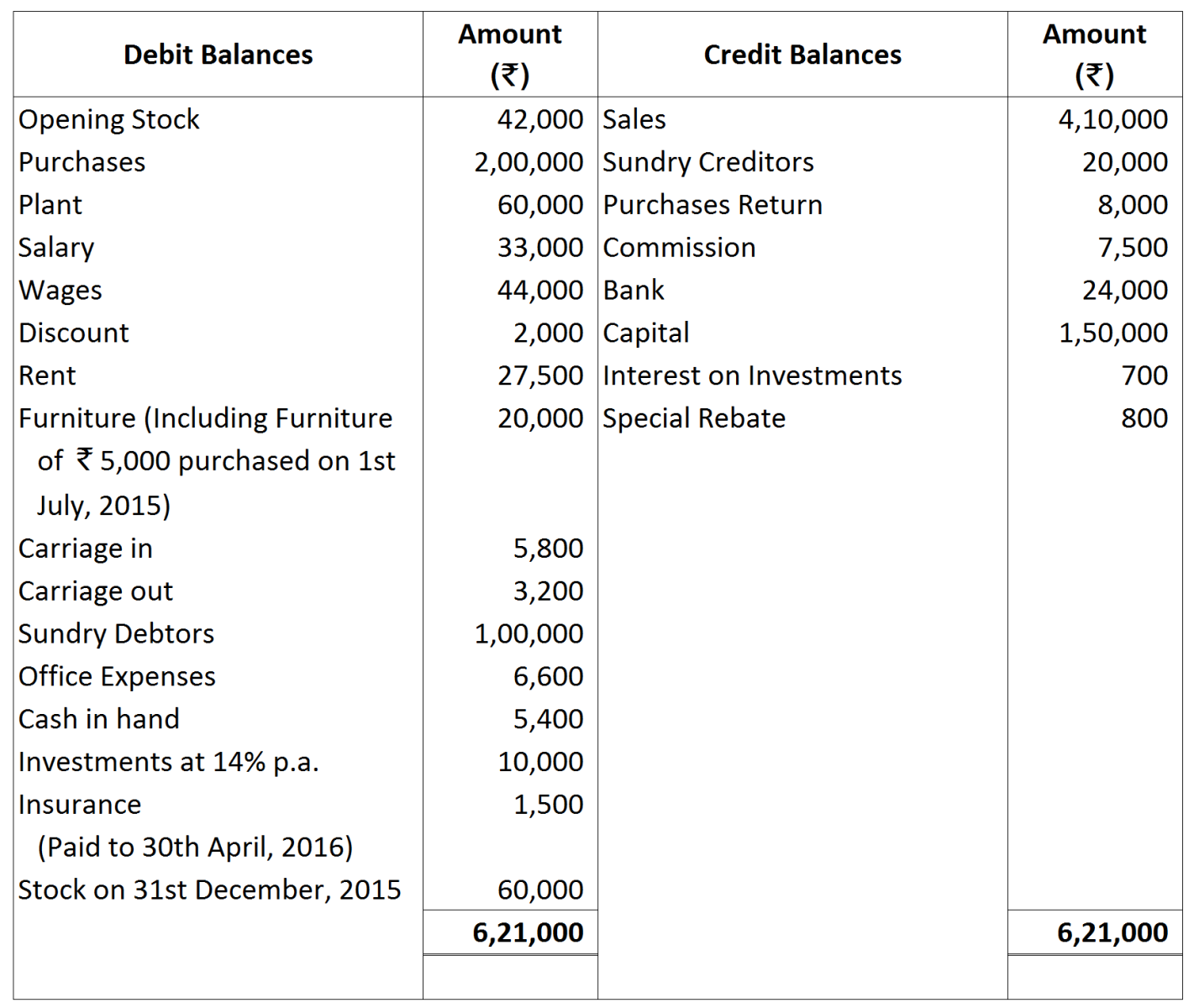
Below is given the Trial Balance of Mr. Ram as at 31st December, 2015. You are required to prepare Trading and Profit & Loss Account and Balance Sheet as at that date.

Adjustments:
  1. Create a provision for Doubtful Debts @ 5% on Debtors and 2% for discount on Debtors.
  2. Provide up-to-date interest on Investments.
  3. Expenses for rent, wages, salaries and office expenses are uniform throughout the year and those for December, 2015 have not been paid.
  4. Depreciate Plant by 10% p.a. and Furniture by 20% p.a.
  5. Unearned Commission ₹ 1,500.
From the following balances, prepare Final Accounts of M/s Raja & Sons for the year ended $31^{st} $March, $2019:$
Salary ₹ $5,400$ Insurance ₹ $2,500$ Cash ₹ $400$ Purchases ₹ $84,170$ Rent Received ₹ $3,150$ Drawings ₹$ 2,100$ Bills Payable ₹ $3,900$ Debtors ₹ $38,080$ Stock ($1^{st} $April, $2018) ₹ 29,500$ Bank Overdraft ₹ $9,700$ Carriage ₹ $2,200$ Creditors ₹ $4,200$ Trade Expenses ₹ $4,900$ Sales Return ₹ $4,700$ Machinery ₹ $12,000$ Wages ₹ $45,000$ Sales ₹ $1,47,200$ Purchases Return ₹ $3,900$ Capital ₹ $58,900$ Closing Stock ($31^{st}$ March, $2019) ₹ 36,200.$
Give the names of different accounting packages.
Why is it necessary to sub-divide a Journal? What are its advantages?
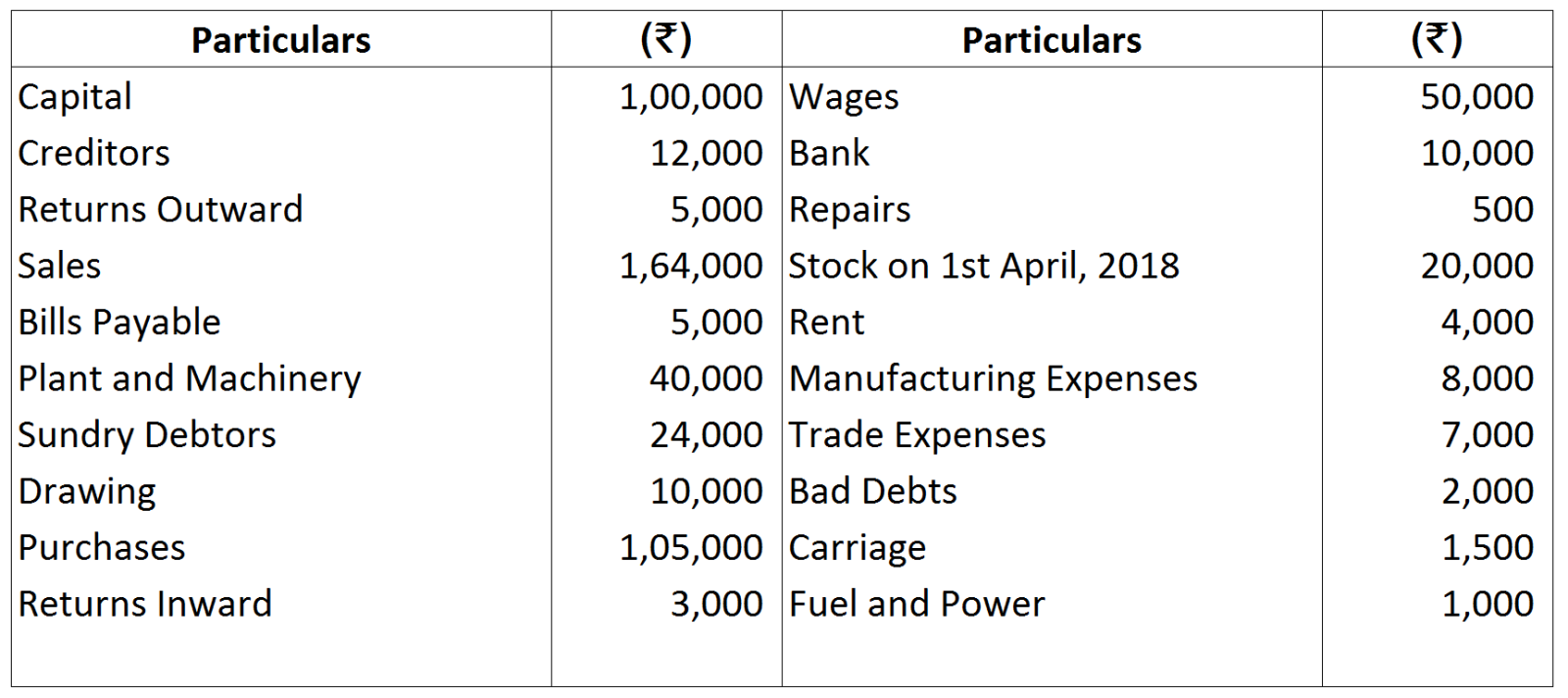
Prepare Trading and Profit and Loss Account and Balance Sheet from the following balance, retating to the year ended 31st march, 2019:

Additional Information:
  1. Closing Stock was valued at ₹ 14,500.
  2. Depreciation Plant and machinery.
  3. Write off Debts ₹ 5,000.
  4. ₹ 400 is due for repairs.
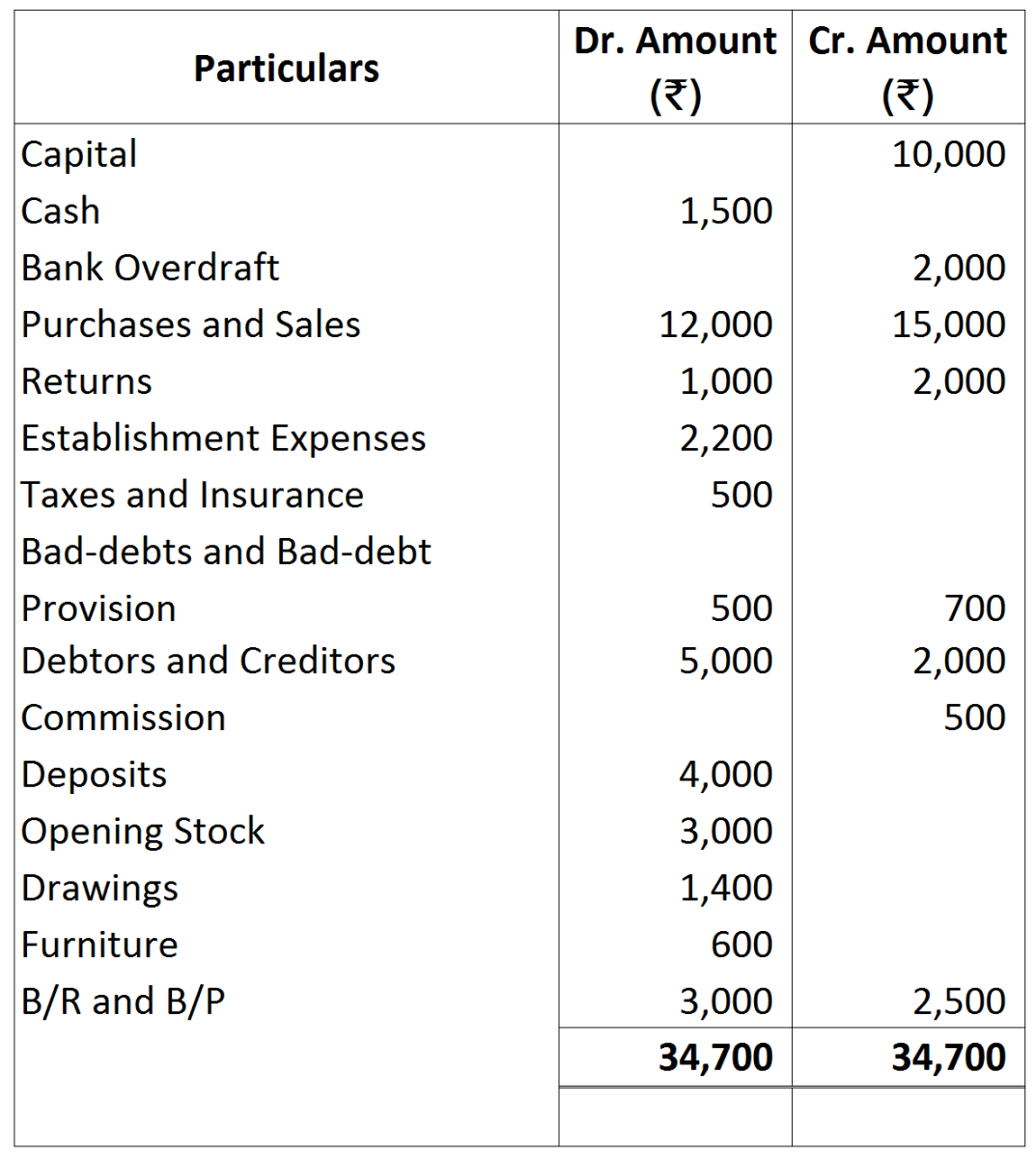
Prepare Trading and Profit & Loss Account for the year ended 31st March, 2017 and Balance Sheet as at that date from the following Trial Balance:

Adjustments:
  1. Salaries ₹ 100 and taxes ₹ 200 are outstanding but insurance ₹ 50 is prepaid.
  2. Commission ₹ 100 is received in advance for next year.
  3. Interest ₹ 210 is to be received on Deposits and Interest on Bank overdraft ₹ 300 is to be paid.
  4. Bad-debts provision is to be maintained at ₹ 1,000 on Debtors.
  5. Depreciate furniture by 10%.
  6. Stock on 31st March, 2017 was valued at ₹ 4,500.