Question

Complete the following giving the structures:
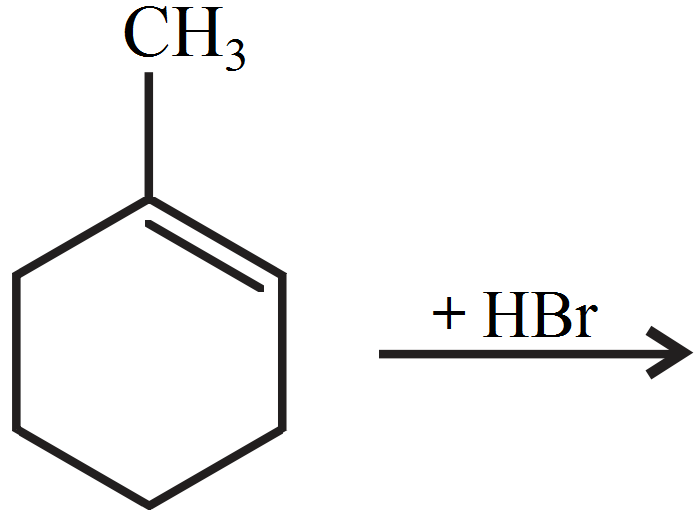
Answer

Get the step-by-step solution for this question inside the Vidyadip app.

Get the answer in the app

Need a full question paper?

Generate a complete, print-ready paper with questions like this in minutes — across 16+ boards, with answer keys.

Start Generating Free

Similar questions

How much electricity will be required to obtain 1.5 gram on copper in 3 hours in an electrolytic cell of aqueous solution of copper sulphate? (Atomic mass of Cu = 63.5 )
What mass of $\text{NaCl} ($molar mass $= 58.5\ g\ mol^{–1})$ must be dissolved in $65\ g$ of water to lower the freezing point by $7.50^\circ C$? The freezing point depression constant, $K_f,$ for water is $1.86\ K \ kg\  mol^{–1}.$ Assume van’t Hoff factor for $\text{NaCl}$ is $1.87.$
[Fe(CN)6]4- and [Fe(H2O)6]2+ are of different colours in dilute solutions. Why?
Write a note on DDT.
How would you account for the following? 
  1. Many of the transition elements are known to form interstitial compounds.
  2. The metallic radii of the third (5d) series of transition metals are virtually the same as those of the corresponding group members of the second (4d) series.
  3. Lanthanoids form primarily +3 ions, while the actinoids usually have higher oxidation states in their compounds, +4 or even +6 being typical.
Explain how does the - OH group attached to a carbon of benzene ring activate it towards electrophilic substitution?
What are Carbohydrates? How are they classified?
$A + 2B \rightarrow 3C + 2D$. The rate of disappearance of $B$ is $1 \times 10^{-2} mol L^{-1}s ^{-1}$ What will be:
  1. Rate of the reaction.
  2. Rate of change in concentration of $A $and $C?$
The Fischer projection of D-Glucose is given alongside.
What happens when L-Glucose is treated with Tollens’ reagent?
  1. Deficiency of which vitamin causes scurvy?
  2. What type of linkage is responsible for the formation of proteins?
  3. Write the product formed when glucose is treated with HI.