MCQ
Conduction electrons are almost uniformly distributed within a conducting plate. When placed in an electrostatic field $\overrightarrow E $, the electric field within the plate
  • Is zero
  • B
    Depends upon $E$
  • C
    Depends upon $\overrightarrow E $
  • D
    Depends upon the atomic number of the conducting element
Answer

Correct option: A.
Is zero
a
(a) Electric field inside a conductor is zero.

Need a full question paper?

Generate a complete, print-ready paper with questions like this in minutes — across 16+ boards, with answer keys.

Start Generating Free

Similar questions

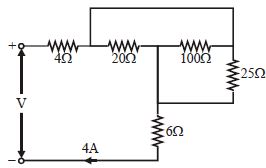
In given circuit find value of ................... $V$
Four equal charges $Q$ are placed at the four corners of a square of each side is $'a'$. Work done in removing a charge $-Q$ from its centre to infinity is
Which of the following spectrum have all the frequencies from high to low frequency range
In the case of a fluid, Bernoulli's theorem expresses the application of the principle of conservation of :
Given below are two statement: one is labelled as Assertion $A$ and the other is labelled as Reason $R.$

Assertion $A:$ $EM$ waves used for optical communication have longer wavelengths than that of microwave, employed in Radar technology.

Reason $R$ : Infrared $EM$ waves are more energetic than microwaves, (used in Radar)

In the light of given statements, choose the correct answer from the options given below:

Two moles a monoatomic gas is mixed with six moles of a diatomic gas. The molar specific heat of the mixture at constant volume is:
A stone thrown upward with a speed $u$ from the top of the tower reaches the ground with a velocity $3u$. The height of the tower is
A thermos flask is polished well
$Assertion :$ A bubble comes from the bottom of a lake to the top.
$Reason :$ Its radius increases.
A rod of length $60 \mathrm{~cm}$ rotates with a uniform angular velocity $20 \mathrm{rad} \mathrm{s}^{-1}$ about its perpendicular bisector, in a uniform magnetic field $0.5 \mathrm{~T}$. The direction of magnetic field is parallel to the axis of rotation. The potential difference between the two ends of the rod is________.$V.$