MCQ
Consider the equilibrium
$
CO(g)+3 H_2(g) \rightleftharpoons CH_4(g)+H_2 O(g)
$
If the pressure applied over the system increases by two fold at constant temperature then
(A) Concentration of reactants and products increases.
(B) Equilibrium will shift in forward direction.
(C) Equilibrium constant increases since concentration of products increases.
(D) Equilibrium constant remains unchanged as concentration of reactants and products remain same.
Choose the correct answer from the options given below :
  • (A) and (B) only
  • B
    (A), (B) and (D) only
  • C
    (B) and (C) only
  • D
    (A), (B) and (C) only

Answer

Correct option: A.
(A) and (B) only
(A) (A) and (B) only

Need a full question paper?

Generate a complete, print-ready paper with questions like this in minutes — across 16+ boards, with answer keys.

Start Generating Free

Similar questions

In the reaction ${C_2}{H_5}CH = C{H_2} + H - X \to $ Product. What is the product
The entropy of a perfectly crystalline solid at absolute zero is
$Z{n^{2 + }}_{(aq) } + 2e\, \to \,Zn_{(s)}.$ This is
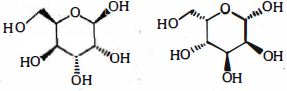
The following compounds differ in respect of 
Polarisability of halide ions increases in the order:
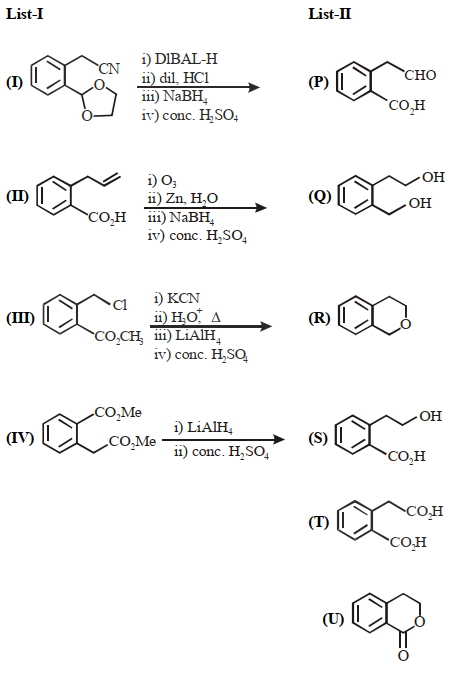
Answer the following by appropriately matching the lists based on the information given in the paragraph $List-I$ includess starting materials and reagents of selected chemical reactions. $List-II$ gives structures of compounds that may be formed as intermediate products and/or final products from the reactions of $List-I$

($1$) Which of the following options has correct combination considering $List-I$ and $List-II$?

$(1) (III), (S), (R)$ $(2) (IV), (Q), (R)$ $(3) (III), (T), (U)$ $(4) (IV), (Q), (U)$

($2$) Which of the following options has correct combination considering $List-I$ and $List-II$?

$(1) (I), (Q), (T), (U)$ $(2) (II), (P), (S), (U)$ $(3) (II), (P), (S), (T)$ $(4) (I), (S), (Q), (R)$

Give the answer quetion ($1$) and ($2$)

Consider the following reaction in a sealed vessel at equilibrium with concentrations of

$ \mathrm{N}_2=3.0 \times 10^{-3} \mathrm{M}, \mathrm{O}_2=4.2 \times 10^{-3} \mathrm{M} \text { and } \mathrm{NO}=2.8 \times 10^{-3} \mathrm{M} . $

$ 2 \mathrm{NO}_{(\mathrm{g})} \rightleftharpoons \mathrm{N}_{2(\mathrm{~g})}+\mathrm{O}_{2(\mathrm{~g})}$

If $0.1 \mathrm{~mol} \mathrm{~L} \mathrm{~L}^{-1}$ of $\mathrm{NO}_{(\mathrm{g})}$ is taken in a closed vessel, what will be degree of dissociation ( $\alpha$ ) of $\mathrm{NO}_{(\mathrm{g})}$ at equilibrium?

Which of the following acids has the smallest dissociation constant
Which of the following conformations of $n-$ butane is the least stable
Which of the following combination does not evolve $Cl_2$ gas?