MCQ
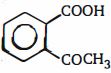
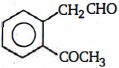
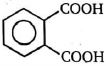
Consider the  following sequence of reactions.

The final product $(B)$ is

  • A

  • B


  • D

Answer

Correct option: C.

c

Need a full question paper?

Generate a complete, print-ready paper with questions like this in minutes — across 16+ boards, with answer keys.

Start Generating Free

Similar questions

Consider two rods of same length and different specific heats $\left(S_{1}, S_{2}\right)$, conductivities $\left(K_{1}, K_{2}\right)$ and area of cross-sections $\left(A_{1}, A_{2}\right)$ and both having temperatures $T_{1}$ and $T_{2}$ at their ends. If rate of loss of heat due to conduction is equal, then
A man inside an artificial satellite feels weightlessness because the force of attraction due to earth is
When light rays are incident on a prism at an angle of $45^o ,$ the minimum deviation is obtained. If refractive index of the material of prism is $\sqrt 2 $, then the angle of prism will be......$^o$
In stationary waves, antinodes are the points where there is
Two light sources are said to be coherent if they are obtained from
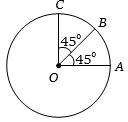
Find the resultant of three vectors $\overrightarrow {OA} ,\,\overrightarrow {OB} $ and $\overrightarrow {OC} $ shown in the following figure. Radius of the circle is $R$.
A body of mass $\mathrm{m}$ is kept on a rough horizontal surface (coefficient of friction $=\mu$ ) A horizontal force is applied on the body, but it does not move. The resultant of normal reaction and the frictional force acting on the object is given by $\mathrm{F},$ where $\mathrm{F}$ is
The potential difference between $A$ and $B$ in the Figure is ................... $\mathrm{V}$
A transverse wave propagating on the string can be described by the equation $y=2 \sin (10 x+300 t)$. where $x$ and $y$ are in metres and $t$ in second. If the vibrating string has linear density of $0.6 \times 10^{-3} \,g / cm$, then the tension in the string is .............. $N$
Two spherical objects each of radii $R$ and masses $m_1$ and $m_2$ are suspended using two strings of equal length $L$ as shown in the figure $(R << L)$. The angle $\theta$ which mass $m_2$ makes with the vertical is approximately