Question
  1. $\text{Cu}|\text{Cu}^{2+}(1\text{M})||\text{Ag}^+(1\text{M})|\text{Ag}$

$\text{E}^0_\frac{\text{Cu}^{2+}}{\text{Cu}}=0.34\text{V}$

$\text{E}^0_\frac{\text{Ag}^+}{\text{Ag}}=+0.80\text{V}$

  1. Write reaction at anode and cathode.
  2. Write net cell reaction.
  3. Calculate e.m.f. of the cell.
  1. What is meant by E.M.F of cell? How is it measured?
Answer

Get the step-by-step solution for this question inside the Vidyadip app.

Get the answer in the app

Need a full question paper?

Generate a complete, print-ready paper with questions like this in minutes — across 16+ boards, with answer keys.

Start Generating Free

Similar questions

Distinguish between a sigma and a pi bond.
Attempt any five of the following:
1. If $Qc < Kc$, when we continuously remove the product, what would be the direction of the reaction?
2. Explain the reason for the extraordinary stability of benzene in spite of the presence of three double bonds in it.
3. What effect does branching of an alkene chain has on its boiling point?
4. Write the IUPAC name:
Image
5. How will you demonstrate that double bonds of benzene are somewhat different from that of olefines?
6. Why do alkynes not show geometrical isomerism?
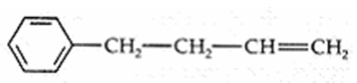
7. Write an IUPAC name:
Image
Explain the important aspects of resonance with reference to the $\text{CO}^{2-}_3$− ion.
Graphically show the total work done in an expansion when the state of an ideal gas is changed reversibly and isothermally from (pi, Vi ) to (pf, Vf ). With the help of a pV plot compare the work done in the above case with that carried out against a constant external pressure pf.
Identify the substance oxidised reduced, oxidising agent and reducing agent for each of the following reactions:

  1. 2AgBr(s) + C6H6O2(aq) → 2Ag(s) + 2HBr(aq) + C6H4O2(aq)

  2. HCHO(l) + 2[Ag(NH3)2]+(aq) + 3OH-(aq) → 2Ag(s) + HCOO-(aq) + 4NH3(aq) + 2H2O(l)

  3. HCHO(l) + 2Cu2+(aq) + 5OH-(aq) → Cu2O(s) + HCOO-(aq) + 3H2O(l)

  4. N2H4(l) + 2H2O2(l) → N2(g) + 4H2O(l)

  5. Pb(s) + PbO2(s) + 2H2SO4(aq) → 2PbSO4(s) + 2H2O(l)

Whenever a reaction between an oxidising agent and a reducing agent is carried out, a compound of lower oxidation state is formed if the reducing agent is in excess and a compound of higher oxidation state is formed if the oxidising agent is in excess. Justify this statement giving three illustrations.
Calculate the degree of ionization of 0.05M acetic acid if its pKa value is 4.74. How is the degree of dissociation affected when its solution also contains (a) 0.01M (b) 0.1M in HCl?
Explain scientific notation in detail.
Equal volumes of 0.002M solutions of sodium iodate and cupric chlorate are mixed together. Will it lead to precipitation of copper iodate? (For cupric iodate Ksp = 7.4 × 10⁻⁸ ).