MCQ
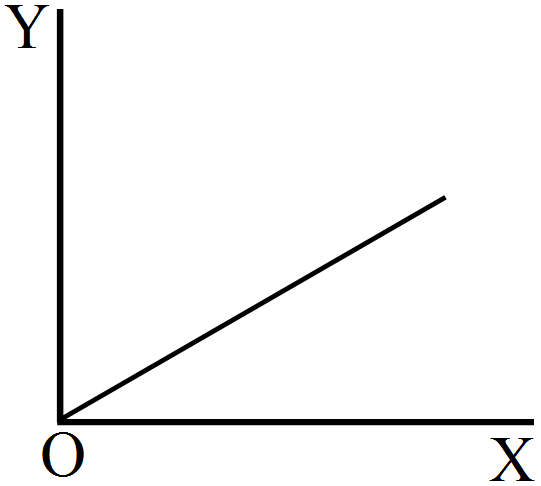
Curie temperature is the temperature above which:
- AA ferromagnetic material becomes paramagnetic.
- BA paramagnetic material becomes diamagnetic.
- CA ferromagnetic material becomes diamagnetic.
- DA paramagnetic material becomes ferromagnetic.
Explanation:
Curie Tempearture is the temperature at which certain materials lose their permanent magnetic properties, to be replaced by induced magnetism. In other words, it is the temperature above which a ferromagnetic material becomes paramagnetic.
Generate a complete, print-ready paper with questions like this in minutes — across 16+ boards, with answer keys.
The S.I. unit of radioactivity is
|
(a) Roentgen |
(b) Rutherford |
(c) Curie |
(d) Becqueral |
A motor having an armature of resistance 2Ω is designed to operate at 220 V mains. At full speed, it develops a back e.m.f. of 210V. When the motor is running at full speed, the current in the armature is
|
(a) 5A |
(b) 105A |
(c) 110A |
(d) 215A |
If q is the charge per unit area on the surface of a conductor, then the electric field intensity at a point on the surface is
|
(a) |
(b) |
|
(c) |
(d) |
The force acting between proton and proton inside the nucleus is
|
(a) Coulombic |
(b) Nuclear |
(c) Both |
(d) None of these |
The difference in the variation of resistance with temperature in a metal and a semiconductor arises essentially due to the difference in the
|
(a) Variation of scattering mechanism with temperature |
|
(b) Crystal structure |
|
(c) Variation of the number of charge carriers with temperature |
|
(d) Type of bon |
In Young's experiment, one slit is covered with a blue filter and the other (slit) with a yellow filter. Then the interference pattern
|
(a) Will be blue |
(b) Will be yellow |
(c) Will be green |
(d) Will not be formed |