Question
Deciduous plants shed their leaves during hot summer or autumn. This process of shedding of leaves is called abscission. Apart from physiological changes, what anatomical mechanism is involved in the abscission of leaves?

Answer

The hormones secreted by plant body influence anatomical changes in it. In the future area of abscission, a special narrow abscission zone develops. It consists of a upper lignified and suberised protective layer. The separation layer consists of unthickened cells where the hydrolysing enzymes develop. Pectinases are secreted out to dissolve middle lamellae. Cellulases bring about hydrolysis of cell walls. Due to this, the separation layer becomes soft and weak. This leads to shedding of leaves from plants.

Need a full question paper?

Generate a complete, print-ready paper with questions like this in minutes — across 16+ boards, with answer keys.
Start Generating Free

Similar questions

Stomach is the right place where hydrochloric acid is required to be secreted in the gastric juice. Describe any three points to justify this statement.
Describe three reasons for the generation of a proton gradient between the lumen of thylakoids and the stroma of chloroplasts.
Explain in brief, the Nitrogen cycle.
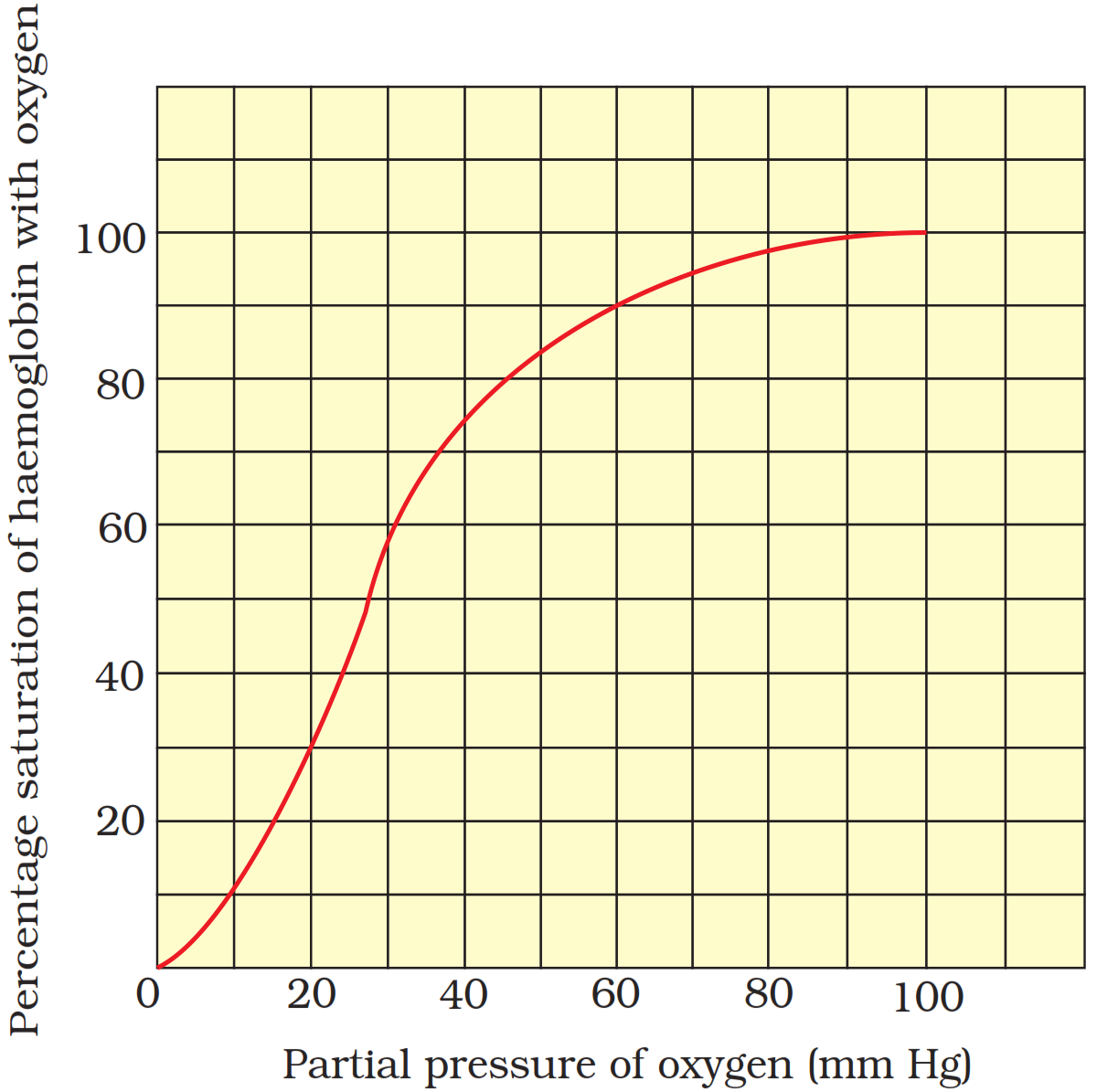
Study the curve given below and answer the questions asked:
  1. What is this curve known as?
  2. What does 'C' depict in the curve?
  3. The effect of which factors can be studied with the help of this curve?
Hairs in the inner lining of the nasal cavity prevent dust from getting inside the lungs. This is similar to which of the following? Why should we avoid breathing through mouth?
  1. Air filters in automobiles prevent dust from getting into the carburetor
  2. A sieve is used to filter out impurities from a substance
Different substrates get oxidized during respiration. How does Respiratory Quotient (RQ) indicate which type of substrate, i.e., carbohydrate, fat or protein is getting oxidized? $\text{R}.\text{Q}=\frac{\text{A}}{\text{B}}$ What do A and B stand for? What type of substrates have R.Q. of 1, < 1 or > 1?
Neha while learning for her test, got confused how aerobic pyruvic acid is transported to mitochondria for further oxidation. She asked her elder sister (who is a graduate in biology) about this and also asked her to explain the same process in detail. Her sister explained her that it gets completely oxidised into $\mathrm{CO}_2$ and water along with the formation of ATP.
  1. Mention the sites in the mitochondria, where these events occur.
  2. What happens to pyruvic acid before it enters 'Krebs' cycle?
  3. Write the summary equation for the 'Krebs' cycle.
  4. Mention the value implicit through Neha's character.
Write a short note on electrocardiogram (ECG).
(i) Write three differences between protein hormones and steroid hormones.
(ii) Draw a labelled diagram depicting the mechanism of hormone action.
What are the difficulties that you would face in classification of animals, if common fundamental features are not taken into account?