Question
  1.  
  1. Define electron gain enthalpy.
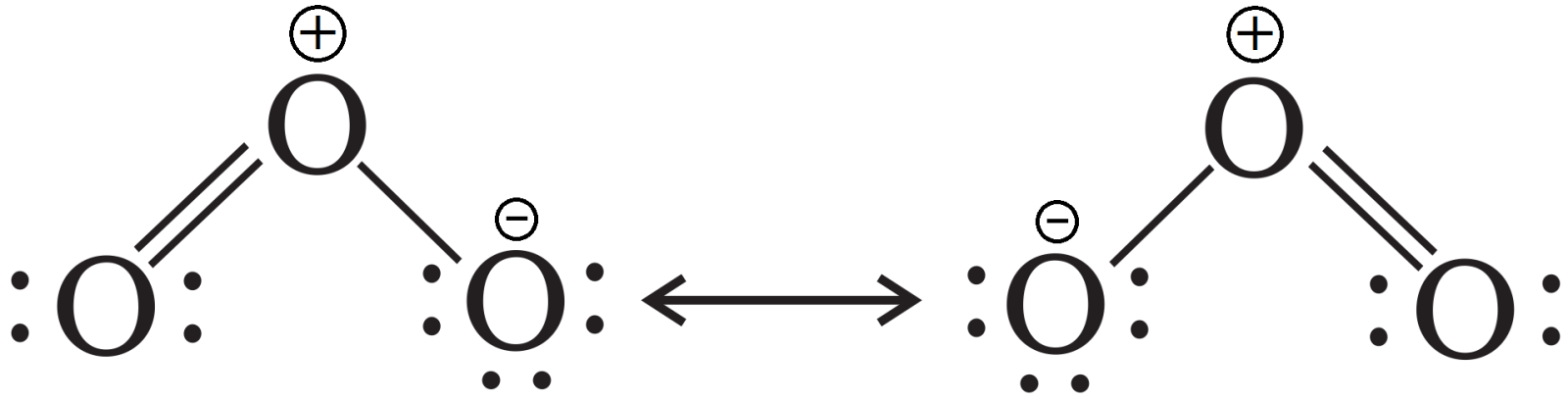
  2. Give the resonance structure of $O_3$.
  1. Give reason:
  1. $He_2$ molecule is not formed.
  2. Ethyl alcohol dissolves in $H_2O$
  3. HF is polar though it possesses covalent bond.
Answer

  1.  
  1. It is defined as energy released when one mole of neutral gaseous atom gains one electron.
  2.  
  1.  
  1. Because its bond order is zero.
$\sigma\text{ls}^2,\ \sigma*\text{ls}^2,\ \text{B.O.}=\frac12(2-2)=0$
  1. Ethyl alcohol can form hydrogen bond with water.
  2. It is due to difference in electronegativity between H and F.

Need a full question paper?

Generate a complete, print-ready paper with questions like this in minutes — across 16+ boards, with answer keys.

Start Generating Free

Similar questions

  1. Why is $+2$ oxidation state of Mn (25) quite stable, while the same is not true for iron (26)?
  2. What is meant by dual nature of electrons? Calculate the energy and wavelength of the photon emitted by hydrogen atom when electron makes a transition from $n = 2$ to $n = 1$. Given that the ionisation potential is $13.6 eV. (1eV = 1.6 \times 10^{-19}J)$.
What are significant figures? State rules to determine it.
What are electron deficient compounds? Are $\mathrm{BCl}_3$ and $\mathrm{SiCl}_4$ electron deficient species? Explain.
How much energy is required to ionise a H atom if the electron occupies n = 5 orbit? Compare your answer with the ionization enthalpy of H atom (energy required to remove the electron from n = 1 orbit).
On the basis of VSEPR theory, compare the geometries of molecules of types $AB _2 E , AB _3 E$, $AB _2 E _2, AB _4 E , AB _3 E _2, AB _5 E$ and $AB _4 E _2$ with various examples. (Here $E =$ lone electron pair)
The diameter of zinc atom is 2.6 $\mathring{\text{A}}$.Calculate,
  1. Radius of zinc atom in pm
  2. Number of atoms present in a length of 1.6cm if the zinc atoms are arranged side by side lengthwise.
What is overlapping of atomic orbitals? How many types are there? Discuss in detail.
When an electric discharge is passed through hydrogen gas, the hydrogen molecules dissociate to produce excited hydrogen atoms. These excited atoms emit electromagnetic radiation of discrete frequencies which can be given by the general formula.
$\bar{\text{v}}=109677\frac{1}{\text{n}^2_\text{i}}-\frac{1}{\text{n}_\text{f}^2}$
What points of Bohr’s model of an atom can be used to arrive at this formula? Based on these points derive the above formula giving description of each step and each term.
Group the following in linear and non-linear molecules: $\mathrm{H}_2 \mathrm{O}, \mathrm{HOCl}, \mathrm{BeCl}_2 \mathrm{Cl}_2 \mathrm{O}$
Give the laws for IUPAC nomenclature of organic compounds have multiple groups and give examples.