Question
Define Single Entry System. What are the defects of this system?

Answer

Accounting records that are not maintained according to Double Entry System are known as Accounts from Incomplete Records or Single Entry System of Accounting.
Kohler defines Single Entry System as, “A system of book keeping in which as a rule only records of cash and of personal accounts are maintained, it is always incomplete double entry varying with the circumstances."
Single Entry System is an incomplete and insufficient system of information, hence it has the following disadvantages:
  1. Arithmetical Accuracy cannot be Proved: Trial Balance cannot be prepared hence, arithmetical accuracy of books cannot be proved or tested. Chances of error, mischief or fraud remaining undetected are high.
  2. No Control on Assets: Since assets accounts are not maintained, it is difficult to keep full control, in order to avoid misappropriations of assets.
  3. Correct Profit or Loss cannot be Determined: Trading and Profit and Loss Account cannot be prepared hence, correct profit earned or loss incurred during the accounting period cannot be determined.
  4. Financial Position of the Business cannot be Assessed: In the absence of assets accounts, it is difficult to determine correct financial position of the business on any particular day by preparing a Balance Sheet.
  5. No Internal Check: Since internal check is not possible, the method leaves room for errors and frauds, besides their detection becomes difficult.
  6. Difficult to Ascertain the Value of Business: The records being inadequate, it is difficult to value the business, especially goodwill.
  7. Incomplete and Unscientific System: This system is incomplete and unscientific as both the aspects of a transaction are not recorded and no set rules are followed for recording them.
  8. Comparative Study is Difficult: A major defect of this system is that the financial position of the current year cannot be compared with that of the previous year due to incomplete information of transactions of business.

Need a full question paper?

Generate a complete, print-ready paper with questions like this in minutes — across 16+ boards, with answer keys.
Start Generating Free

Similar questions

State three points of difference between Statement of Affairs and Balance Sheet.
Modern Ltd. purchased a machinery on 1st August, 2016 for ₹ 60,000. On 1st October, 2017, it purchased another machine for ₹ 20,000 plus CGST and SGST @ 6% each. On 30th June, 2018, it sold the first machine purchased in 2016 for ₹ 38,500 charging IGST @ 12%. Depreciation is provided @ 20% p.a. on the original cost each year. Accounts are closed on 31st March every year. Prepare the Machinery Account for three years.
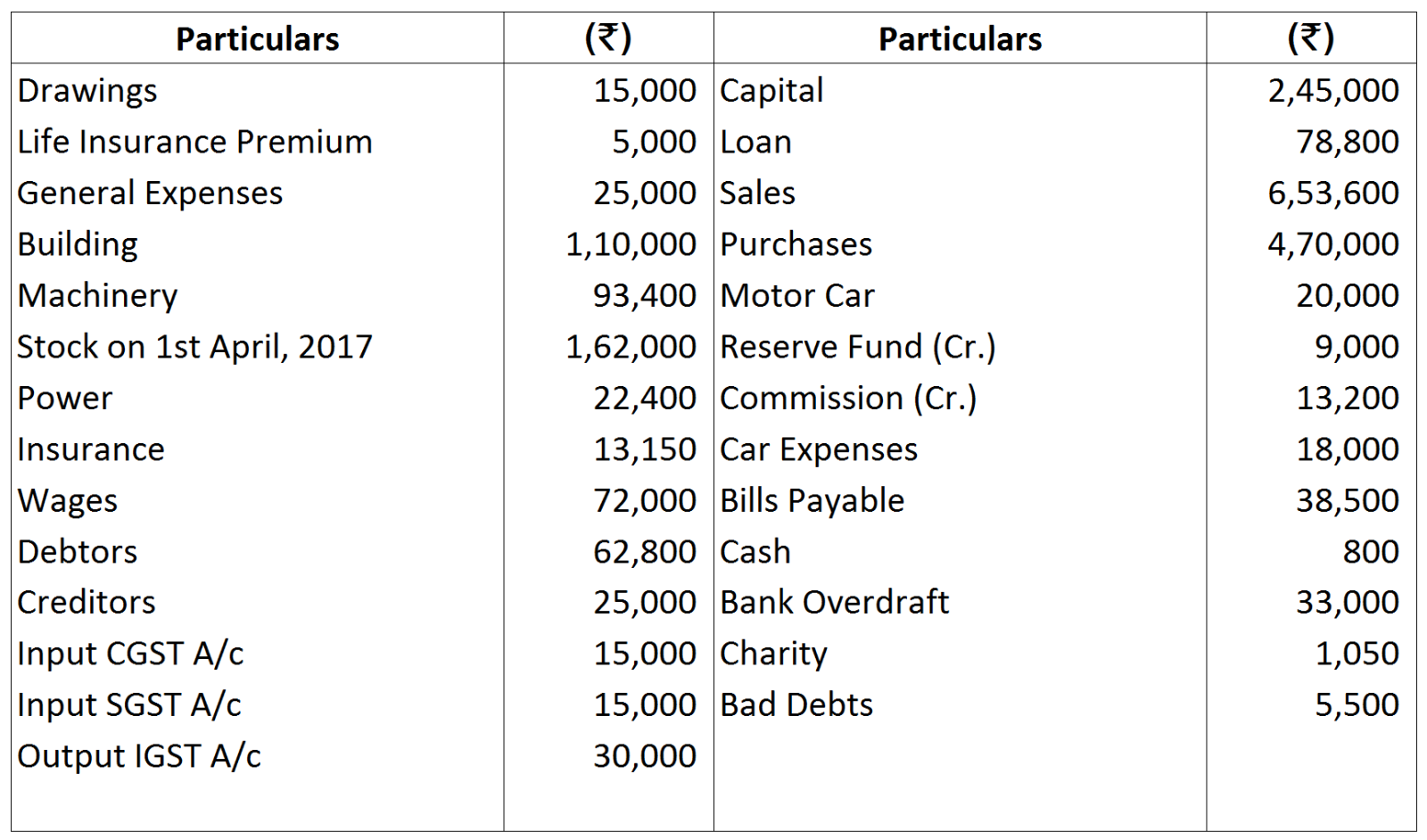
From the following balances taken from the books of Hari & Co., prepare Trading and Profit and Loss Account for the year ended $31^{st}$​​​​​​​ March,$ 2019:$ and Balance Sheet as at that date:

Closing Stock was valued at ₹ 1,82,100.
Pass the rectifying entries for the following:
  1. Sales of goods ₹ 6,000 to Madan were recorded as ₹ 600 in the Sales Book.
  2. Credit purchase of goods from Mohan amounting to ₹ 2,000 has been wrongly passed through the Sales Book.
  3. Return of goods worth ₹ 500 by a customer was entered in ‘Purchases Return Book’.
  4. Cheque of ₹ 400 received from Ranjan was dishonoured and debited to the Discount Account.
  5. Bill for ₹ 820 received from Ramesh for repair of machinery was entered in the Purchases Book as ₹ 720.
Give any three limitations of Computer System.
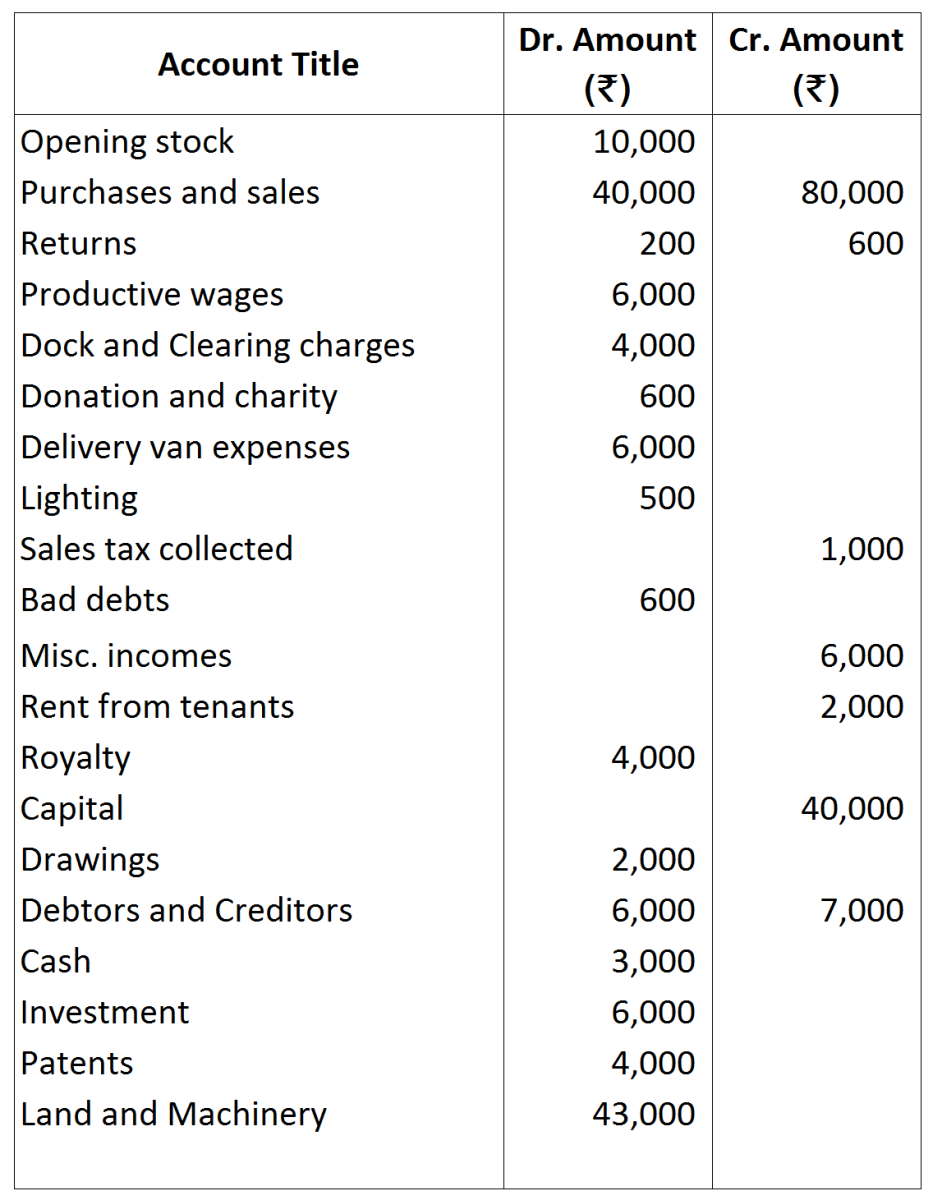
The following is the trial balance of Manju Chawla on March 31, 2017. You are required to prepare trading and profit and loss account and a balance sheet as on date:

Closing stock ₹ 2,000.
Cash Book shows a balance of ₹ 12,500. On comparing the Cash Book with the Pass Book, following discrepancies were noted:
 
 
(i)
Cheques issued but not yet presented for payment.
6,000
(ii)
Cheques deposited in the bank but not collected.
9,000
(iii)
Bank paid insurance premium.
5,000
(iv)
Bank charges.
300
(v)
Directly deposited by a customer.
8,000
(vi)
Interest on investment collected by bank.
2,000
(vii)
Cash discount allowed of ₹ 200 was recorded on the debit side of the Bank column.
 
Prepare Bank Reconciliation Statement.
State briefly the necessity of providing Depreciation.
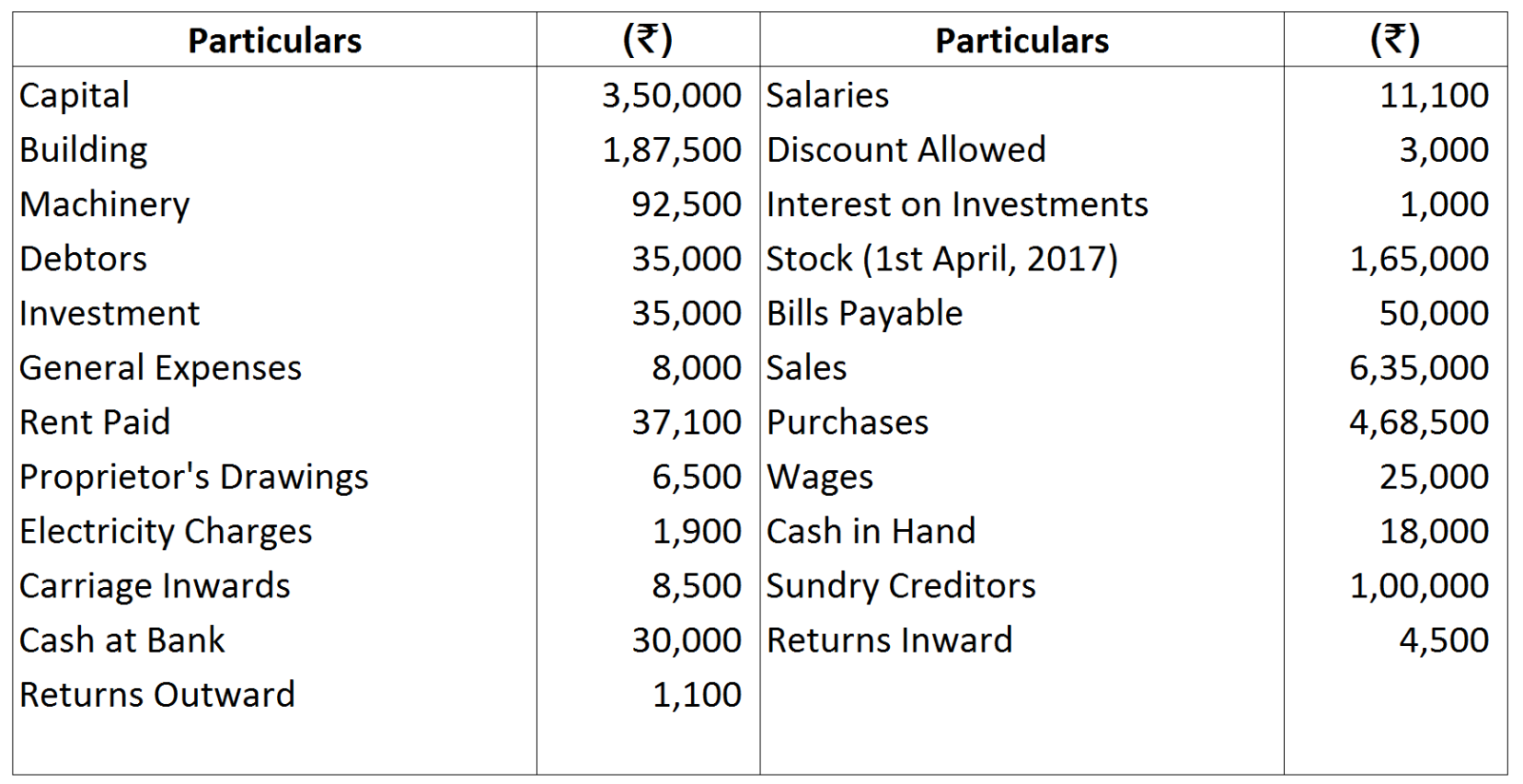
The following balances were extracted from the books of Harish Chandra on $31^{st}$ March, $2019:$

Stock on $31^{st}$ March,$ 2019$ was valued at $₹ 2,35,000.$
Prepare final accounts for the year ended $31^{st}$ March, $2019.$
  1. What are the different causes that make a Trial Balance incorrect?
  2. Pass the rectifying Journal entries:
  1. A credit sale of goods for ₹ 2,500 to Krishna has been wrongly passed through the Purchases Book.
  2. ₹ 5,000 paid for freight on machinery purchased was debited to the Freight Account as ₹ 500.
  3. The Returns Inward Book has been wrongly overcasted by ₹ 100.
  4. An amount of ₹ 500 due from Ramesh which had been written off as bad debt in previous year was recovered and had been posted to the Personal Account of Ramesh.
  5. A sum of ₹ 460 owed by Hari had not been included in the list of debtors.