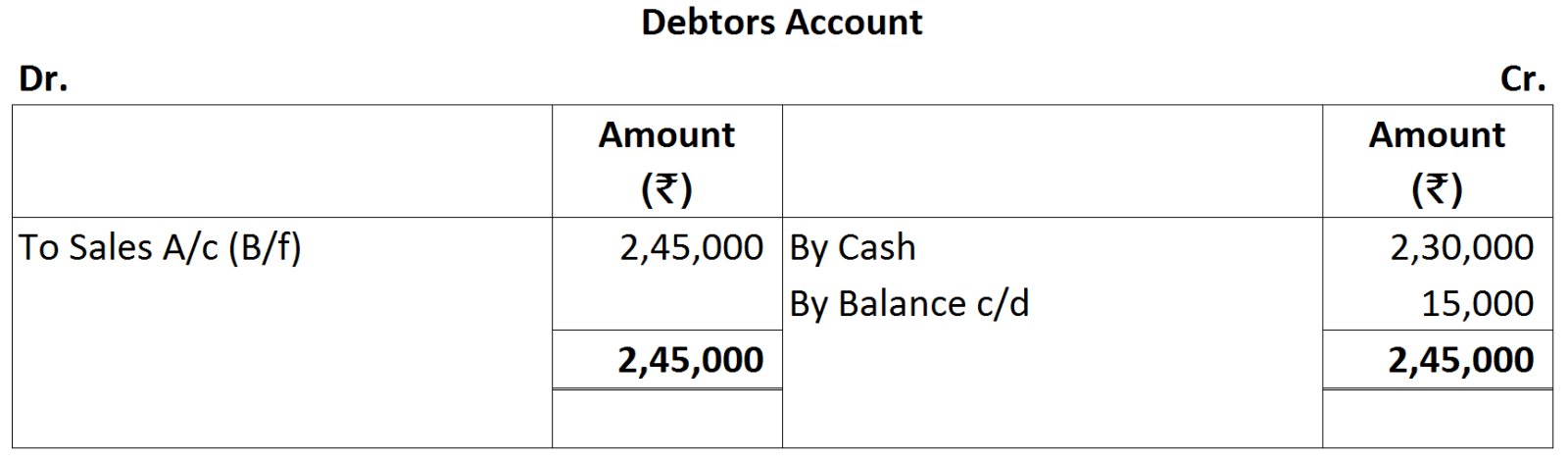
Questions

6 Marks Question

🎯

Test yourself on this topic

21 questions · timed · auto-graded

Question 16 Marks
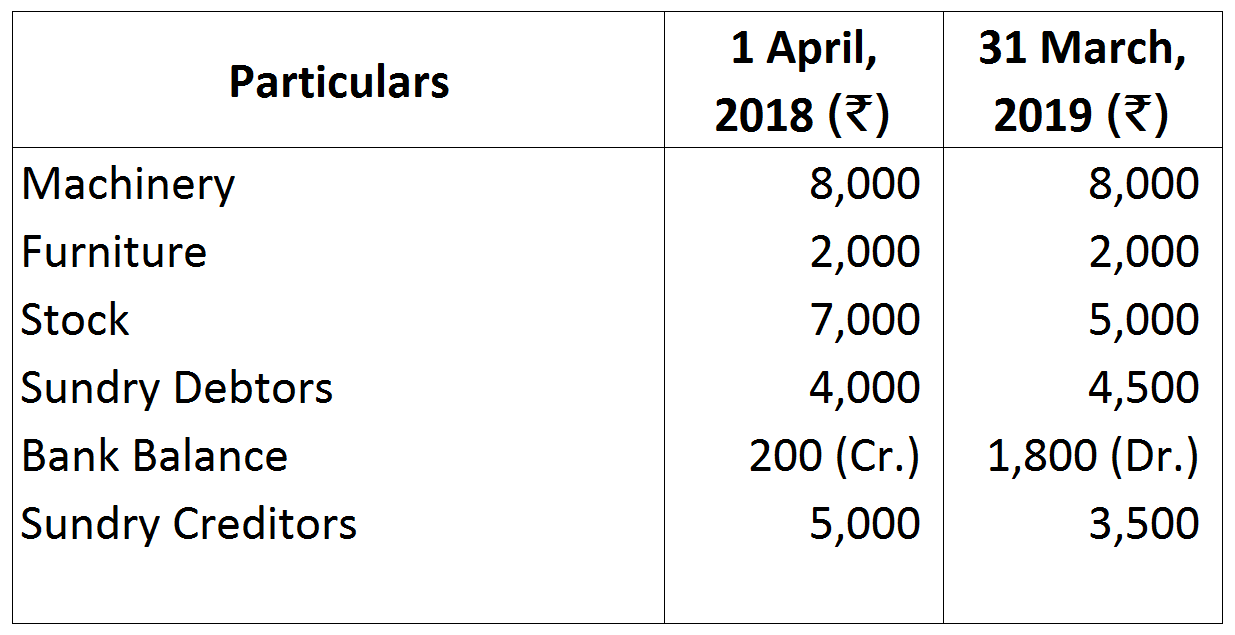
Hari maintains his books of account on Single Entry System. His books provide the following information:
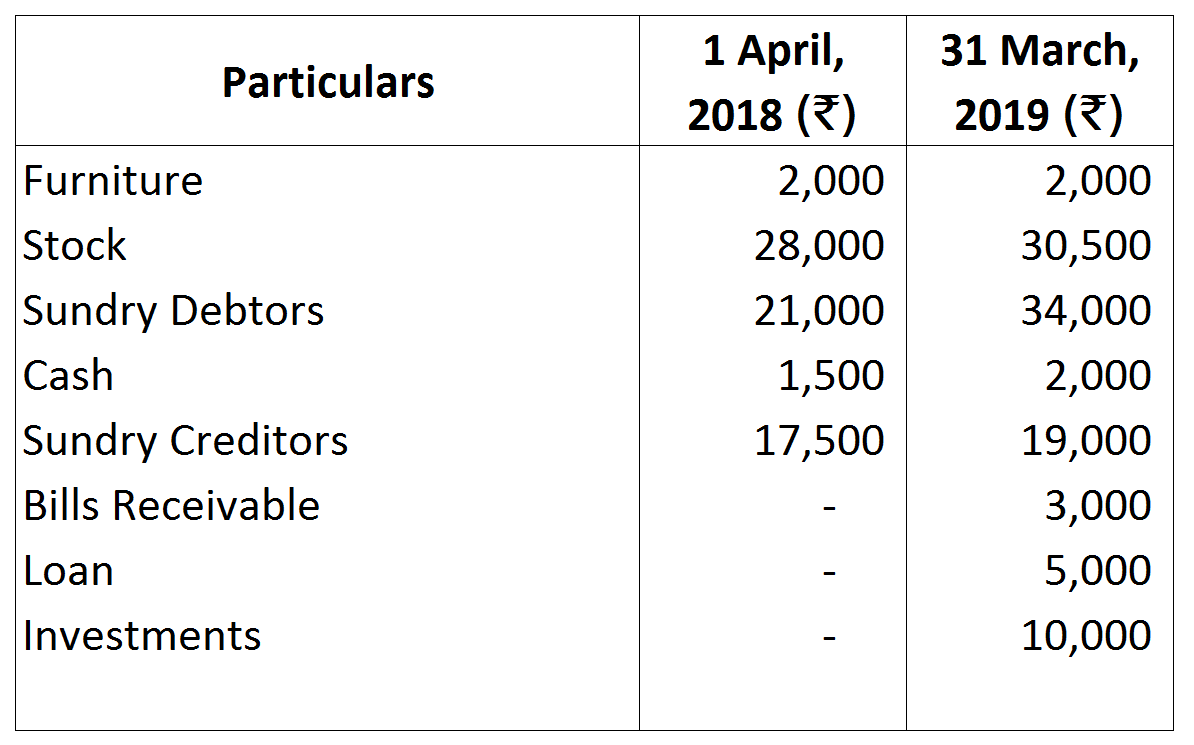
His drawings during the year were ₹ 5,000 Depreciate furniture by 10% and provide a reserve for Bad and Doubtful Debts at 10% on Sundry Debtors. Prepare the statement showing the profits for the year.
View full question & answer
Question 26 Marks
Krishan started his business on 1st April, 2018 with a Capital of ₹ 1,00,000. On 31st March, 2019, his assets were:
 
Cash 3,200
Stock 34,800
Debtors 31,000
Plant 85,000
He owed ₹ 12,000 to sundry creditors and ₹ 10,000 to his brother on that date. He withdrew ₹ 2,000 per month for his personal expenses. Ascertain his profit.
View full question & answer
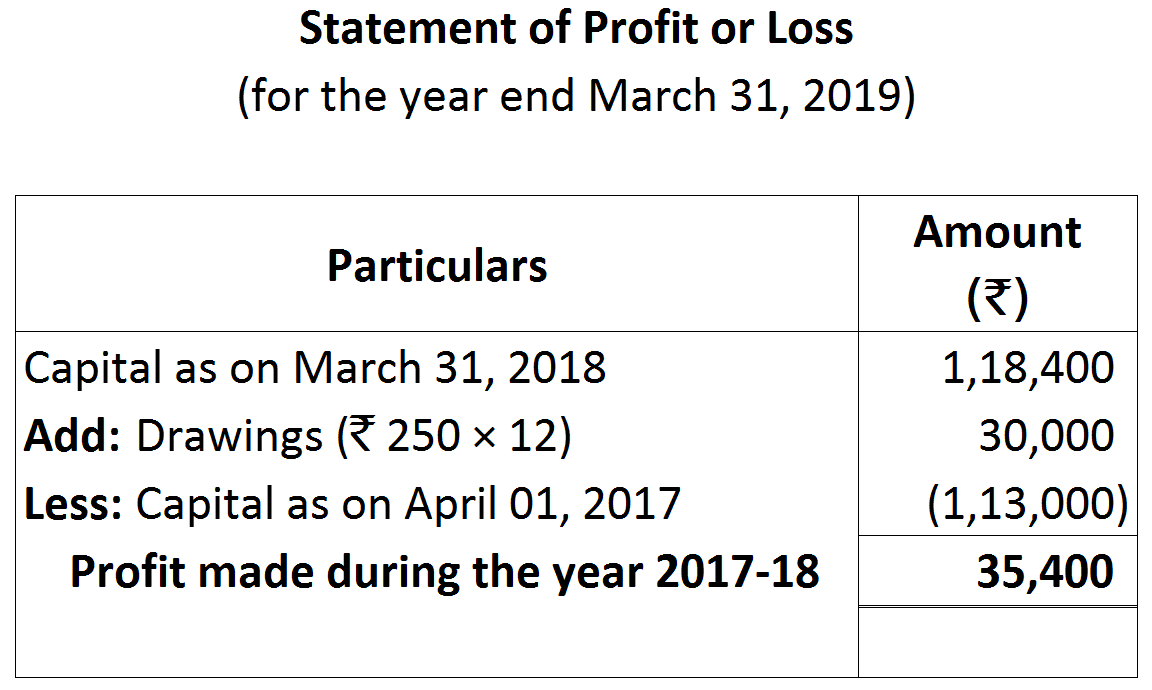
Question 36 Marks
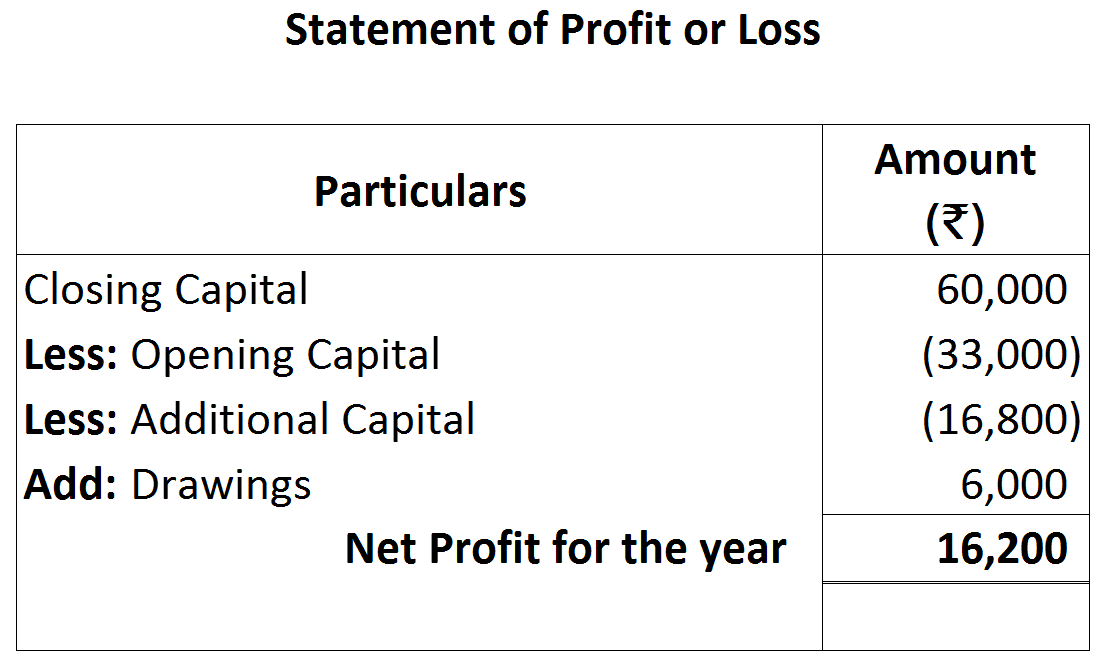
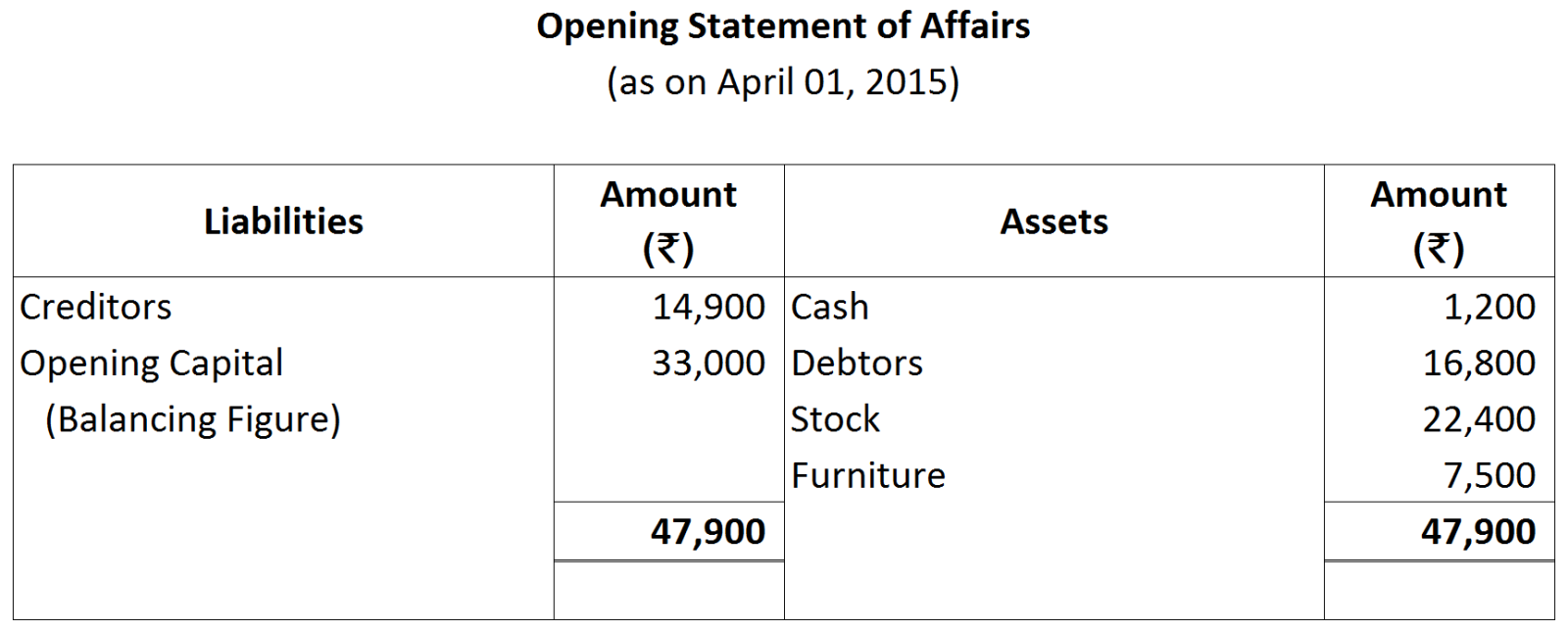
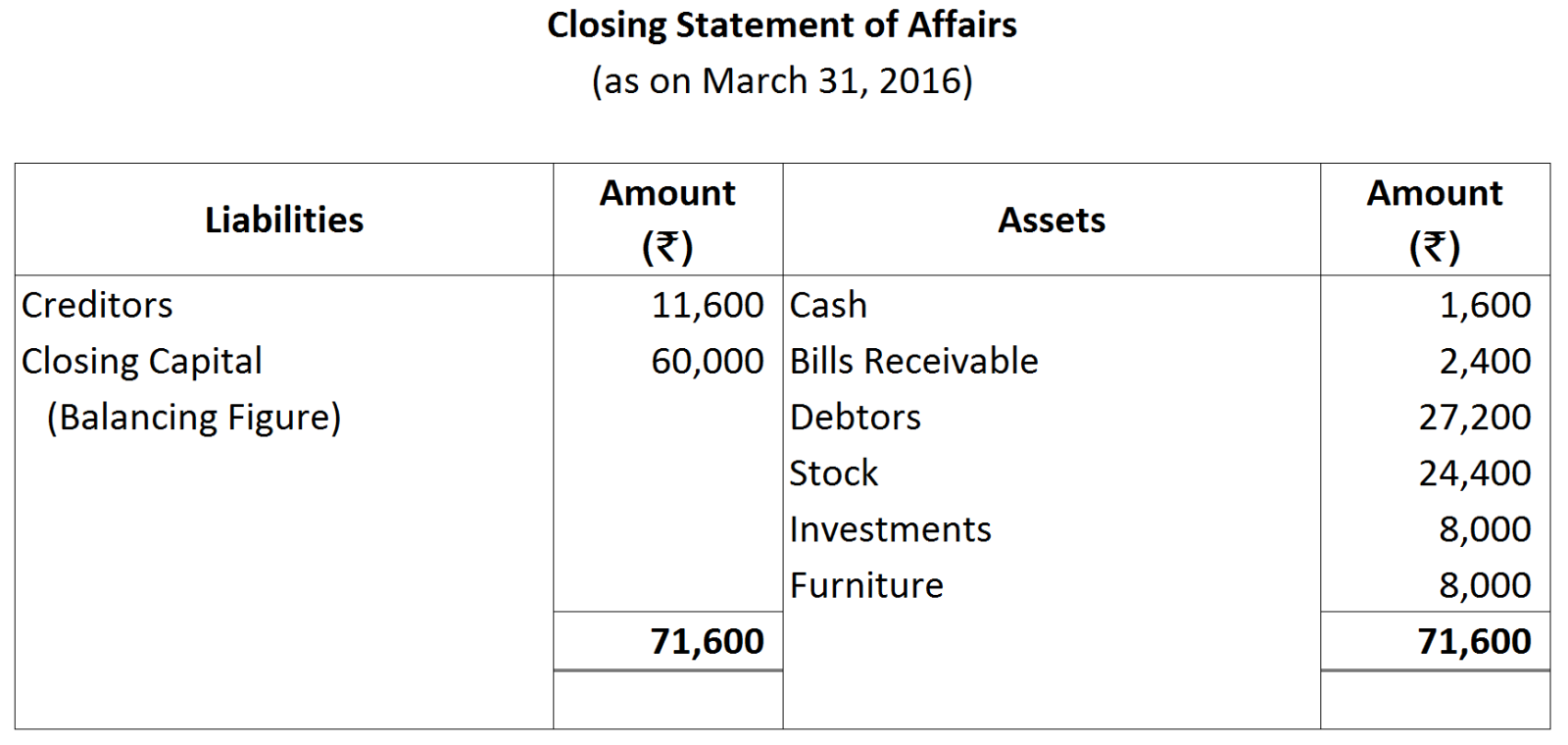
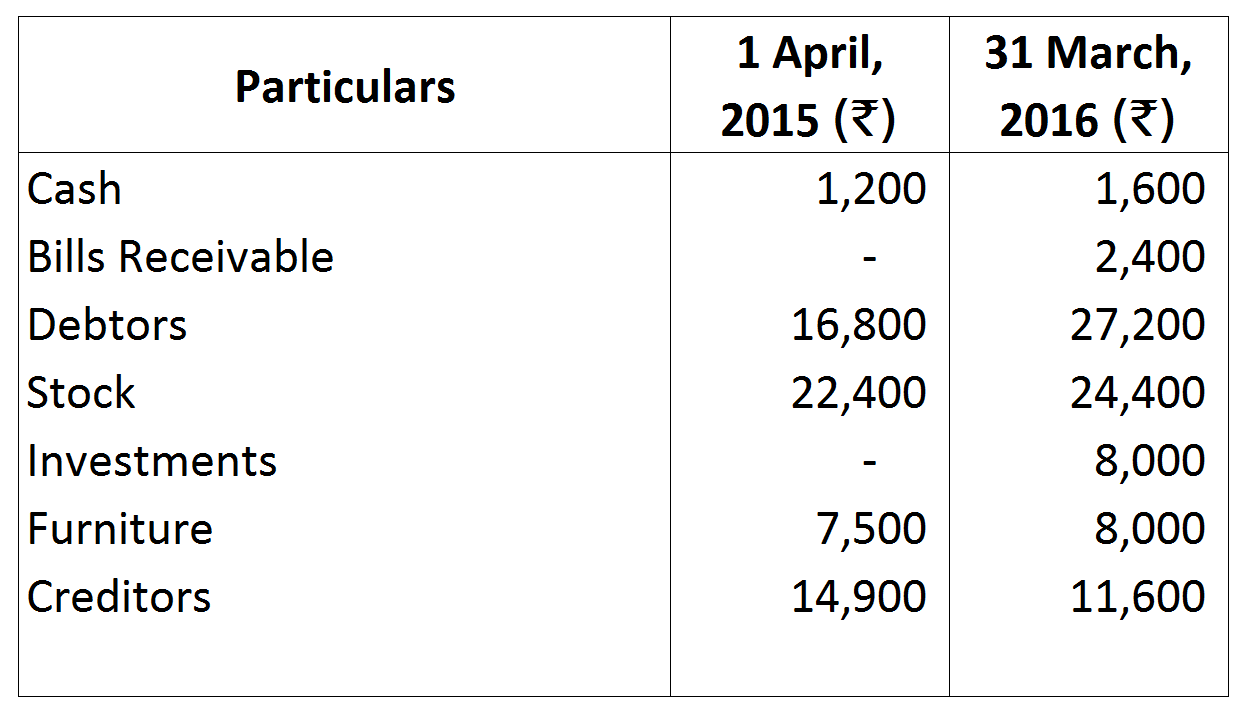
Shruti maintains her books of account from Incomplete Records. Her books provide the following information:
She withdrew ₹ 500 per month for personal expenses. She sold her Investments of ₹ 16,000 at 5% premium and introduced the amount into business.
You are required to prepare a Statement of Profit or Loss for the year ending 31st March, 2016.
Answer

Working Notes:

View full question & answer
Question 46 Marks
What is a Statement of Affairs? How does it differ from the Balance Sheet?
Answer
A Statement of Affairs is a statement of assets and liabilities. Difference between the amounts of the two sides is taken as capital.
Under the Single Entry System, it is necessary to prepare Statement of Affairs at the end of the year and also in the beginning of the year, if not already prepared to determine profit. Statement of Affairs like Balance Sheet, has two sides-right-hand side for Assets and left-hand side for Liabilities. The difference between the total of assets and liabilities is capital.
Capital = Total Assets - Liabilities
Difference between Balance Sheet and Statement of Affairs:
 
Basis
Balance Sheet
Statement of Affairs
1
Objective
The main objective of preparing Balance Sheet is to know about the financial position of the business.
The main objective of preparing Statement of Affairs is to know about capital at a point of time.
2
Accounting System
Balance Sheet is prepared when accounts are maintained under Double Entry System.
Statement of Affairs is prepared when accounts are maintained under Single Entry System.
3
Accounts and Information
This is prepared exclusively on the basis of ledger accounts.
In view of incomplete accounts, its preparation is based on limited accounts, calculations, estimates and other information.
View full question & answer
Question 56 Marks
A commenced business on 1st April, 2018 with a capital of ₹ 10,000. He immediately bought Furniture and Fixtures for ₹ 2,000. On 1st October, 2018, he borrowed ₹ 5,000 from his wife @ 9% p.a. (interest not yet paid) and introduced a further capital of his own amounting to ₹ 1,500. A drew @ ₹ 300 per month at the end of each month for household expenses. On 31st March, 2019 his position was as follows:
Cash in Hand ₹ 2,800; Sundry Debtors ₹ 4,800; Stock ₹ 6,800; Bills Receivable ₹ 1,600; Sundry Creditors ₹ 500 and owing for Rent ₹ 150. Furniture and Fixtures to be depreciated by 10%.
Ascertain the profit or loss made by A during 2018-19.
View full question & answer
Question 66 Marks
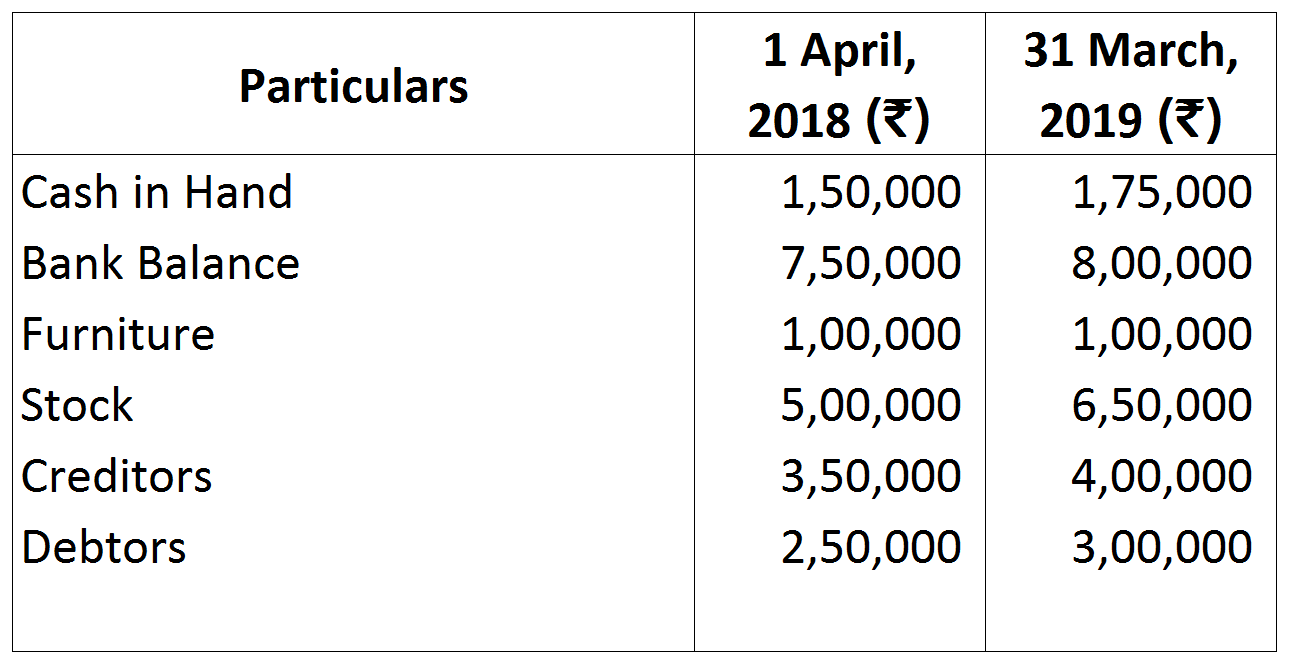
Ram Prashad keeps his books on Single Entry System and from them and the particulars supplied, the following figures were gathered together on 31st March, 2019:
Book Debts ₹ 10,000; Cash in Hand ₹ 510; Stock-in-Trade (estimated) ₹ 6,000; Furniture and Fittings ₹ 1,200; Trade Creditors ₹ 4,000; Bank Overdraft ₹ 1,000; Ram Prashad stated that he started business on 1st April, 2018 with cash ₹ 6000 paid into bank but stocks valued at ₹ 4,000. During the year he estimated his drawings to be ₹ 2,400. You are required to prepare the statement, showing the profit for the year, after writing off 10% for Depreciation on Furniture and Fittings.
View full question & answer
Question 76 Marks
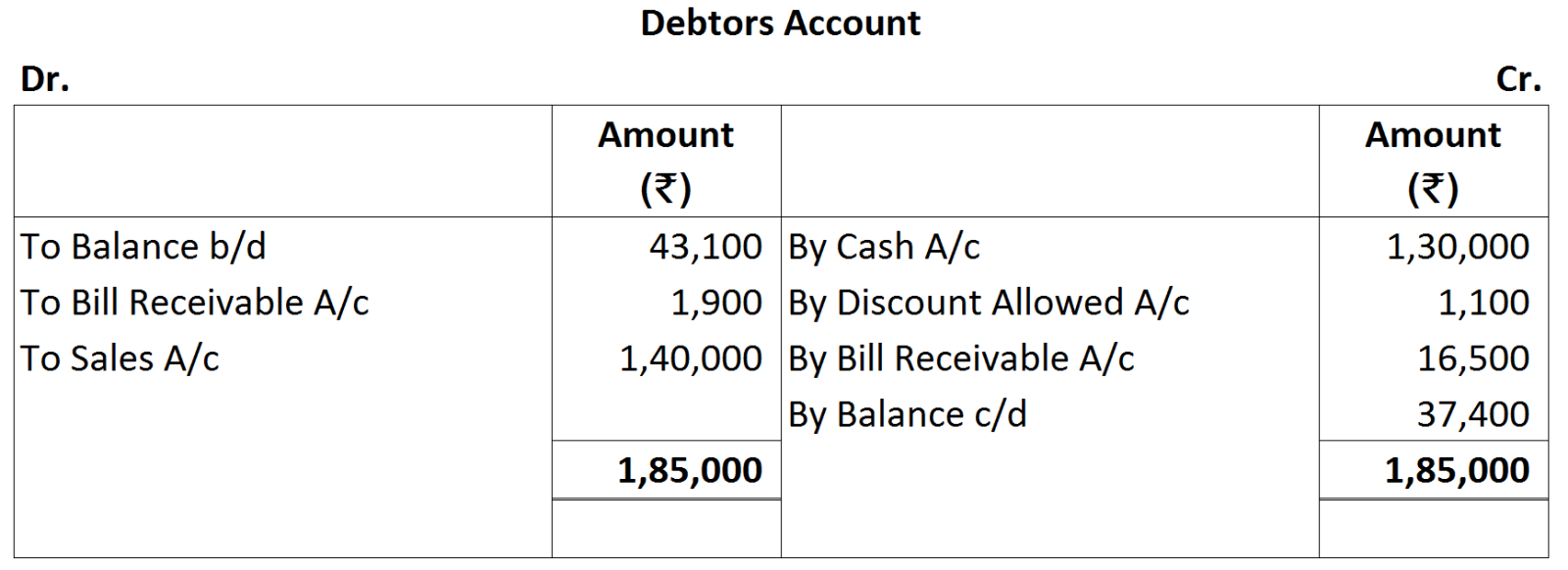
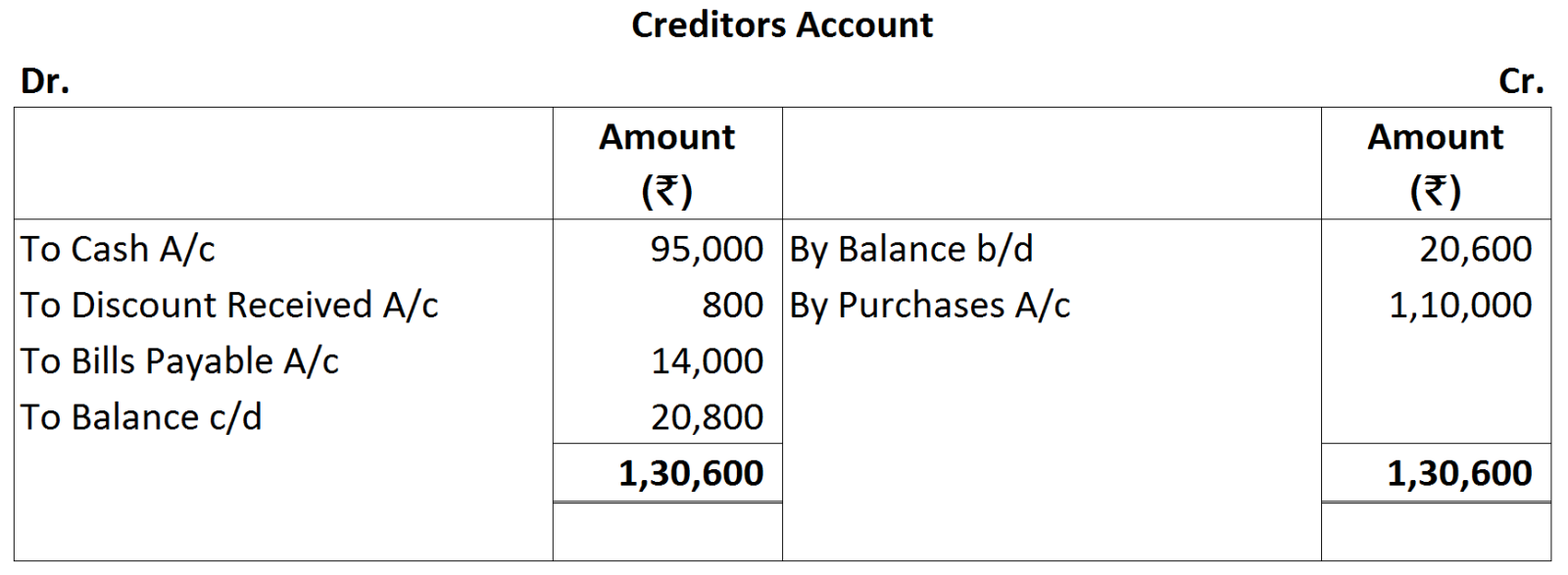
From the following information, ascertain the opening balance of Sundry Debtors and the closing balance of Sundry Creditors:
 
Sundry Creditors as on 31st March, 2017 20,600
Sundry Debtors as on 31st March, 2018 37,400
Stock as on 31st March, 2017 26,000
Stock as on 31st March, 2018 24,000
During the year ended 31st March, 2018:
Purchases 1,10,000
Discount allowed by creditors 800
Discount allowed to customers 1,100
Cash paid to sundry creditors 95,000
Bills Payable issued by them 14,000
Bills Receivable received from customers 16,500
Cash received from customers 1,30,000
Bills receivable dishonoured 1,900
Answer

Cost of Goods Sold = Opening Stock + Purchases - Closing Stock
Cost of Goods Sold = 26,000 + 1,10,000 - 24,000 = 1,12,000
Gross Profit $=\frac{30}{70}\times1,12,000=₹ \ 48,000$
Sales = Cost of Goods Sold + Gross Profit
Sales = 1,12,000 + 48,000 = ₹ 1,60,000
Credit Sales = 1,60,000 - 20,000 = ₹ 1,40,000
View full question & answer
Question 86 Marks
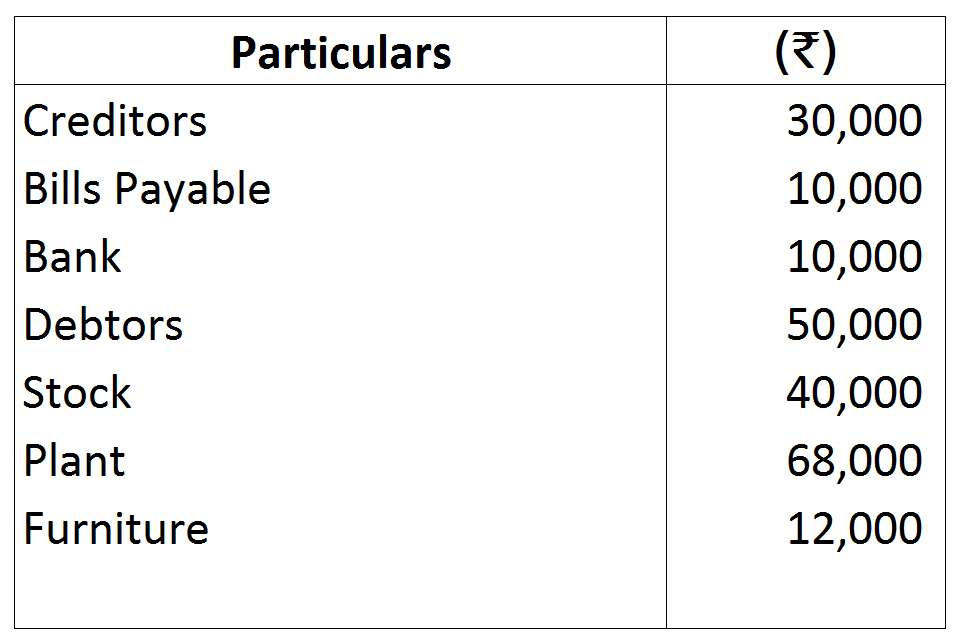
On 1st April, 2018, X started a business with ₹ 40,000 as his capital. On 31st March, 2019, his position was as follows:
During the year 2018-19, X drew ₹ 24,000. On 1st October, 2018, he introduced further capital amounting to ₹ 30,000. You are required to ascertain profit or loss made by him during the year 2018-19. Adjustments:
  1. Plant is to be depreciated at 10%.
  2. A provision of 5% is to be made against debtors.
Also prepare the Statement of Affairs as on 31st March, 2019.
View full question & answer
Question 96 Marks
From the following information relating to the business of Abhay who keeps books on Single Entry System, ascertain the profit or loss for the year 2018-19:
Abhay withdrew ₹ 4,100 during the year to meet his household expenses. He introduced ₹ 300 as fresh capital on 15th January, 2019. Machinery and Furniture are to be depreciated at 10% and 5% p.a. respectively.
View full question & answer
Question 106 Marks
Manu started business with a capital of ₹ 4,00,000 on 1st October, 2005. He borrowed from his friend a sum of ₹ 1,00,000. He brought further ₹ 75,000 as capital on 31st March, 2006, his position was:
Cash: ₹ 30,000; Stock: ₹ 4,70,000; Debtors: ₹ 3,50,000 and Creditors: ₹ 3,00,000.
He withdrew ₹ 8,000 per month during this period. Calculate profit on loss for the period.
View full question & answer
Question 116 Marks
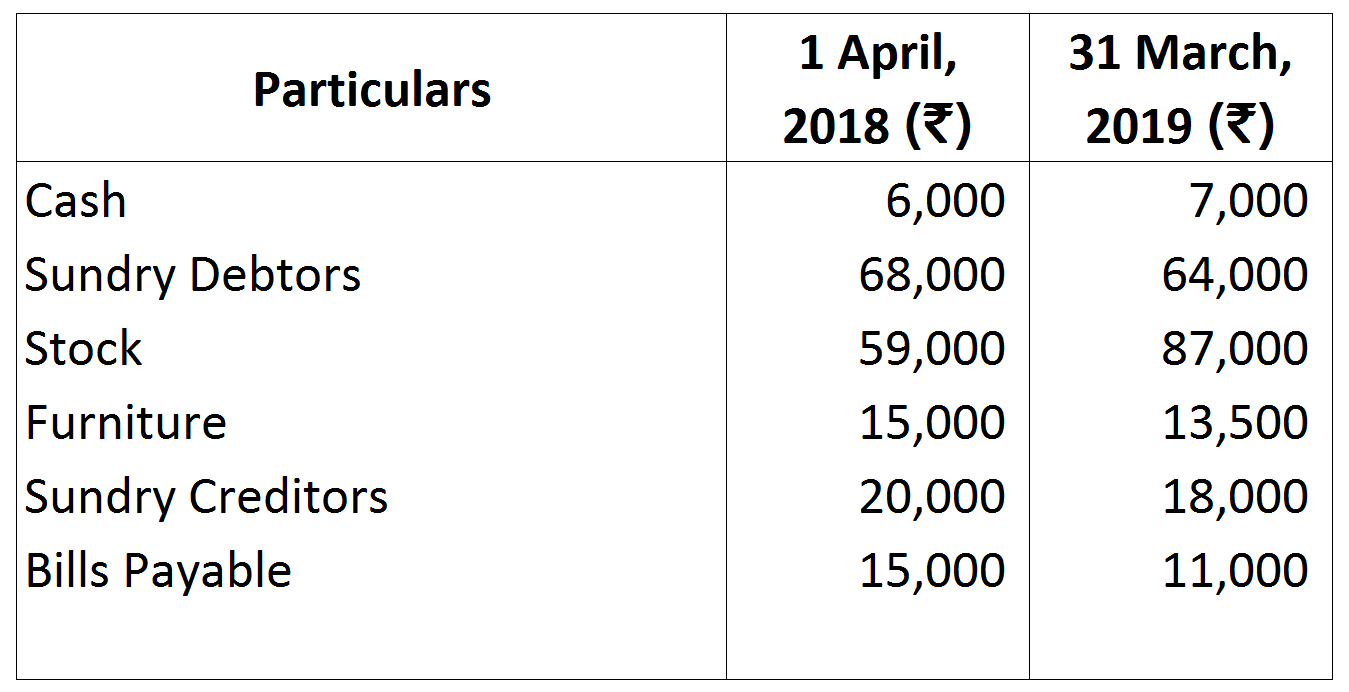
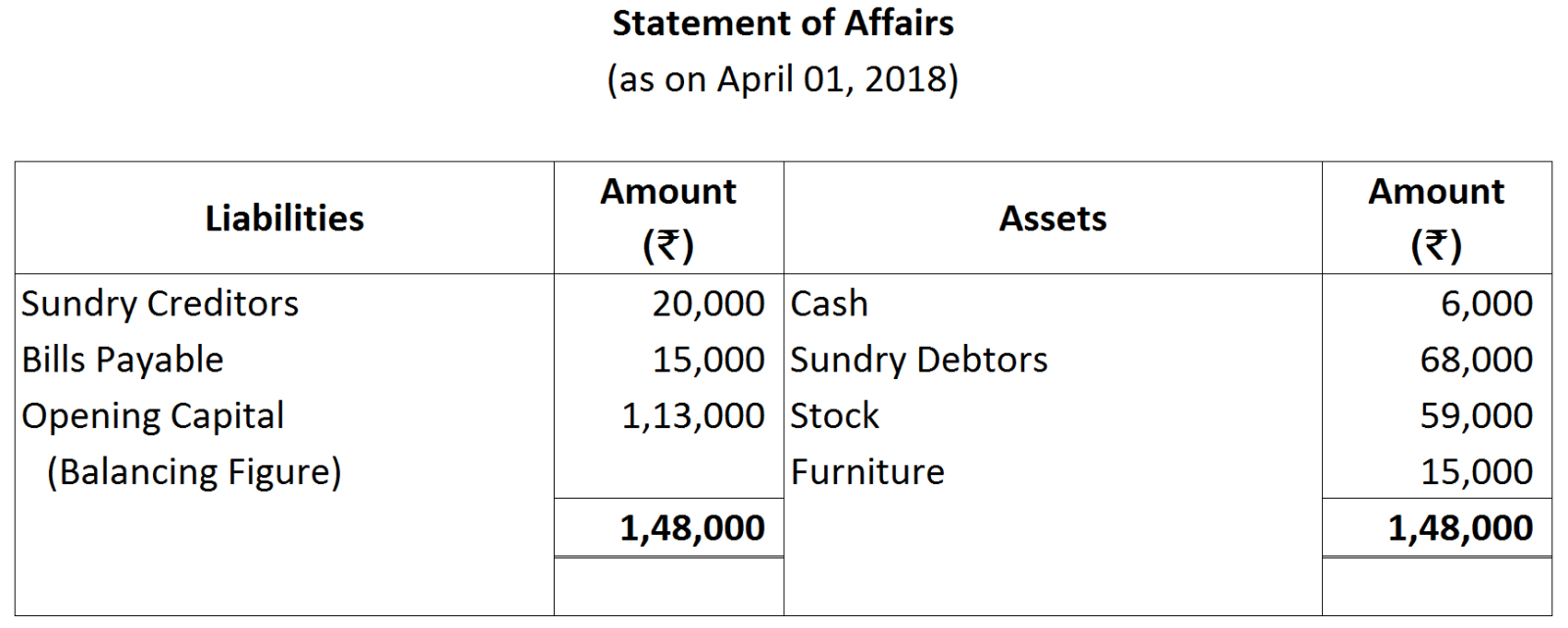
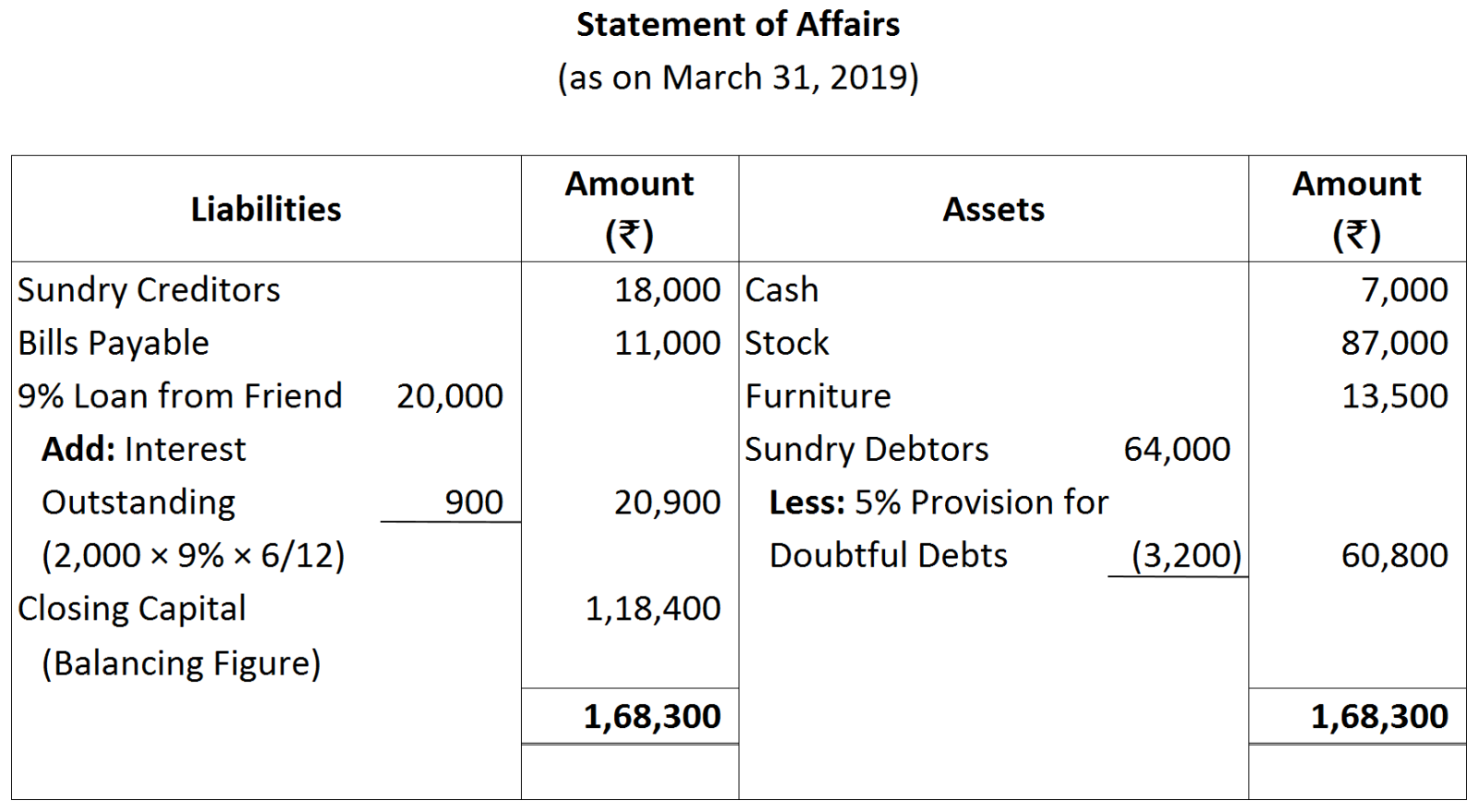
Following information is supplied to you by a shopkeeper:
During the year, he withdrew ₹ 2,500 per month for domestic purposes. He also borrowed from a friend at 9% a sum of ₹ 20,000 on 1st October, 2018. He has not yet paid the interest. A provision of 5% on debtors for doubtful debts is to be made. Ascertain the profit or loss made by him during the period.
Answer


.
View full question & answer
Question 126 Marks
Kuldeep, a general merchant, keeps his accounts on Single Entry System. He wants to know the results of his business on 31st March, 2019 and for that following information is available:
During the year, he had withdrawn ₹ 5,00,000 for his personal use and invested ₹ 2,50,000 as additional capital. Calculate his profits on 31st March, 2019 and prepare the Statement of Affairs as on that date.
View full question & answer
Question 136 Marks
Define Single Entry System. What are the defects of this system?
Answer
Accounting records that are not maintained according to Double Entry System are known as Accounts from Incomplete Records or Single Entry System of Accounting.
Kohler defines Single Entry System as, “A system of book keeping in which as a rule only records of cash and of personal accounts are maintained, it is always incomplete double entry varying with the circumstances."
Single Entry System is an incomplete and insufficient system of information, hence it has the following disadvantages:
  1. Arithmetical Accuracy cannot be Proved: Trial Balance cannot be prepared hence, arithmetical accuracy of books cannot be proved or tested. Chances of error, mischief or fraud remaining undetected are high.
  2. No Control on Assets: Since assets accounts are not maintained, it is difficult to keep full control, in order to avoid misappropriations of assets.
  3. Correct Profit or Loss cannot be Determined: Trading and Profit and Loss Account cannot be prepared hence, correct profit earned or loss incurred during the accounting period cannot be determined.
  4. Financial Position of the Business cannot be Assessed: In the absence of assets accounts, it is difficult to determine correct financial position of the business on any particular day by preparing a Balance Sheet.
  5. No Internal Check: Since internal check is not possible, the method leaves room for errors and frauds, besides their detection becomes difficult.
  6. Difficult to Ascertain the Value of Business: The records being inadequate, it is difficult to value the business, especially goodwill.
  7. Incomplete and Unscientific System: This system is incomplete and unscientific as both the aspects of a transaction are not recorded and no set rules are followed for recording them.
  8. Comparative Study is Difficult: A major defect of this system is that the financial position of the current year cannot be compared with that of the previous year due to incomplete information of transactions of business.
View full question & answer
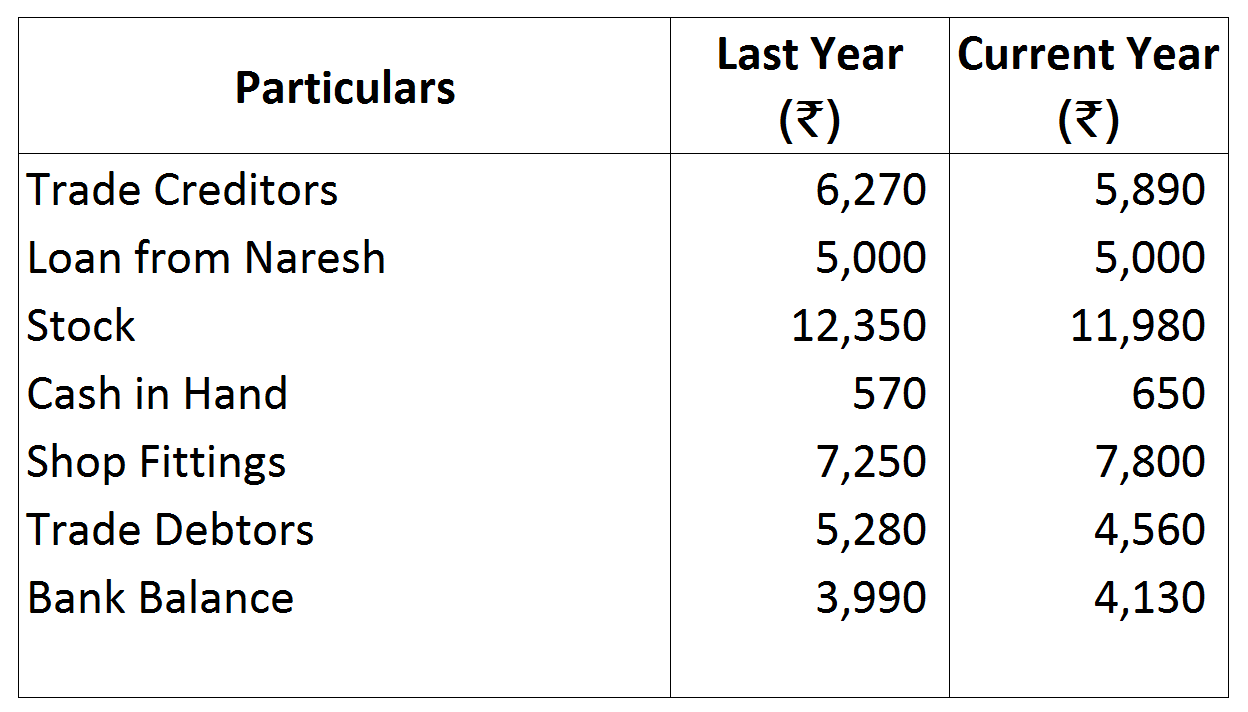
Question 146 Marks
Aditya a retailer, has not maintained proper books of account but it has been possible to obtain the following details:
Calculate the net profit for this year and draft the Statement of Affairs at the end of the year after noting that:
  1. Shop Fittings are to be depreciated by ₹ 780.
  2. Aditya has drawn ₹ 100 per week for his own use.
  3. Included in the Trade Debtors is an irrecoverable balance of ₹ 270.
  4. Interest at 5% p.a. is due on the loan from Naresh but has not been paid for the year.
View full question & answer
Question 156 Marks
What is the difference between Single Entry System and Double Entry System?
Answer
Difference between Double Entry System and Single Entry System:
 
Basis
Double Entry System
Single Entry System
1
Aspects of a Transaction
Under this system, both aspects of a transaction are recorded.
Under this system, both aspects of transaction may not be recorded. In fact, for some transactions both the aspects, for some others one aspect and yet for others no aspect at all are recorded.
2
Accounts Maintained
Under this system, personal, real and nominal, etc., all the accounts are maintained. Thus, it is a complete and scientific system of accounting.
Under this system, only personal accounts and Cash Book are maintained. Hence, it remains an incomplete record of accounts.
3
Trial Balance
Under this system, Trial Balance is prepared and thus, the arithmetical accuracy of the books of account is verified.
Under this system, Trial Balance cannot be prepared due to incomplete system of accounting. Therefore, arithmetical accuracy of the accounting cannot be verified.
4
Profit or Loss
Under this system, after a certain period, net profit or net loss can be ascertained by preparing the Profit and Loss Account.
Under this system, Profit and Loss Account is not prepared to ascertain the net profit or loss. Method for ascertaining the profit or loss is not adequate.
5
Financial Position
Under this system, correct financial position of the business can be ascertained by preparing the Balance Sheet.
Under this system, Balance Sheet is not prepared. Only Statement of Affairs is prepared. The reason is that the assets and liabilities do not stand at real amounts but at estimated amounts.
6
Adjustments
Under this system, adjustments are made at the time of preparing the Final Accounts.
There is no provision to make adjustments primarily because of incompleteness of accounts.
7
Use
This system is used by almost all the businesses.
This system is used by only tiny businesses and institutions.
8
Authenticity
This system is considered authentic by the Court.
The Court does not consider this system as authentic.
View full question & answer
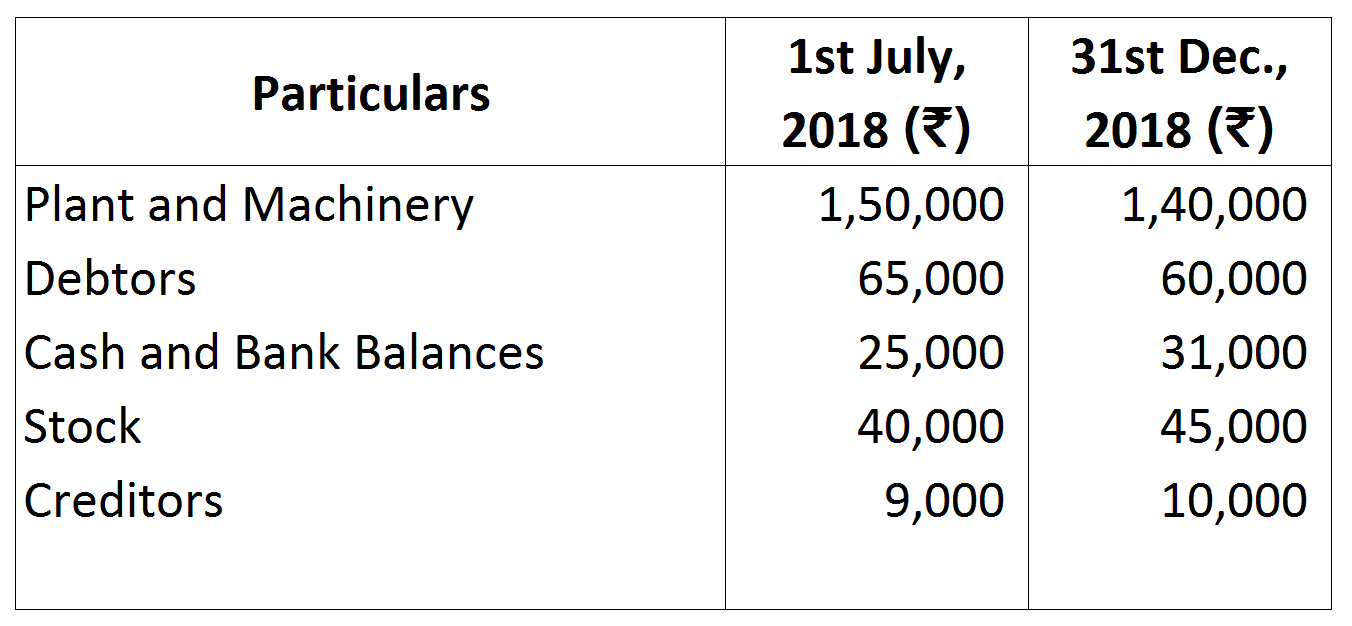
Question 166 Marks
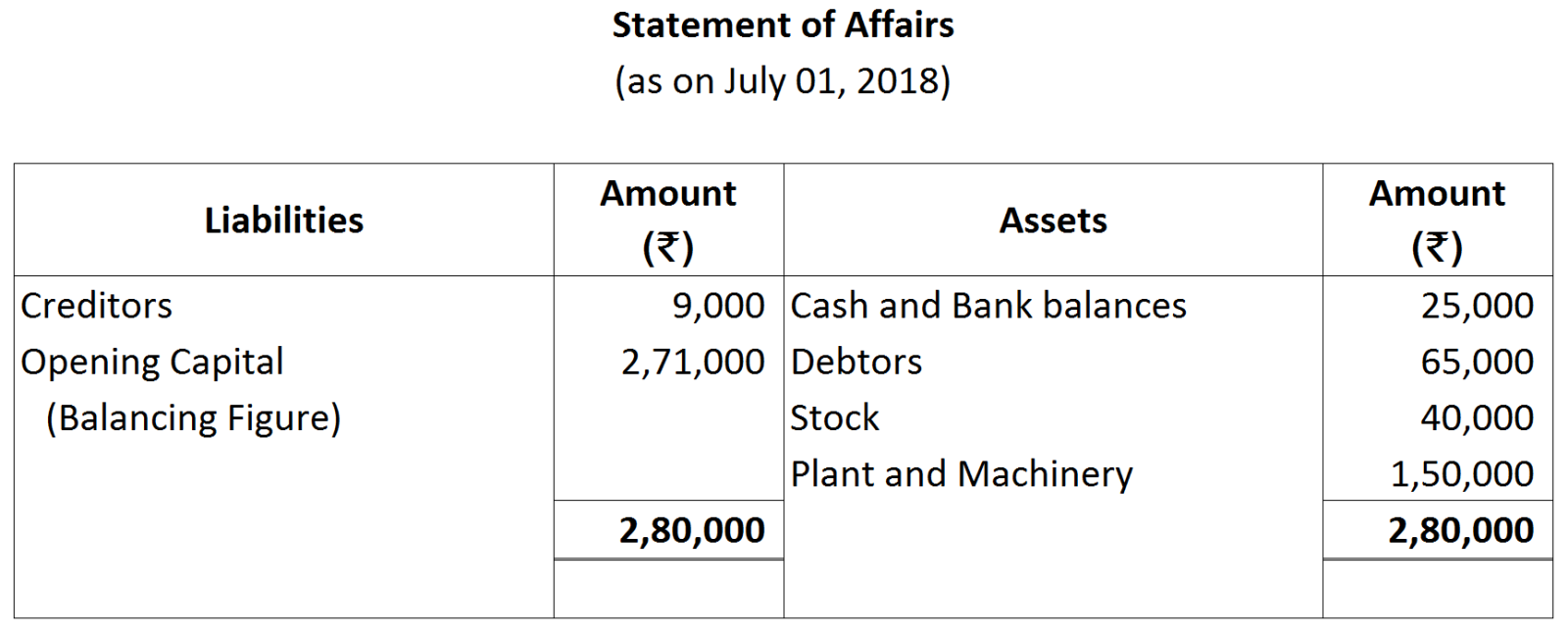
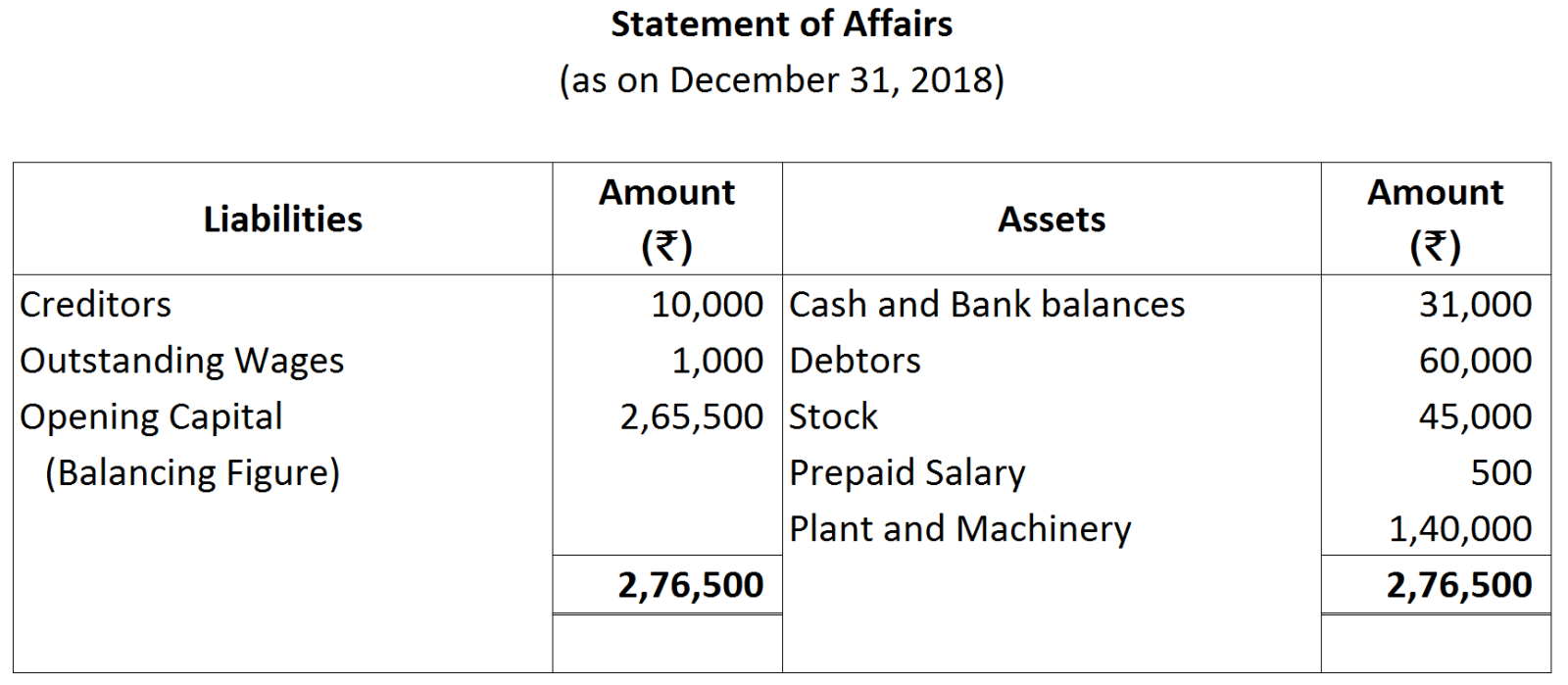
Chaman maintains his books according to Single Entry System. Following figures were available from the books for the six months ended 31st December 2018:
Adjustments:
  1. He had withdrawn ₹ 200 in the beginning of every month for household purposes.
  2. Depreciation on Plant and Machinery @ 10% p.a.
  3. Further Bad Debts ₹ 5,000 and Provision for Doubtful Debts to be created @ 2%.
  4. During the period, salaries have been prepaid by ₹ 500 while wages outstanding were ₹ 1,000.
  5. Interest on drawings to be reckoned @ 6% p.a.
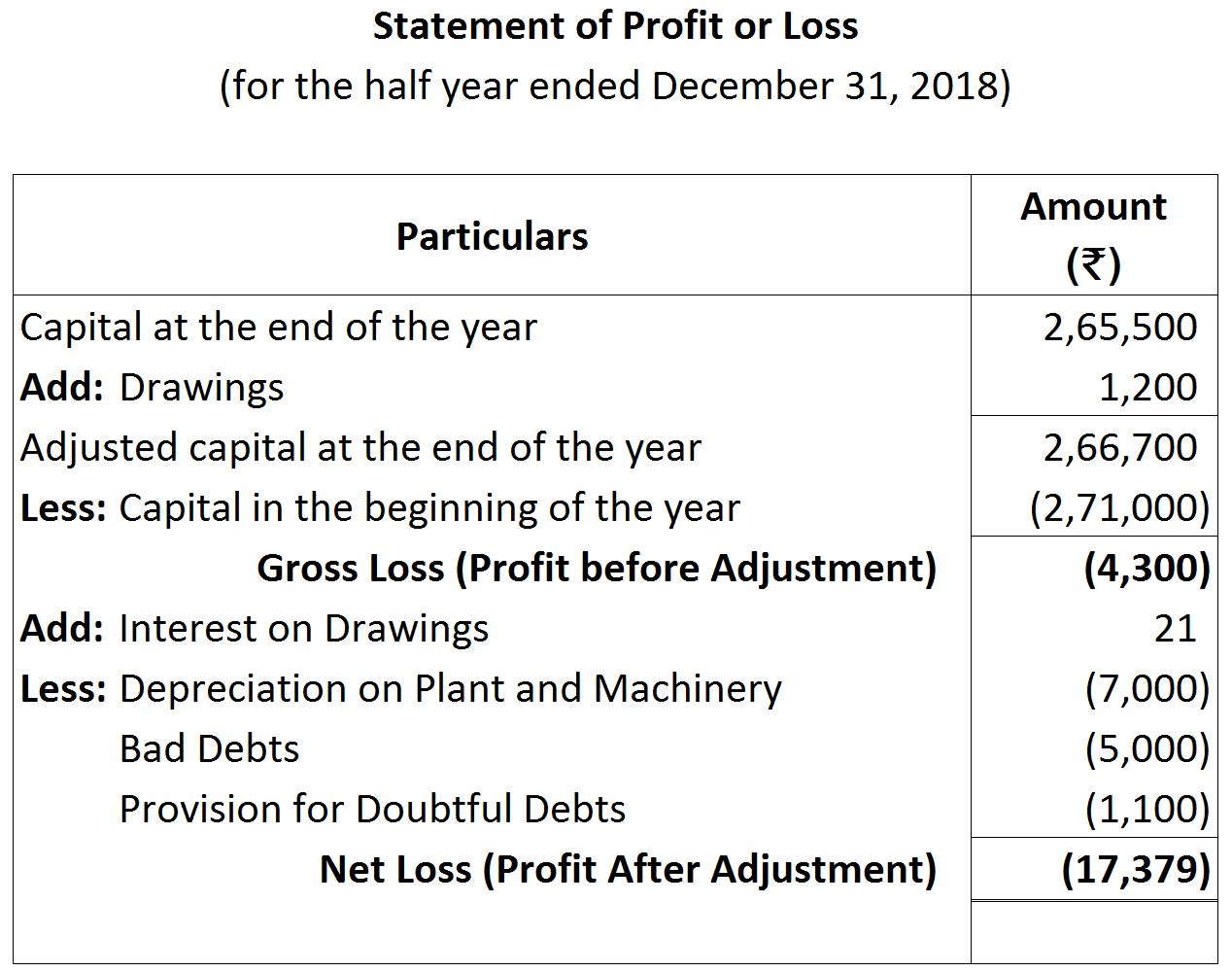
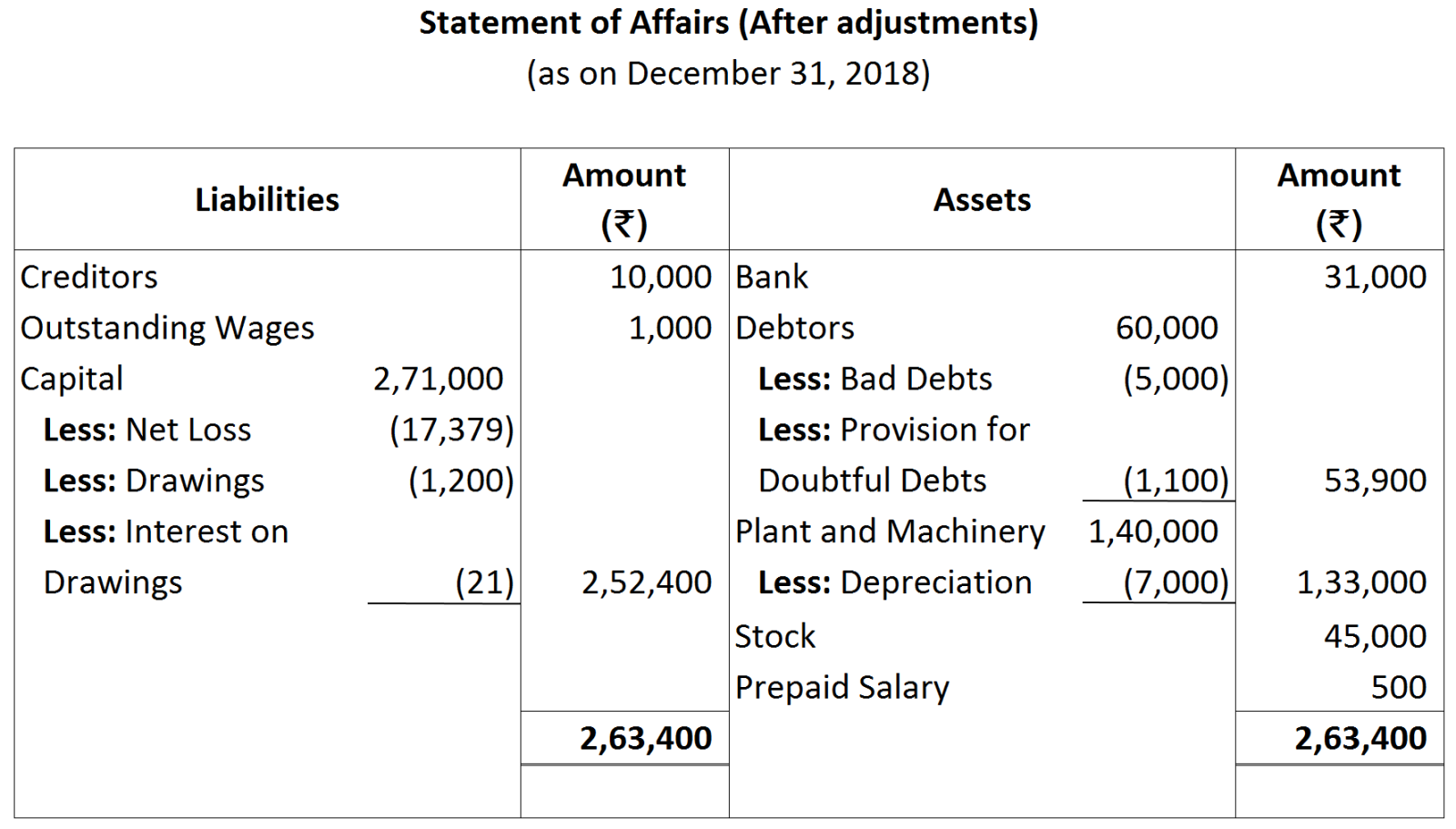
You are required to prepare the Statement of Profit or Loss for the half year ended 31st December, 2018, followed by Revised Statement of Affairs as on that date.
Answer


Working Notes:
WN1: Depreciation on plant and machinery would be charged for six months only i.e., Rs 7,000 $\Big(\frac{1,40,000\times10\times6}{100\times12}\Big)$
WN2: Amount of Provision for Doubtful Debts would be ₹ 1,100 $\Big(\frac{2}{100}\times(60,000-5,000)\Big)$
WN3: Calculation of Amount of Interest on Drawings:
Interest on Drawings $=\frac{4,200\times6\times1}{100\times12}=₹ \ 21$
View full question & answer
Question 176 Marks
Vijay commenced business as food grains merchant on 1st April, 2018 with a capital of ₹ 4,00,000. On the same day, he purchased furniture for ₹ 80,000. From the following particulars obtained from his books which do not conform to Double Entry principles, you are required to prepare the Trading and Profit and Loss Account for the year ended 31st March, 2019 and the Balance Sheet as on that date:
 
Sales (including Cash Sales ₹ 2,00,000) 5,00,000
Purchases (including Cash Purchases ₹ 1,20,000 4,00,000
Vijay's Drawings (in Cash) 40,000
Salaries to Staff 48,000
Bad Debts written off 4,000
Trade Expenses paid 16,000
Vijay used goods of ₹ 12,000 for personal purposes during the year. On 31st March, 2019, his Debtors amounted to ₹ 1,40,000 and Creditors ₹ 80,000. Stock-in-Trade on that date was ₹ 1,60,000.
View full question & answer
Question 186 Marks
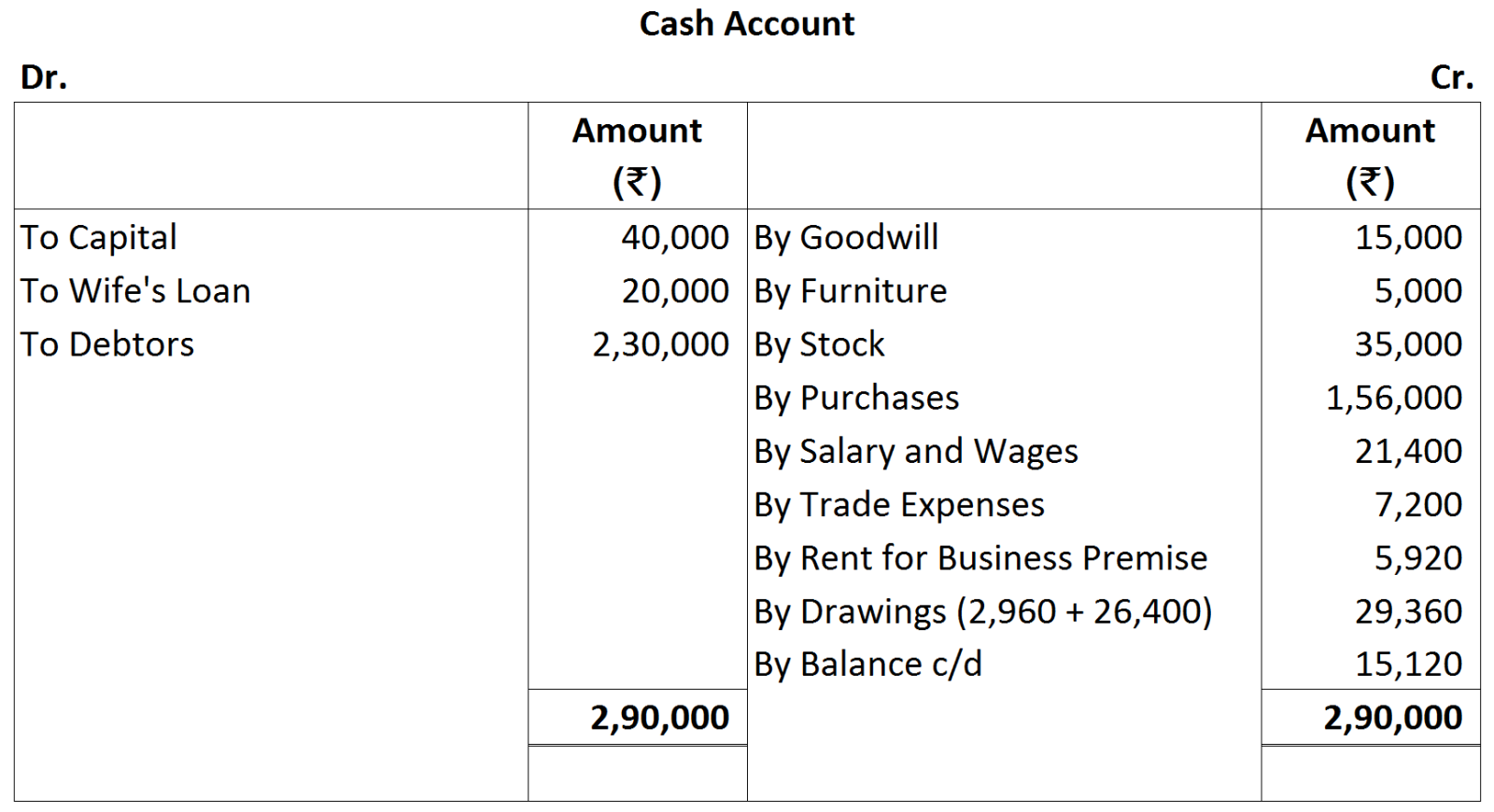
Roshan, whose accounts are maintained by Single Entry System, acquired a retail business on 1st April, 2017. He had ₹ 40,000 of his own and he borrowed ₹ 20,000 from his wife. He paid ₹ 15,000 for Goodwill, ₹ 5,000 for Furniture and ₹ 35,000 for Stock.
Total cash received by him during the financial year from the Debtors was ₹ 2,30,000. His payments were:
 
Purchases 1,56,000
Salary and Wages 21,400
Trade Expenses 7,200
Rent:
For business premises 5,920
For private house 2,960
Payments made for domestic purposes and drawings 26,400
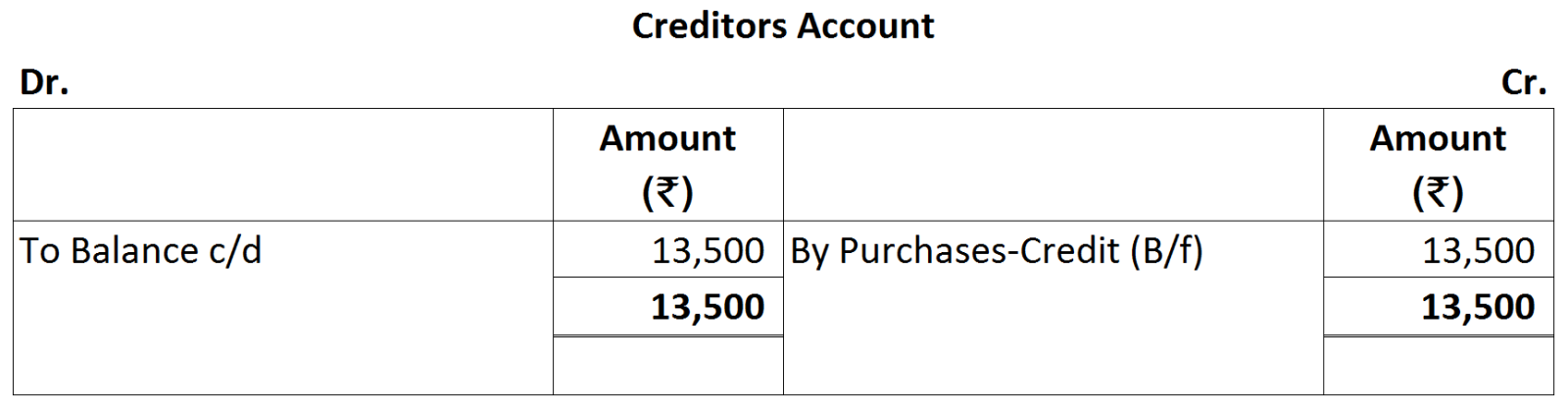
At the end of the year, the Stock was ₹ 37,500. He owed ₹ 13,500 to Creditors for goods and his customers owed to him ₹ 15,000. Provide 5% for Depreciation on Furniture, Interest at 5% on wife's Loan and ₹ 1,000 for Doubtful Debts.
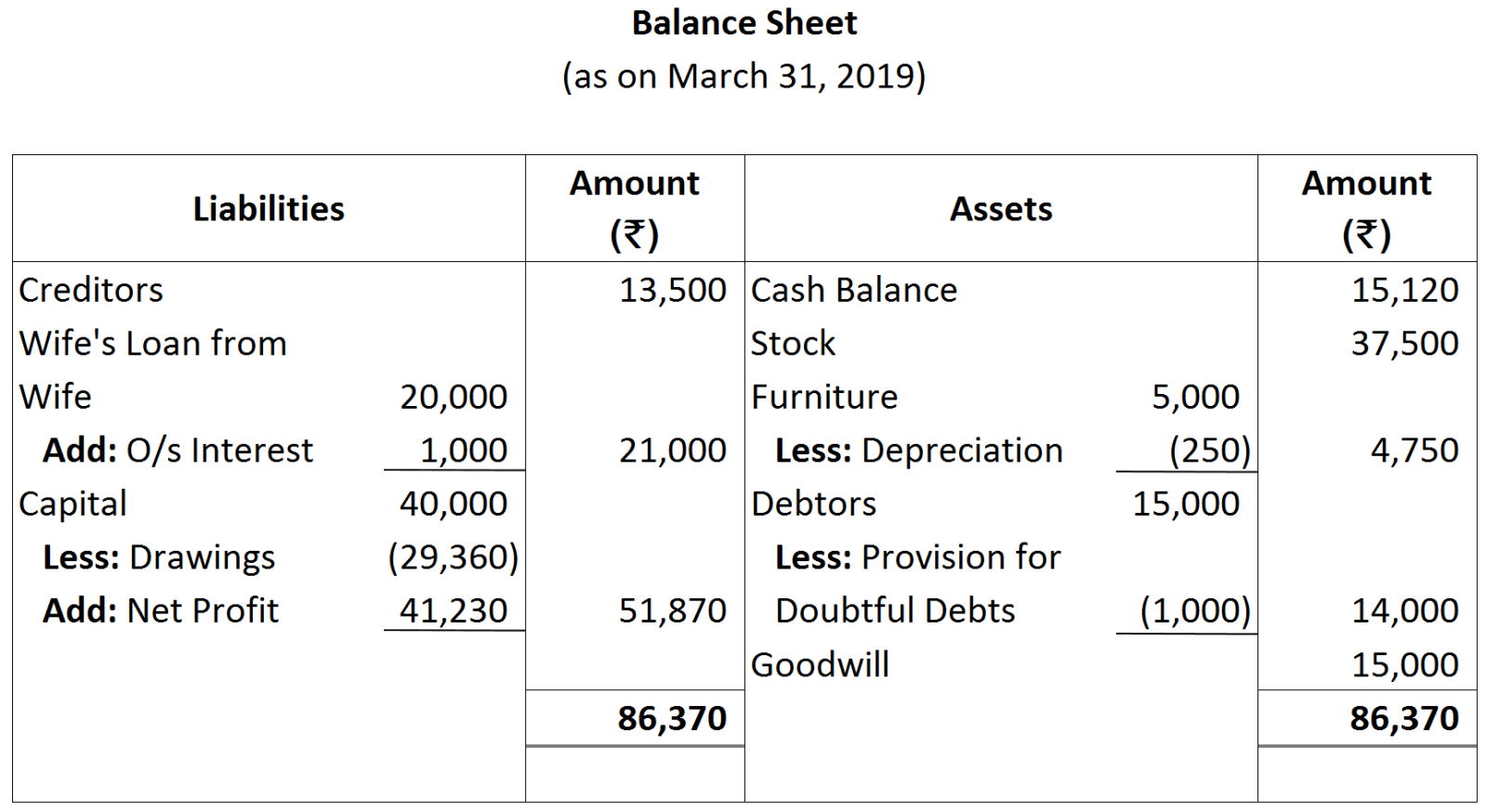
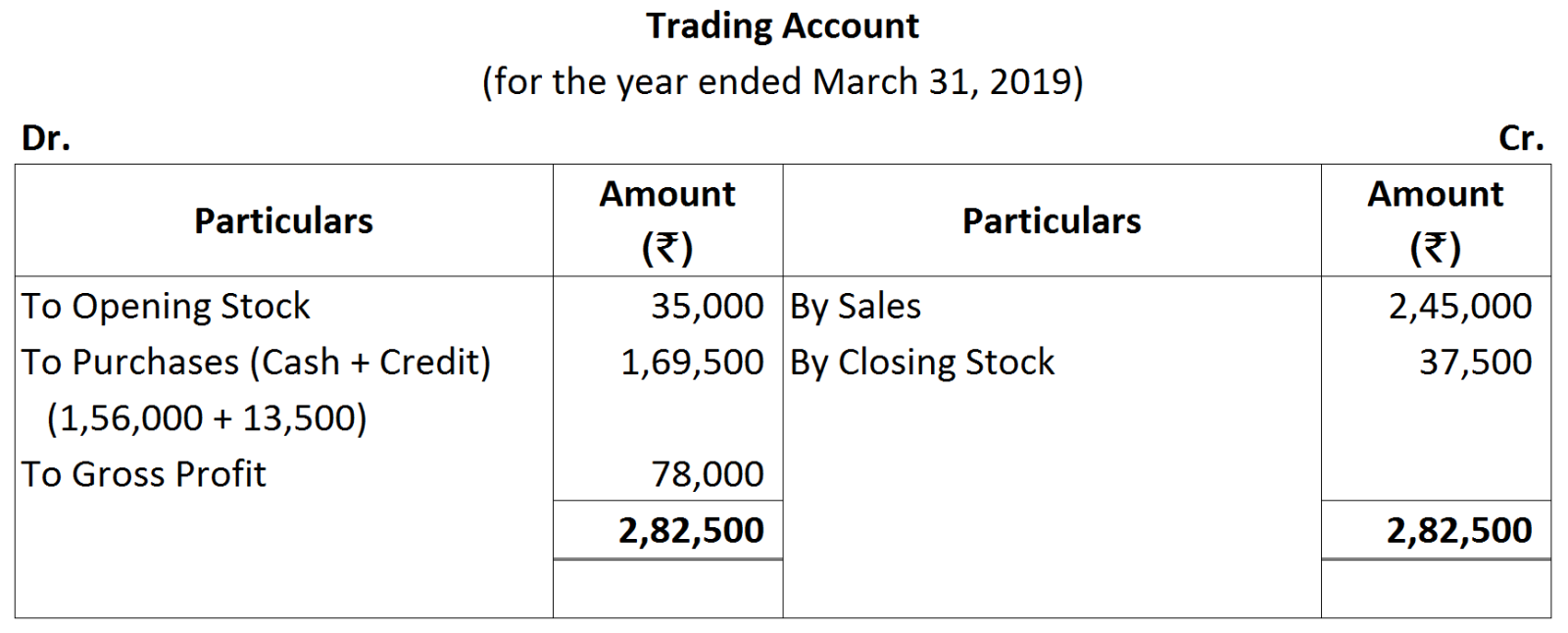
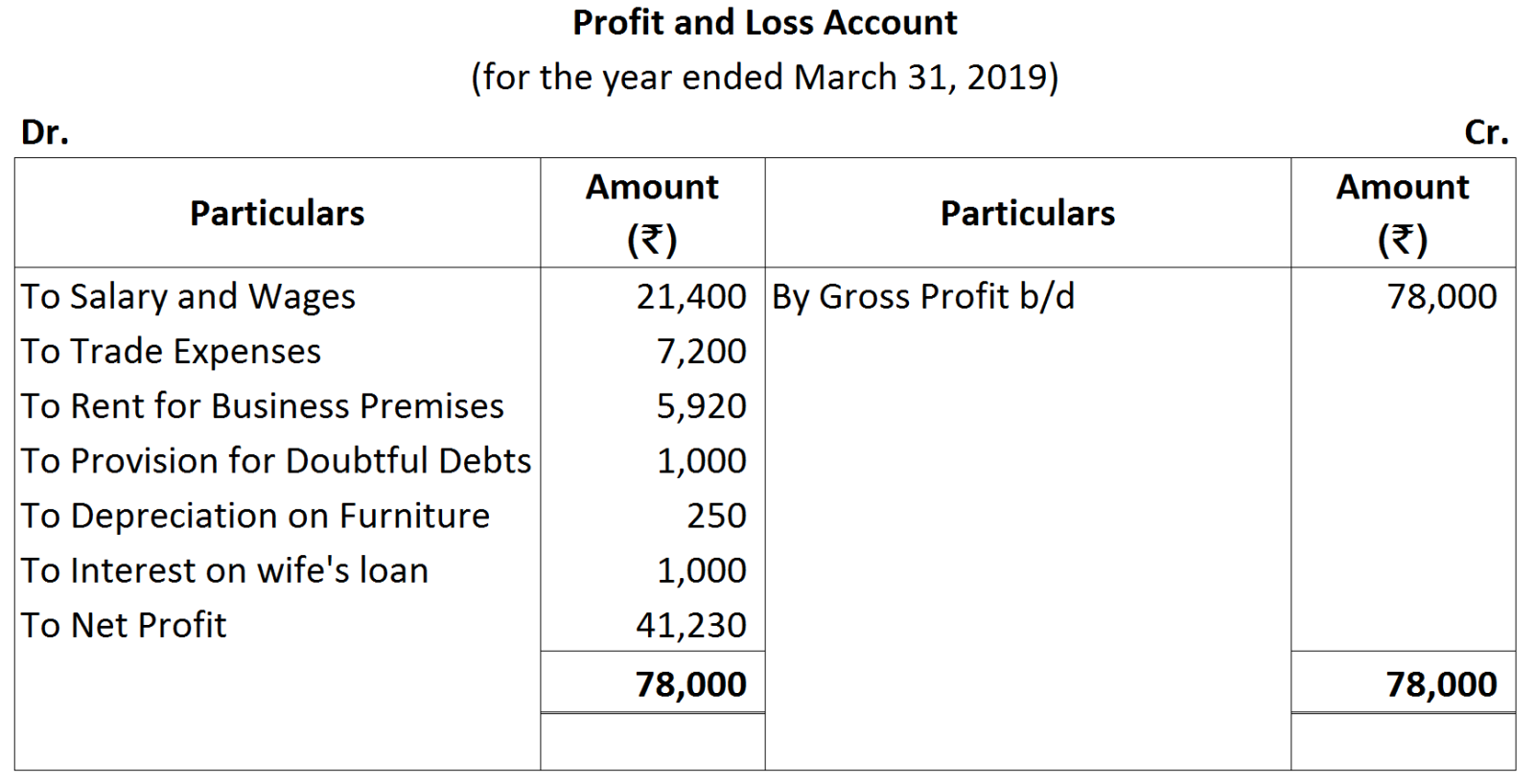
Prepare the Cash Account, the Profit and Loss Account for the year ended 31st March, 2018 and the Balance Sheet at the close of the year.
Answer


Working Notes:

View full question & answer
Question 196 Marks
State the necessary steps that are required to be taken to convert Single Entry Books into Double Entry Books.
Answer
  1. Prepare Opening Statement of Affairs: It is prepared to find missing values (figures) of assets and liabilities such as, Opening Capital, Creditors, Stock, Debtor's, Cash Balance, etc.
  2. Prepare Cash Book: As a second step, prepare Cash Book and complete it as much as possible. If both the sides of Cash Book are not tallied, then the difference in both the sides is taken as one of the following items:
If Credit Side exceeds Debit Side
If Debit Side exceeds Credit Side
Opening Cash or Bank Balance or Closing Bank Overdraft
Closing Cash or Bank Balance or Opening Bank Overdraft
Cash Sales
Cash Purchases
Sundry Income
Sundry Expenses
Capital Introduced
Drawings
Collection for Debtors
Payment to Creditors
Collection from Bills Receivable
Bills Payable Discharged
Sale of Fixed Assets
Purchase of Fixed Assets
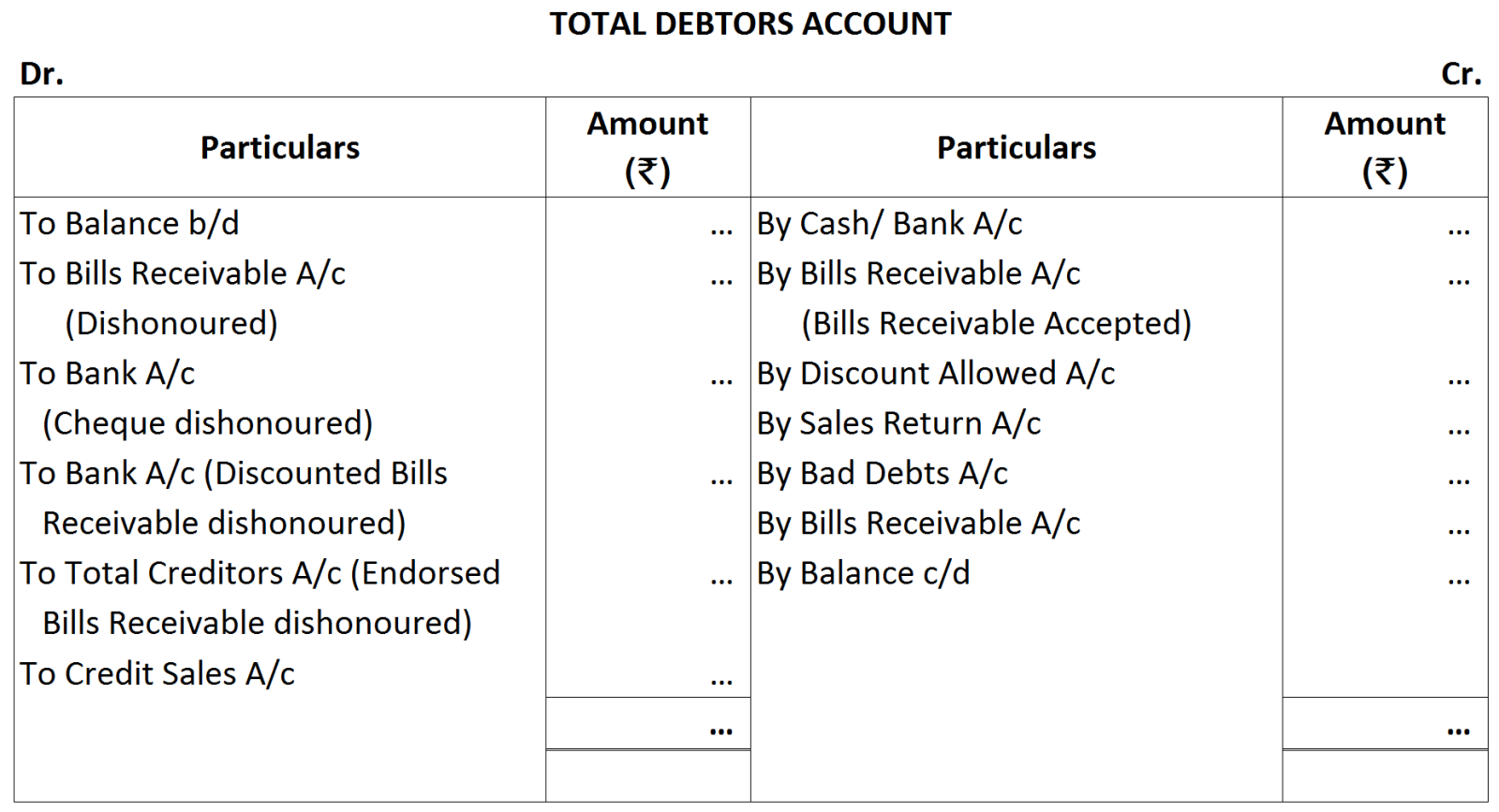
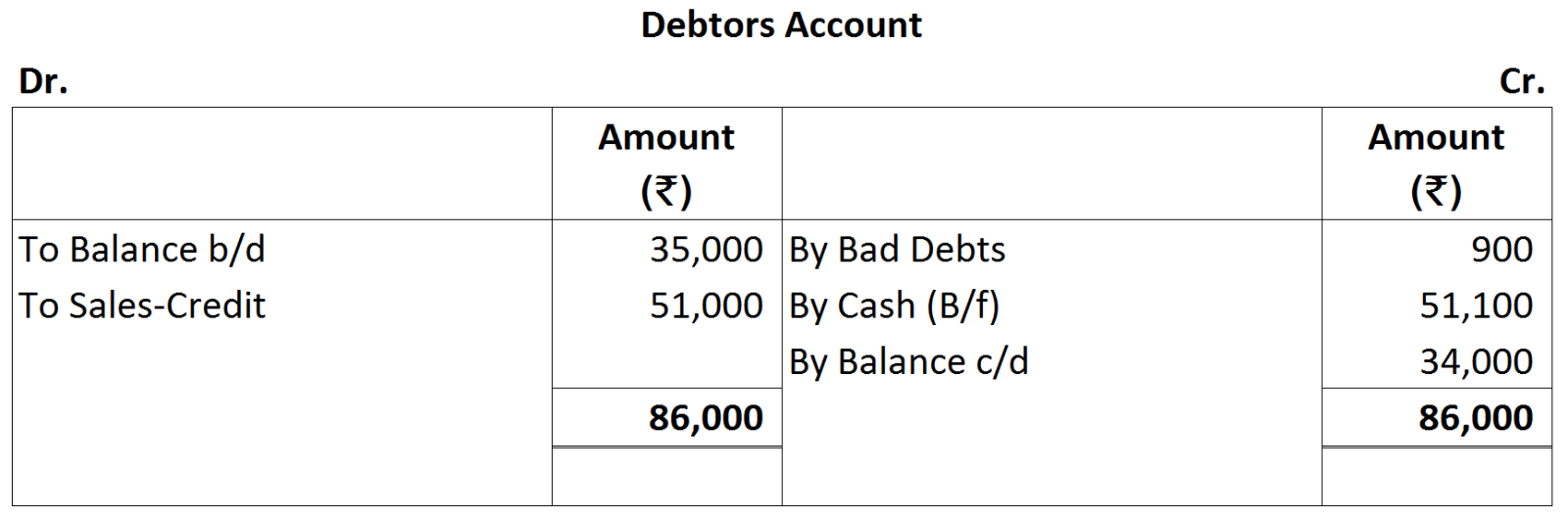
  1. Prepare Total Debtors Account: Total Debtors Accourt is prepared to find the missing values (figures) of credit sales or the closing balance of debtors or cash received from the debtors or opening balance of debtors in the following manner.
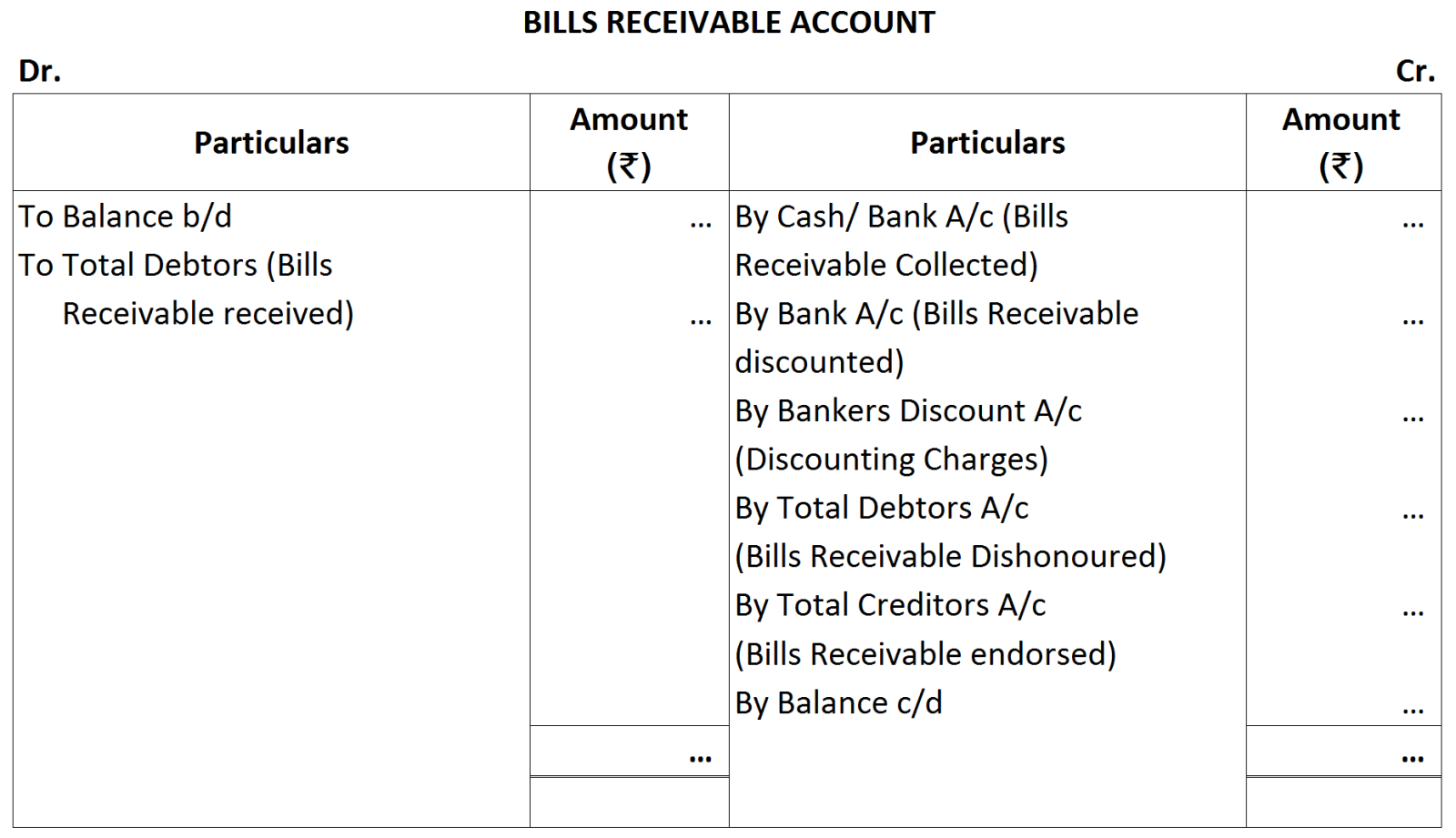
  1. Prepare Bills Receivable Account: It is prepared to find the opening or closing balance of Bills Receivable or other information in the following manner.
​​​​​​​
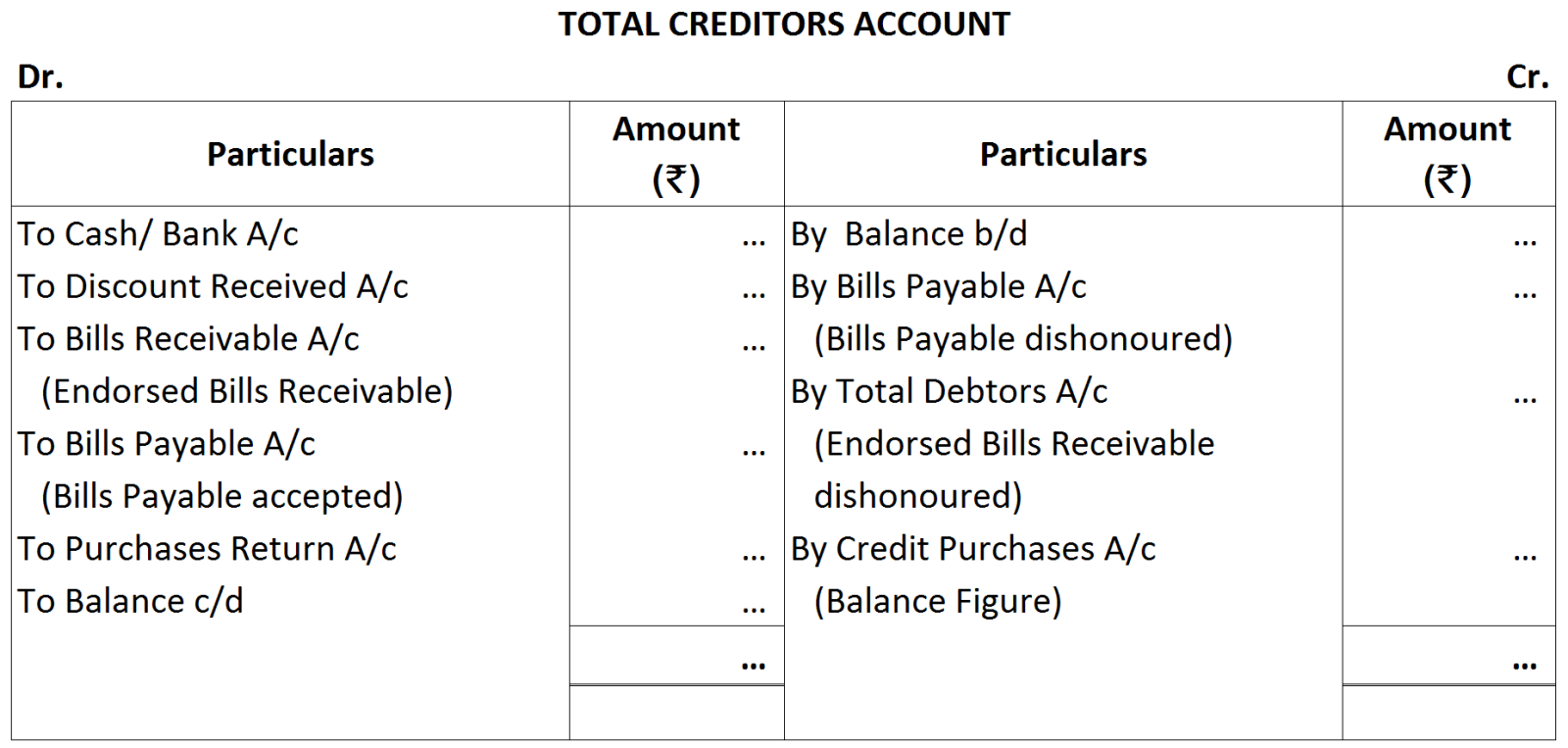
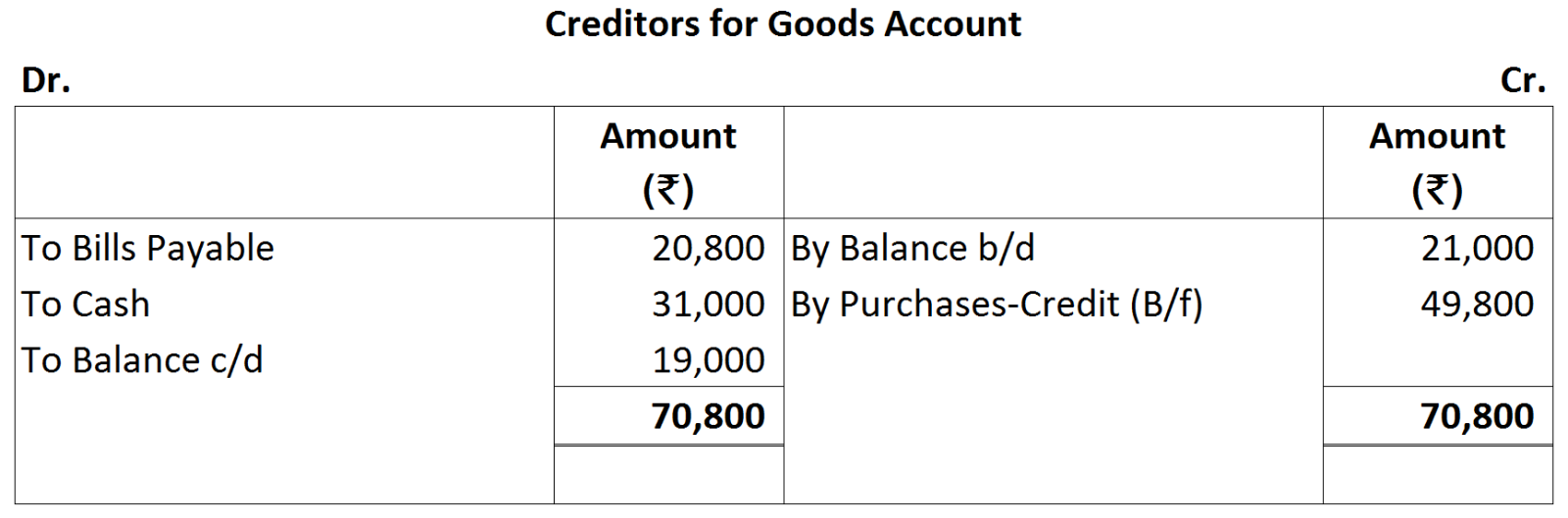
  1. Prepare Total Creditors Account: Total Creditors Account is prepared in the same manner as Total Debtors Account to find the missing value (figure) of creclit purchases or closing balance of creditors or cash paid to creditors or opening balance of creditors as given below.
​​​​​​​
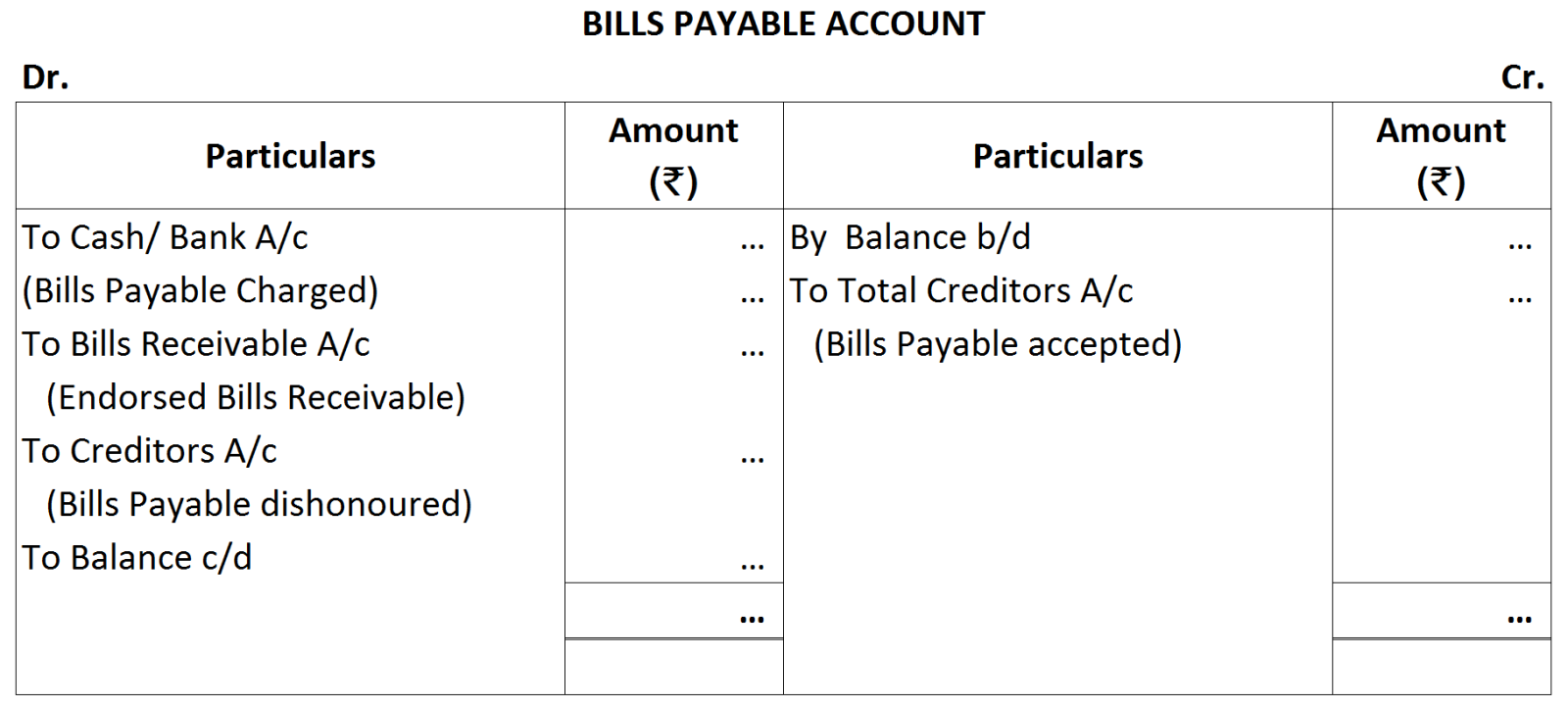
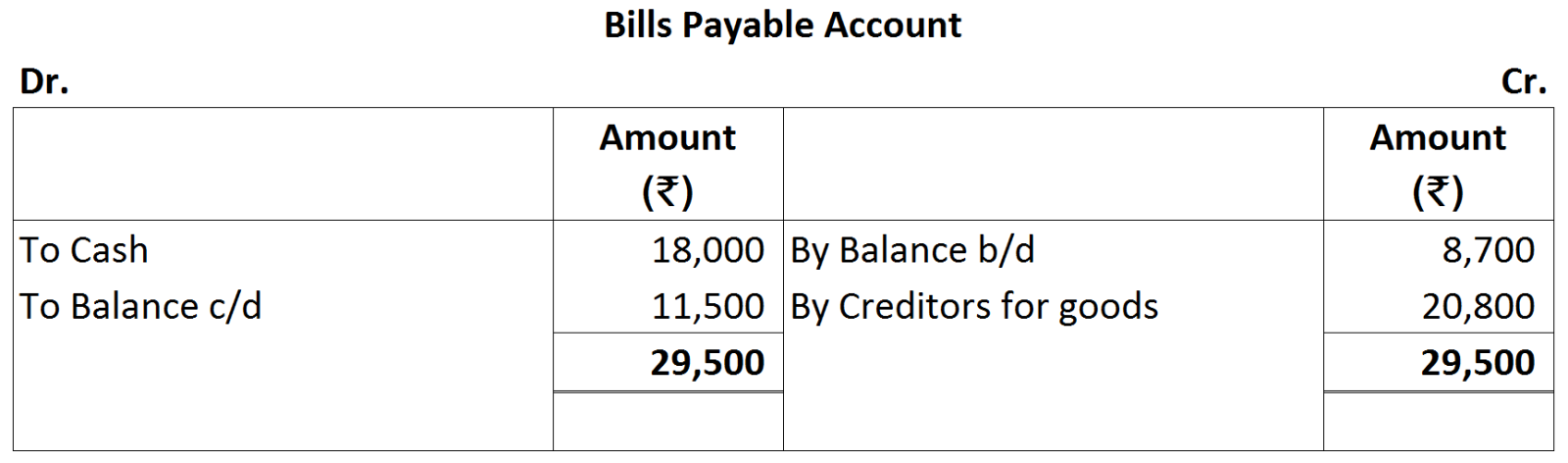
  1. Prepare Bills Payable Account: It is prepared to find the opening or closing balance of Bills Payable or other information in the following manner.
​​​​​​​
  1. Calculate Total Sales and Total Purchases: After preparing these accounts (i.e., Total Debtors Account, Bills Receivable Account, Total Creditors Account and Bills Payable Account), Calculate:
  1. Total sales, by adding credit sales and cash sales.
  2. Ttotal purchases by adding cash purchases and credit purchases.
  1. Calculation of the Values of Opening Stock and Closing Stock: The values (figures) of Opening Stock and Closing Stock are normally given in the question. If they are not given, then they are calculated with the help of rate of gross profit and Memorandum Trading Account as explained in the illustrations given below.
  2. Direct and Indirect Expenses: Expenses paid during the year are shown on the credit side of the Cash Book. For determining the total expenses incurred during the year outstanding expenses are added and prepaid expenses are deducted from the relevant expense.
  3. Revenue Income: Accrued Income is added and Income received in advance is deducted from the relevant income.
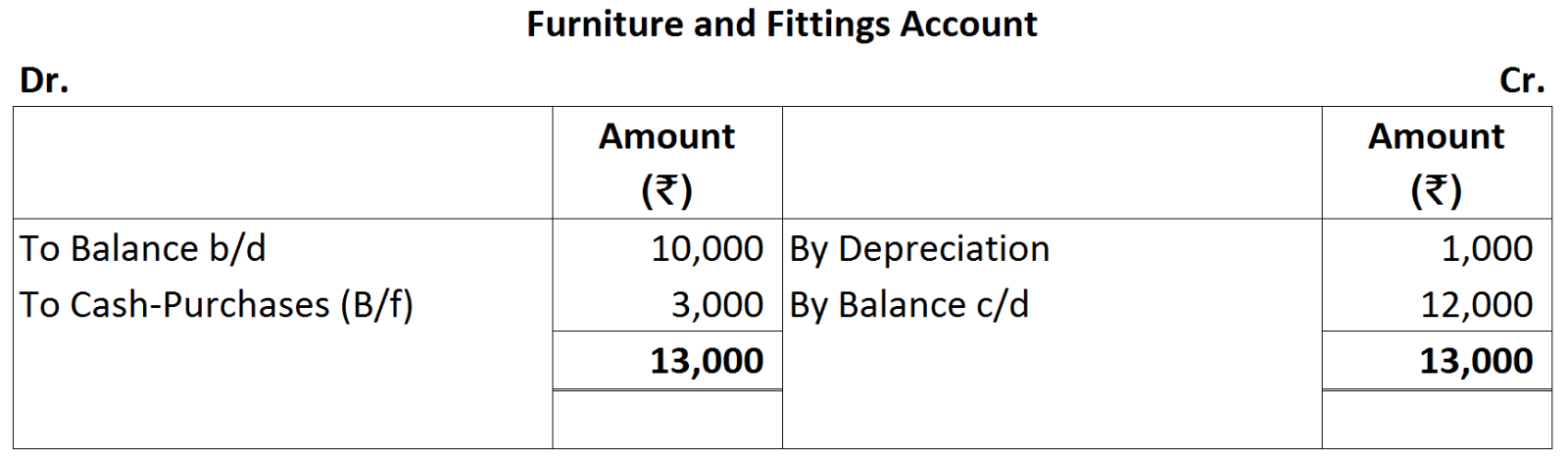
  4. Ascertaining Fixed Assets (e.g. furniture, machinery) Balances: Such balances can be determined on the basis of following information:
  1. Opening balance from Opening Balance Sheet.
  2. Purchase and sale of fixed assets shown by Cash Book.
  3. Depreciation provided during the year.
View full question & answer
Question 206 Marks
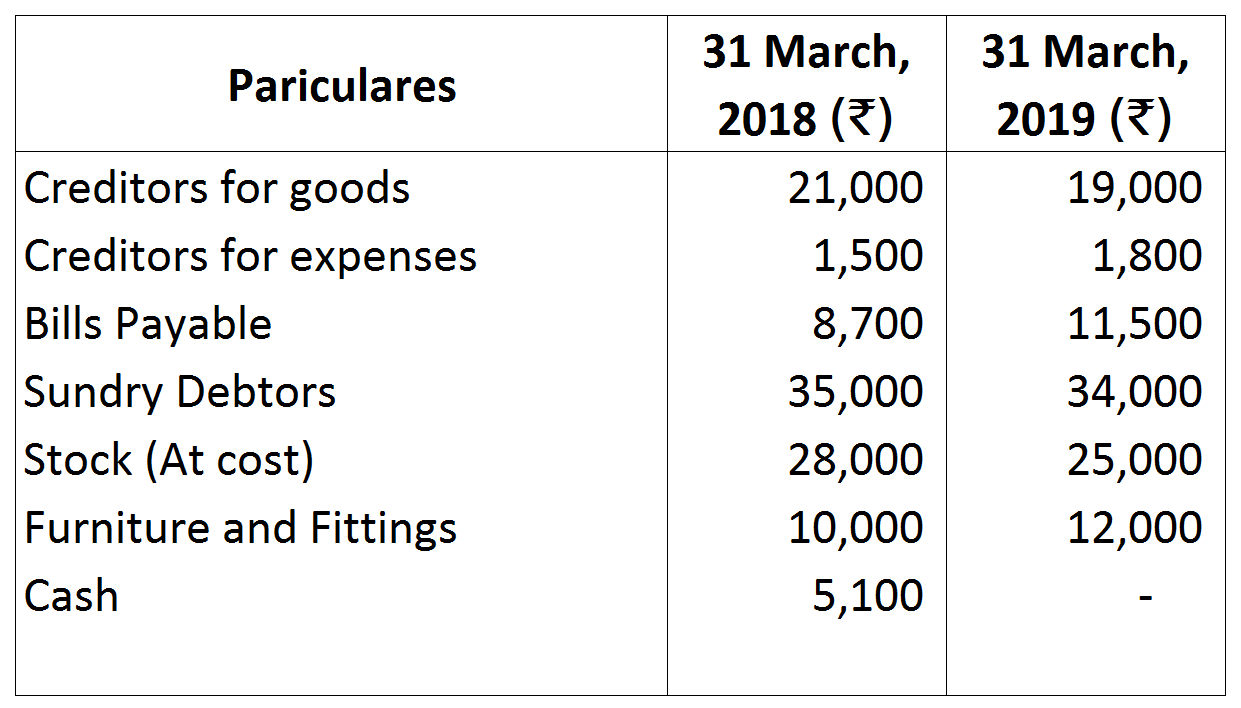
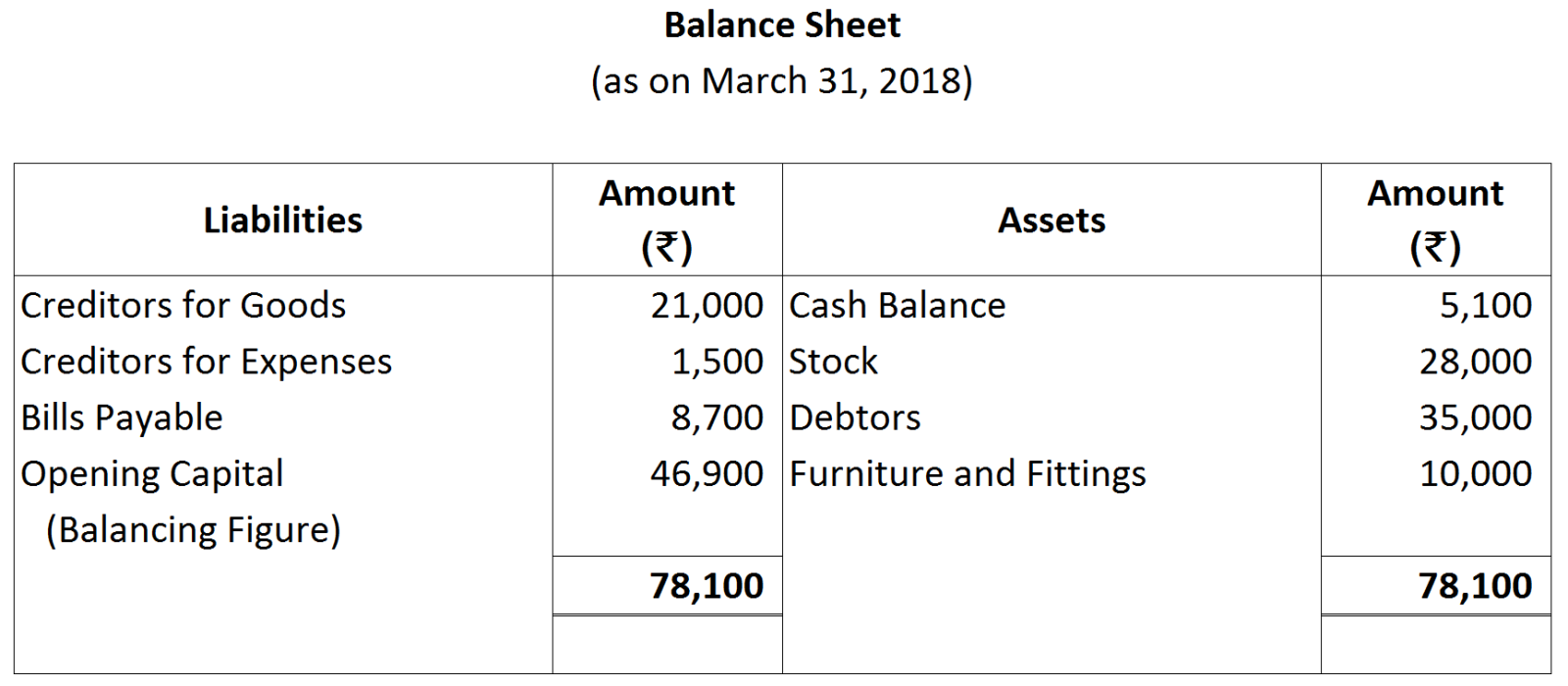
Surya does not keep a systematic record of his transactions. He is able to give you the following information regarding his assets and liabilities:
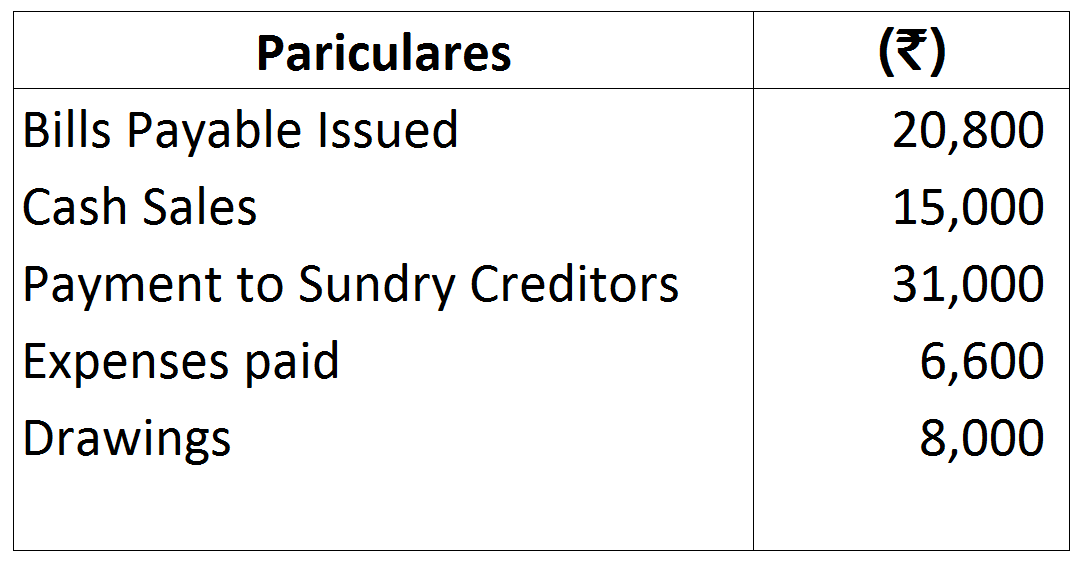
Following additional information is also available for the year ended 31st March, 2019:

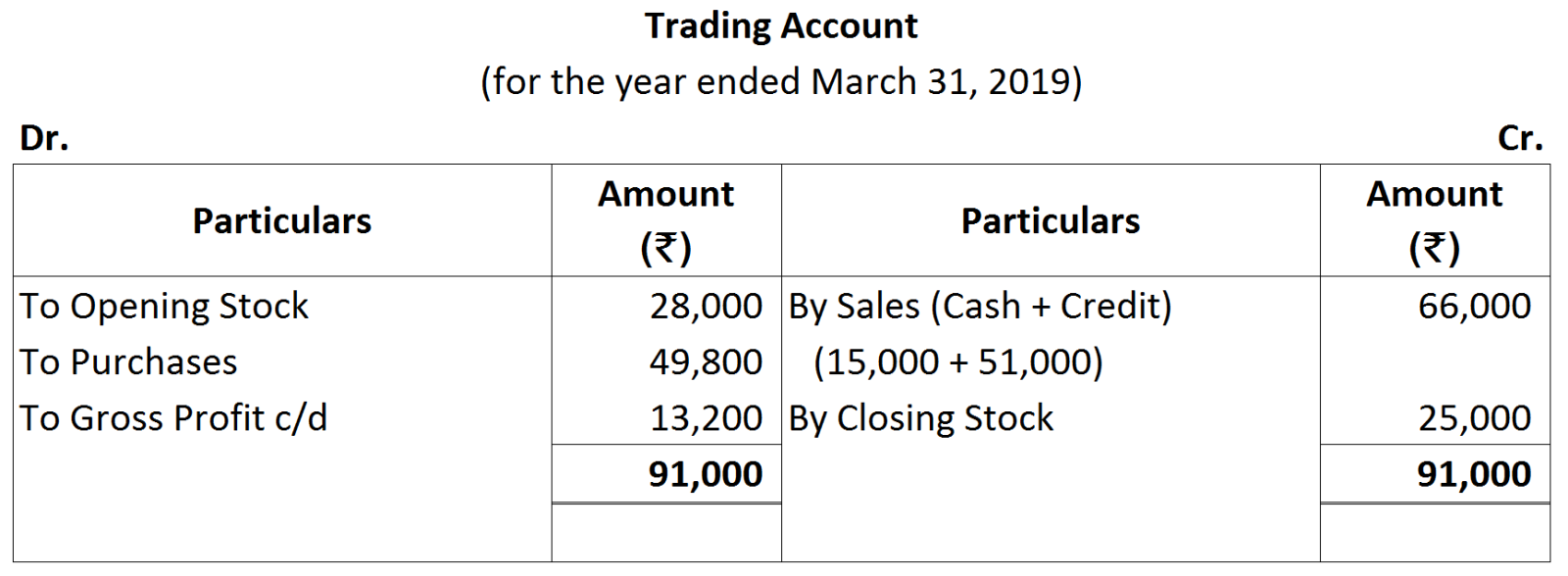
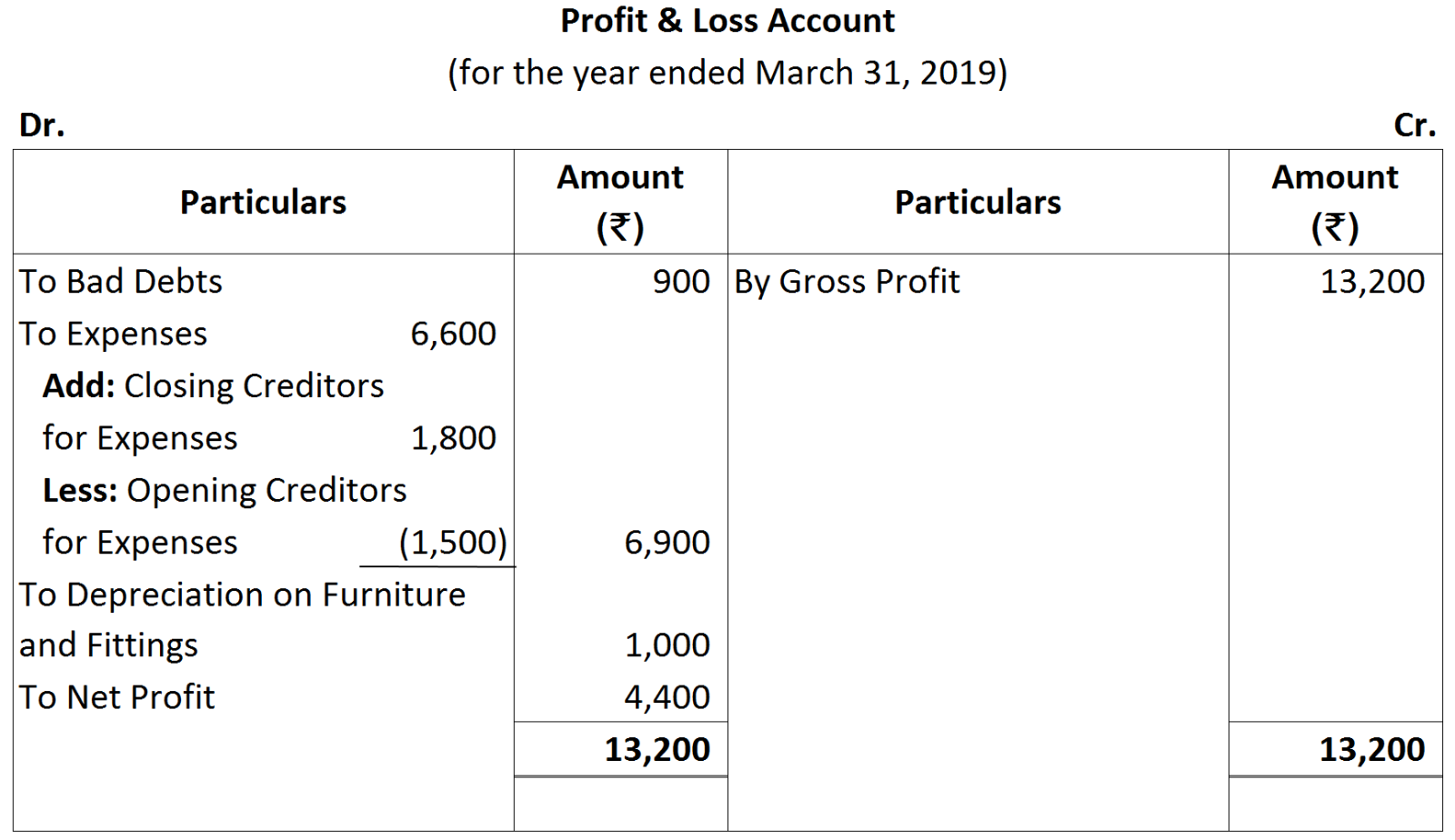
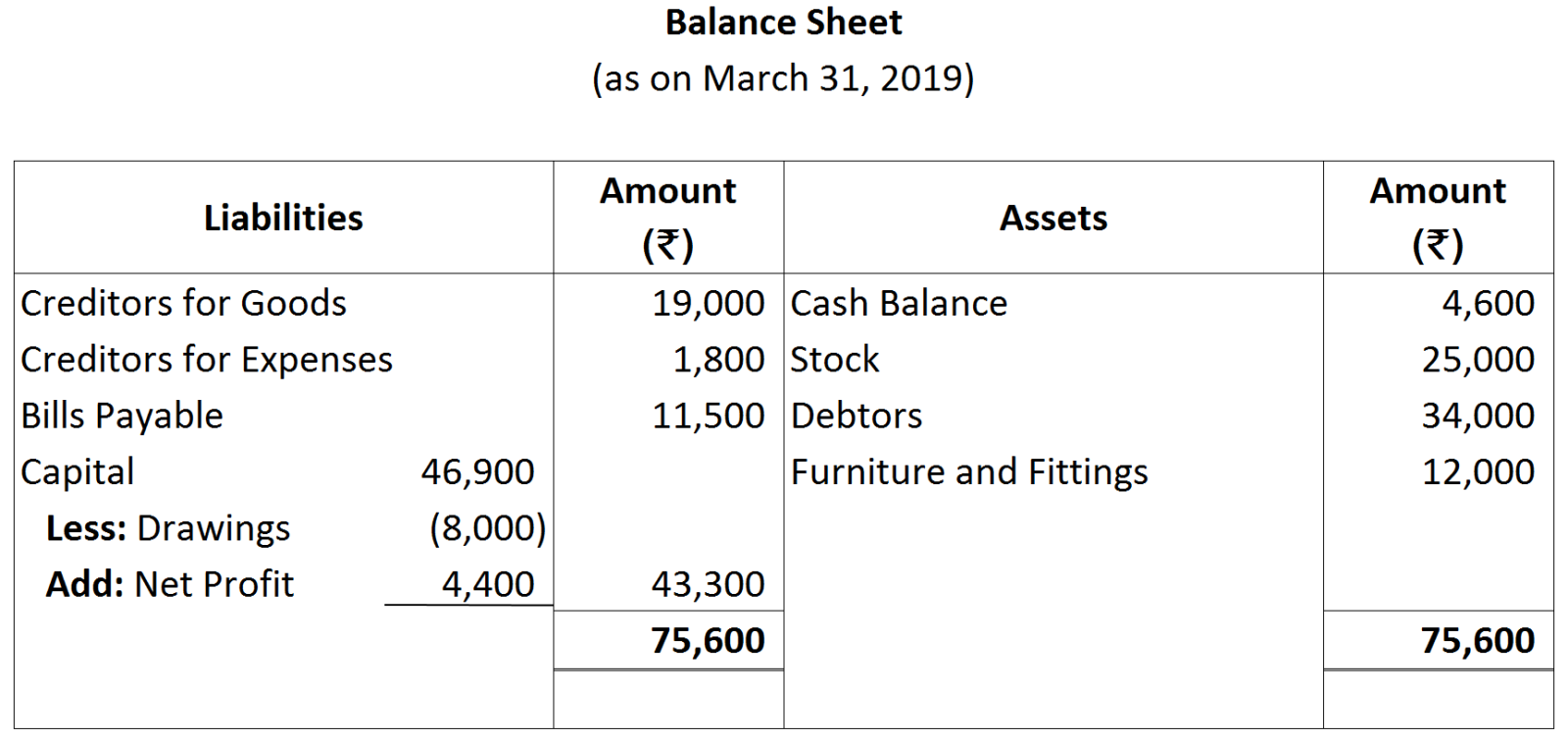
Bad Debts during the year were ₹ 900. As regards sale, Surya tells you that he always sells goods at Cost plus 25%. Furniture and Fittings are to be depreciated at 10% of the value in the beginning of the year. Prepare Surya's Trading and Profit and Loss Account for the year ended 31st March, 2019 and his Balance Sheet on that date.
Answer


Working Notes:


Computation of Cost of Goods Sold and Credit Sales:
COGS = Opening Stock + Purchases - closing Stock = 28,000 + 49,800 - 25,000 = 52,800
Gross Profit $=52,800\times\frac{25}{100}=13,200$
Total Sales = COGS + Gross Profit = 52,800 + 13,200 = 66,000 Credit Sales = Total Sales - Cash Sales
= 66,000 - 15,000 = 51,000
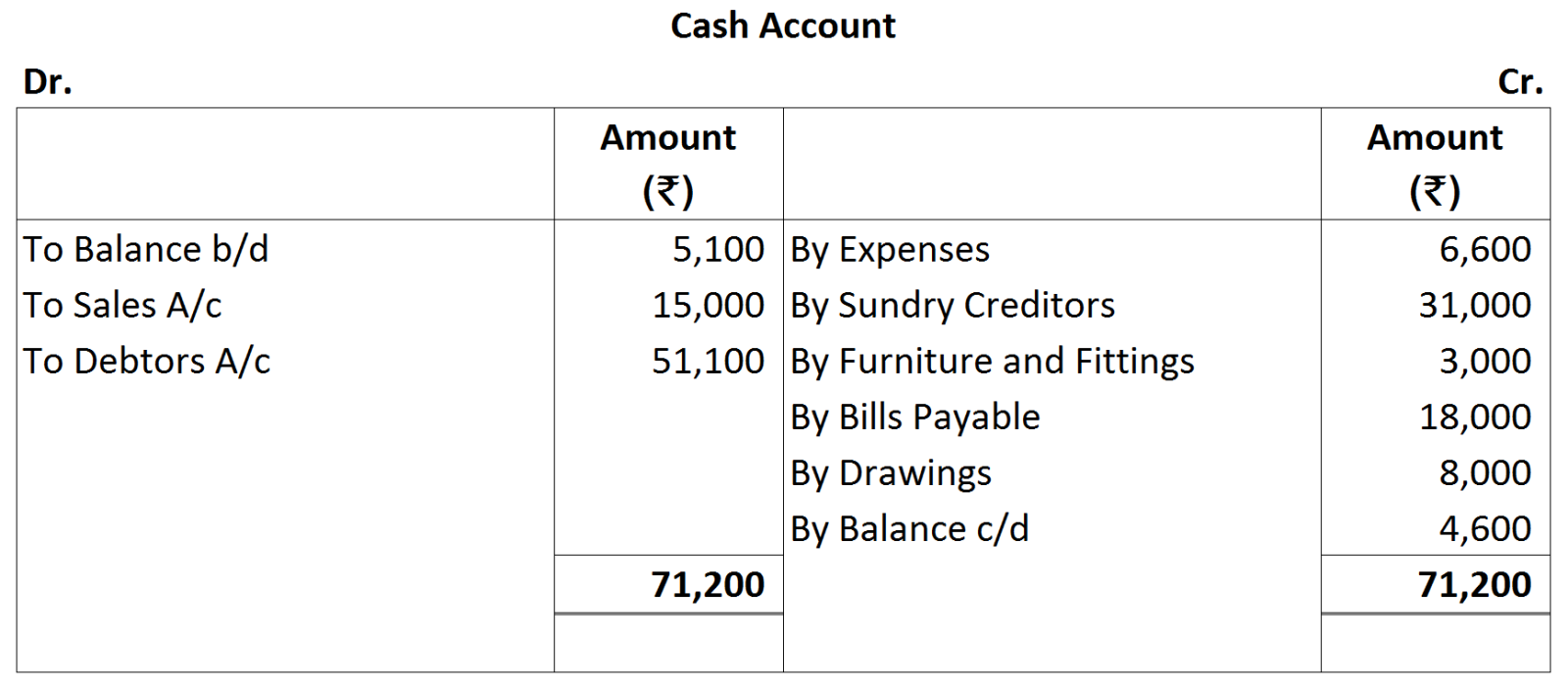
Note: It has been assumed that a Drawings in cash of Amount ₹ 8,000 has been made by Surya during the year.
View full question & answer
Question 216 Marks
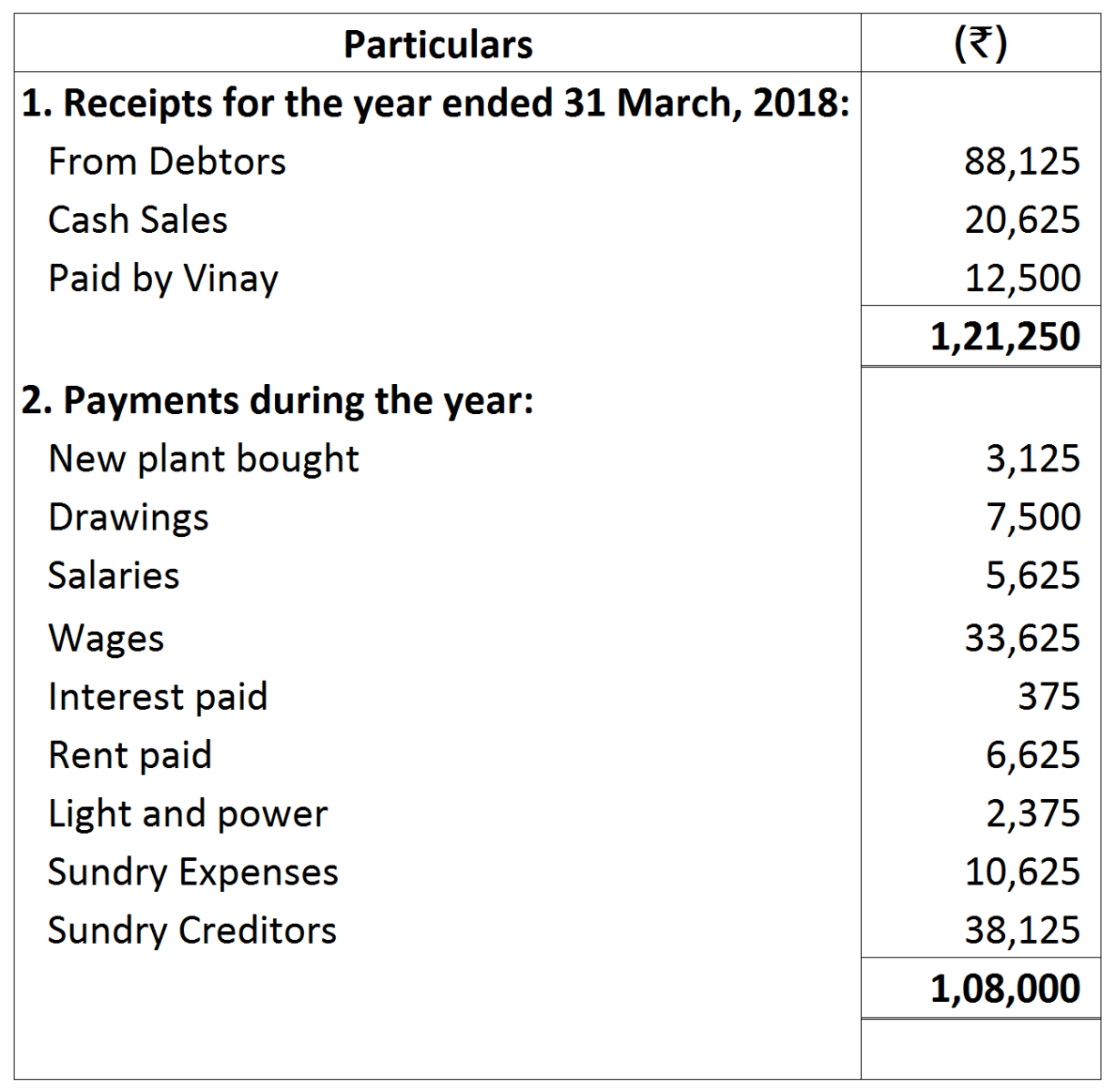
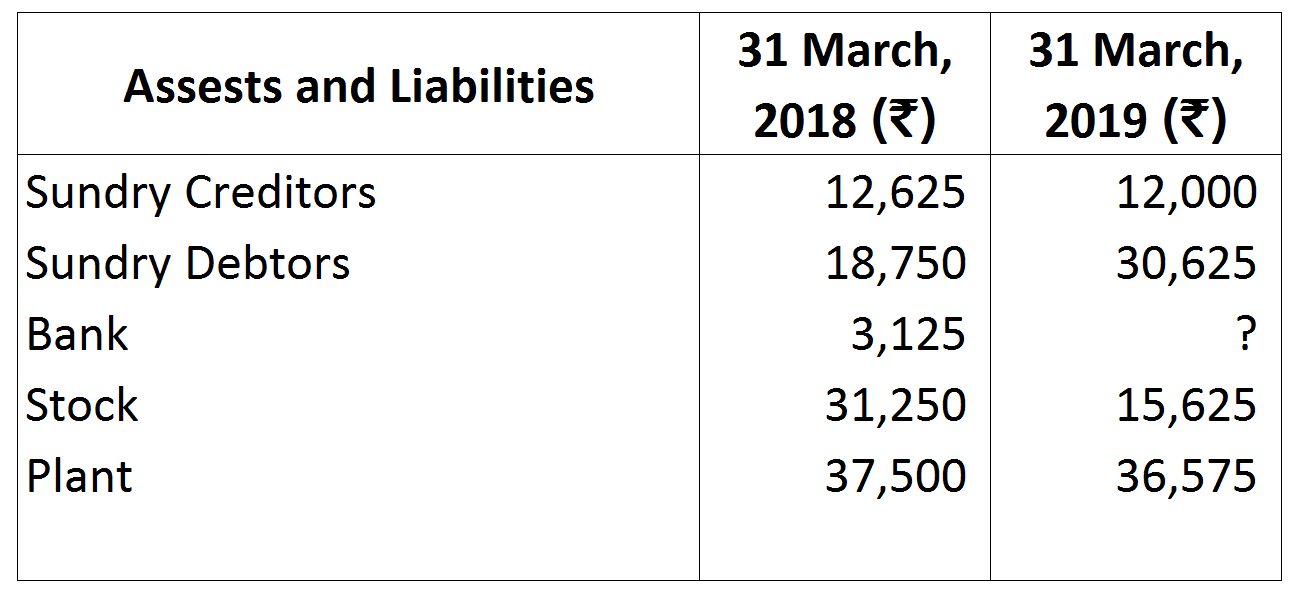
Following information is obtained from the books of Vinay, who maintained his books of account under Single Entry System:
Vinay banks all receipts and makes payments by means of cheque.
From the above information, prepare Trading and Profit and Loss Account for the year ended 31st March, 2019 and Balance Sheet as on that date.
View full question & answer
6 Marks Question - Account STD 11 Commerce Questions - Vidyadip