Question
Define ‘speciation’. Explain how speciation occurs.

Answer

The process by which new species develop from the existing species is known as speciation. New species are formed when the population of same species splits into two separate groups which then get isolated from each other geographically by the barriers such as mountain ranges, rivers or the sea. The geographical isolation of the two groups of population leads to their reproductive isolation due to which no genes are exchanged between them. However, breeding continues within the isolated populations producing more and more generations. Over the generations, the processes of genetic drift (random change in gene frequency), and natural selection operate in different ways in the two isolated groups of population and make them more and more different from each other. After thousands of years, the individuals of these isolated groups of population become so different that they will be incapable of reproducing with each other even if they happen to meet again. We then say that two new species have been formed.
Need a full question paper?

Generate a complete, print-ready paper with questions like this in minutes — across 16+ boards, with answer keys.

Start Generating Free

Similar questions

Out of bacteria, spider, fish and chimpanzee, which organism has a better body design in evolutionary terms? Give reason for your answer.
What is meant by strong bases and weak bases? Classify the following into strong bases and weak bases: $NH _4 OH , Ca ( OH )_2, NaOH , KOH , Mg ( OH )_2$
If one hold his breath after expiration for about 30sec., would there still be occurring any exchange of respiratory gases in the lung during this period? Explain.
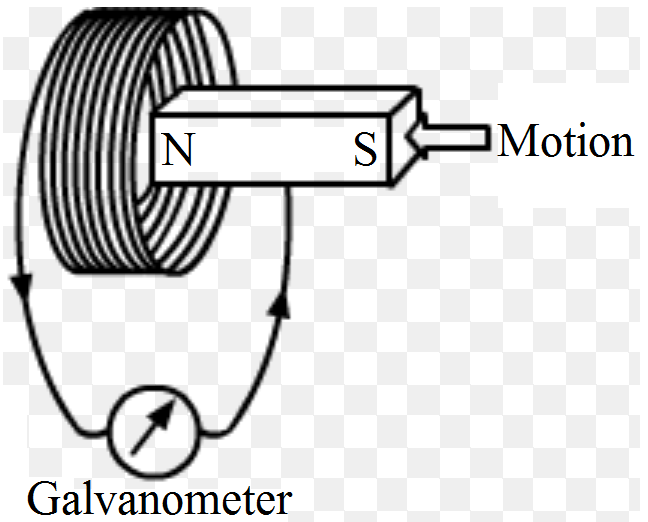
When the magnet shown in the diagram below is moving towards the coil, the galvanometer gives a reading to the right.
  1. What is the name of the effect being produced by the moving magnet?
  2. State what happens to the reading shown on the galvanometer when the magnet is moving away from the coil.
  3. The original experiment is repeated. This time the magnet is moved towards the coil at a great speed. State two changes you would notice in the reading on the galvanometer.
A spherical mirror produces an image of magnification -1.0 on a screen placed at a distance of 30 cm from the pole of the mirror.
  1. Write the type of mirror in this case.
  2. What is the focal length of the mirror?
  3. What is the nature of the image formed?
  4. Draw the ray diagram to show the image formation in this case.
Size of image of an object by a mirror having a focal length of 20cm is observed to be reduced to $\frac{1}{3}\text{rd}$ of its size. At what distance the object has been placed from the mirror? What is the nature of the image and the mirror?
A man sits in an optician's chair looking into plane mirror which is 2m away from him and views the image of a chart which faces the mirror and is 50cm behind his head. How far away from his eyes does the chart appear to be?
How can the reproductive health be maintained and sexually transmitted disease (STDs) be prevented?
  1. Draw a diagram to show the formation of image of a distant object by a myopic eye. How can such an eye defect be remedied?
  2. State two reasons due to which this eye defect may be caused.
  3. A person with a myopic eye cannot see objects beyond a distance of 1.5 m. What would be the power of the corrective lens used to restore proper vision?
What are the qualities of an ideal source of energy?