Question
Define the following:
  1. Sol
  2. Aerosol
  3. Emulsion
  4. Foam
Given one example of each.

Answer

  1. Sol: Sol is a colloid in which tiny solid particles are dispersed in a liquid medium.
Examples are ink and soap solution.
  1. Aerosol: Aerosol is a colloid in which a solid or liquid is dispersed in a gas.
Examples are hairspray and fog.
  1. Emulsion: An emulsion is a colloid in which minute droplets of one liquid are dispersed in another liquid which is not miscible with it.
Examples are milk and butter.
  1. Foam: A foam is a colloid in which a gas is dispersed in a liquid medium.
Examples are soap bubbles and shaving cream.

Need a full question paper?

Generate a complete, print-ready paper with questions like this in minutes — across 16+ boards, with answer keys.
Start Generating Free

Similar questions

What is a soundboard? Explain the working of a soundboard with the help of a labelled diagram.
Write the differences between mass and weight of an object.
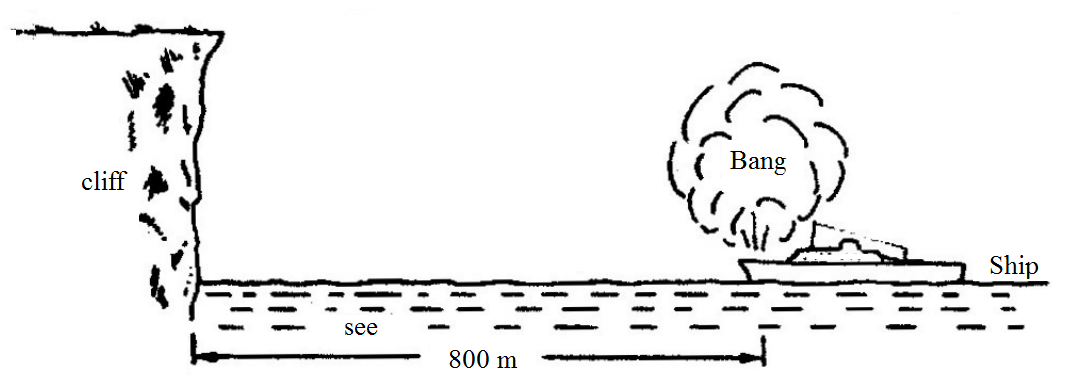
The drawing shoes a ship $800\ m$ from a cliff. A gun is fired on the ship. After $5$ seconds the people at the front of the ship hear the sound of the gun again.

  1. What is the name of this effect?
  2. What happens to the sound at the cliff?
  3. How far foes the sound travel in $5$ seconds?
  4. Calculate the speed of sound.
A car is travelling along the road at $8 ms^{-1}$. It accelerates at $1 ms^{-2}$ for a distance of 18 m . How fast is it then travelling?
One of the forms of a naturally occurring solid compound $P$ is usually used for making the floors of houses. On adding a few drops of dilute hydrochloric acid to $P$, brisk effervescence are produced. When $50\ g$ of reactant $P$ was heated strongly, than $22\ g$ of a gas $Q $and $28\ g$ of a solid $R$ were produced as products. Gas $Q$ is the same which produced brisk effervescence on adding dilute HCl to $P$. Gas $Q$ is said to cause global warming whereas solid $R$ is used for white-washing.
a. What is (i) solid $P$ (ii) gas $Q$, and (iii) solid $R$.
b. What is the total mass of $Q$ and $R$ obtained from $50\ g$ of $P$ ?
c. How does the total mass of $Q$ and $R$ formed compare with the mass of $P$ taken?
d. What conclusion do you get from the comparison of masses of products and reactant?
e. Which law of chemical combination is illustrated by the example given in this problem?
Suppose a planet exists whose mass and radius both are half those of the earth. Calculate the acceleration due to gravity on the surface of this planet.
Describe an experiment to show that sound cannot pass through vacuum.
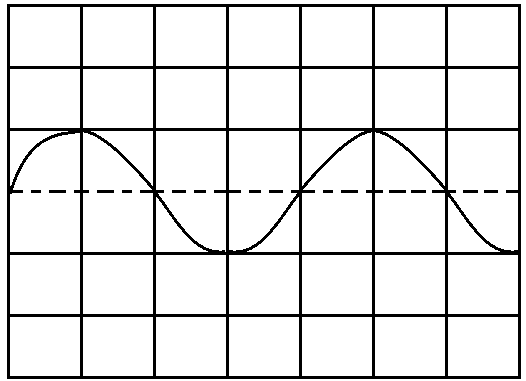
Figure X showa a trace of a sound wave produced by a particular tuning fork:


  1. On the graph paper given in Figure Y, draw a trace of the sound wave which has higher frequency than that shown in Figure X.
  2. On the graph paper shoen in Figure Z, draw a trace of the sound wave which has a larger amplitude than that shown in Figure X.
A ball of mass $200\ g$ falls from a height of $5$ metres. What is its kinetic energy when it just reaches the ground? $(8=$ $9.8 m / s$ ).
How will you separate a mixture of common salt, sulphur powder and sand?