Question
  1. Define the term redox couple. Write the practical application of redox couple.
  2. Split $2\text{K}\text{(s)}+\text{Cl}_2\text{(g)}\xrightarrow{ \ \ \ \ \ }2\text{KCl}\text{(s)}$ into oxidation and reducton half reaction.

Answer

  1. Redox couple. It is defined as having together the oxidised and reduced forms of a substance taking part in an oxidation or reduction half reaction e.g. $\frac{\text{Zn}^{2+}}{\text{Zn}}$ and $\frac{\text{Cu}^{2+}}{\text{Cu}}$ form a redoxc couple. application. These are used to make electrochemical cell.
  2. $2\text{K}\xrightarrow{ \ \ \ \ }2\text{K}^++2\text{e}^-$ (oxidation half reaction)
$\text{Cl}_2+2\text{e}^-\xrightarrow{ \ \ \ \ }2\text{Cl}^-$ (reduction half reaction)

Need a full question paper?

Generate a complete, print-ready paper with questions like this in minutes — across 16+ boards, with answer keys.
Start Generating Free

Similar questions

Predict the dipole moment of:
  1. A molecule of the type $\mathrm{AX}_2$ having a linear geometry.
  2. A molecule of the type $\mathrm{AX}_4$ having tetrahedral geometry.
  3. A molecule of the type $\mathrm{AX}_2$ having angular geometry.
  4. A molecule of the type $\mathrm{AX}_4$ having square planar geometry.
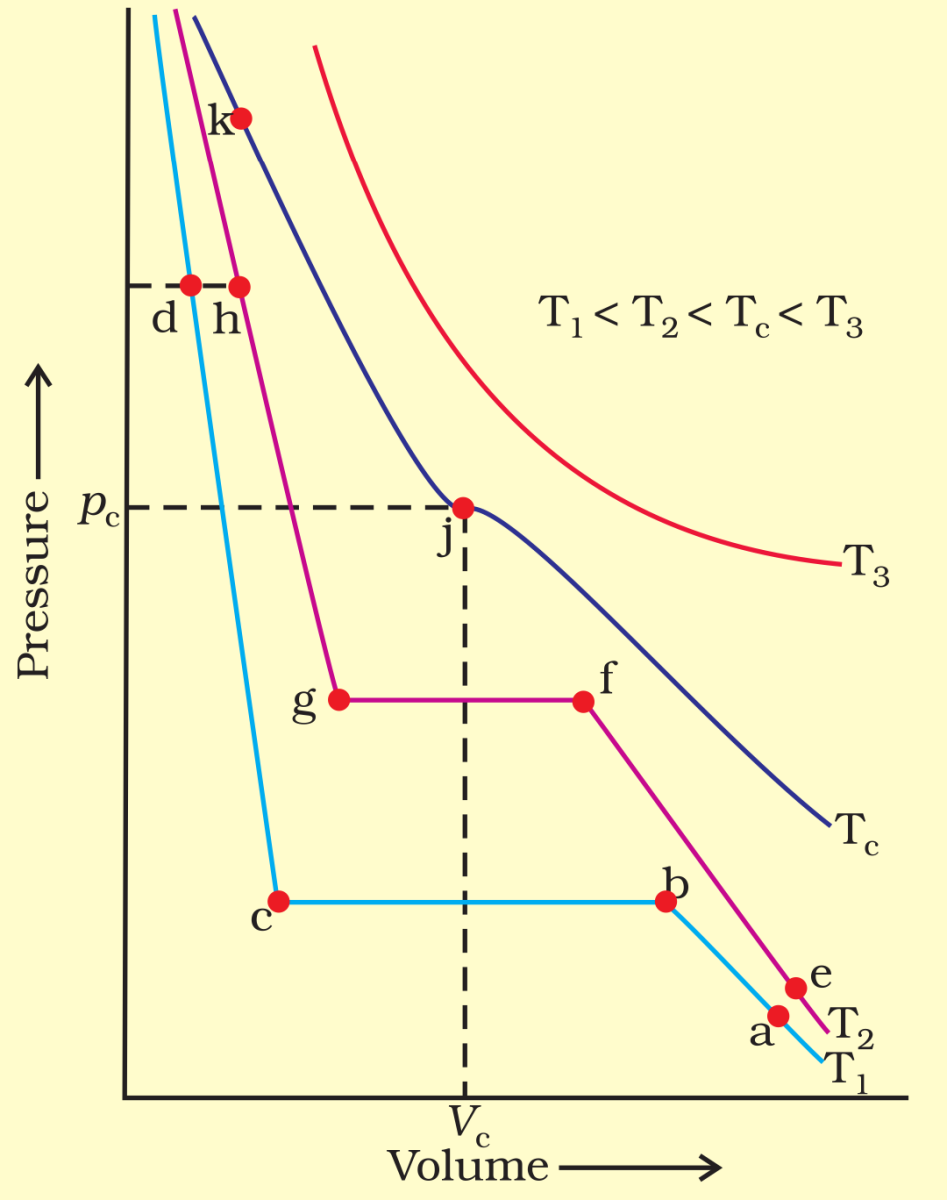
Isotherms of carbon dioxide at various temperatures are represented in Fig. Answer the following questions based on this figure.

a. In which state will $\mathrm{CO}_2$ exist between the points $a$ and $b$ at temperature $\mathrm{T}_1$ ?
b. At what point will $\mathrm{CO}_2$ start liquefying when temperature is $\mathrm{T}_1$ ?
c. At what point will $\mathrm{CO}_2$ be completely liquefied when temperature is $\mathrm{T}_2$.
d. Will condensation take place when the temperature is $T_3$ ?
e. What portion of the isotherm at $\mathrm{T}_1$ represent liquid and gaseous $\mathrm{CO}_2$ at equilibrium?
Complete the following chemical equations:
$\text{Z}+3\text{LiAlH}_4\rightarrow\text{X}+3\text{LiF}+3\text{AlF}_3$
$\text{X}+6\text{H}_2\text{O}\rightarrow\text{Y}+6\text{H}_2$
$3\text{X}+3\text{O}_2\xrightarrow{\triangle}\text{B}_2\text{O}_3+3\text{H}_2\text{O}$
i. $\mathrm{BaCl}_2, \mathrm{MgCl}_2, \mathrm{CaCl}_2, \mathrm{BeCl}_2$ [Increasing ionic, character]
ii. $\mathrm{Mg}(\mathrm{OH})_2, \mathrm{Ca}(\mathrm{OH})_2, \mathrm{Ba}(\mathrm{OH})_2, \mathrm{Sr}(\mathrm{OH})_2$, [Increasing solubility in water]
 
Write Lewis strucure of $\mathrm{O}_2{}-$ ion and find out oxidation state of each oxygen atom? What is the average oxidation state of oxygen in this ion?
What do you understand by the terms:
Hydrogenation.
Arrange the elements with the following electronic configurations in order of increasing electron gain enthalpy.
i. $1 s^2 2 s^2 2 p^5$
ii. $1 s^2 2 s^2 2 p^4$
iii. $1 s^2 2 s^2 2 p^3$
iv. $1 s^2 2 s^2 2 p^6 3 s^2 3 p^4$
Differentiate between mass and weight.
How can you apply green chemistry for the following:To reduce the consumption of petrol and diesel.
How does electronegativity and non - metallic character related to each other?