MCQ
$(\Delta\text{Q}-\Delta\text{W})$ is:
  • A
    Path dependent.
  • B
    Path independent.
  • C
    Equal to $\Delta\text{U}.$
  • D
    Both (b) and (c).

Answer

  1. Both (b) and (c).

Need a full question paper?

Generate a complete, print-ready paper with questions like this in minutes — across 16+ boards, with answer keys.

Start Generating Free

Similar questions

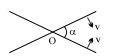
Find the speed of the intersection point $O$ of the two wires if the wires starts moving perpendicular to itself with speed $v$ as shown in figure.
An empty balloon weighs $1\, g$. The balloon is filled with water to the neck and tied with  a massless thread. The weight of balloon alongwith water is $101\, g$. The balloon filled with  water is weighed when fully immersed. Then, its weight in water is ...... $g$
One second is equal to
A cube has a side of length $1.2 \times 10^{-2}\; m$. Calculate its volume.
From a circle of radius $a,$ an isosceles right angled triangle with the hypotenuse as the diameter of the circle is removed. The distance of the centre of gravity of the remaining position from the centre of the circle is
The scale on a steel metre stick is calibrated at $20^o\,C$.The error in the reading of $50\,cm$ at $30^o\,C$ is: (take linear expansion coefficient of steel $= 1.0 \times 10^{-5} /  ^oC)$
Four bodies $P, Q, R$ and $S$ are projected with equal velocities having angles of projection $15^o , 30^o , 45^o $  and $60^o $ with the horizontal respectively. The body having shortest range is
A particle is moving in a circular path of radius a under the action of an attractive potential $U = - \frac{k}{{2{r^2}}}$ Its total energy is
The average resisting force that must act on a $5 \,kg$ mass to reduce its speed from $65 \,cm/s$ to $15 \,cm/s$ in $0.2\,s$ is .......... $N$
Wave equations of two particles are given by ${y_1} = a\sin (\omega \,t - kx)$, ${y_2} = a\sin (kx + \omega \,t)$, then