Question
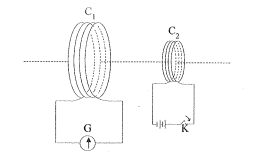
Describe experiment of two stationary coil which explains clectromagnetic induction.

Answer

Image

Even if there is no relative motion between two coils, phenomenon of electromagnetic induction can be obtained.
Two stationary coils $C _1$ and $C _2$ are shown in figure.
Galvanometer is connected to $C _1$ and battery and key K are connected to $C _2$.
On pressing K (closing), galvanometer shows momentary deflection & then comes to zero.
After pressing (closing) key and keeping it in same situation, galvanometer does not show deflection.
On releasing key (opening), galvanometer shows deflection in opposite direction.
On repeating experiment keeping iron rod on axis of coil, very large deflection is seen in galvanometer.
Thus, it is proved that a changing magnetic field produces electric current.

Need a full question paper?

Generate a complete, print-ready paper with questions like this in minutes — across 16+ boards, with answer keys.
Start Generating Free

Similar questions

Each side of a square is 90 cm long. At its corners $-2,+3,-4$ and +5 micro coulomb charges are placed respectively. Find the electric potential at the centre of the square.
An electron gun emits 2.0 × 10¹⁶ electrons per second. What electric current does this correspond to?
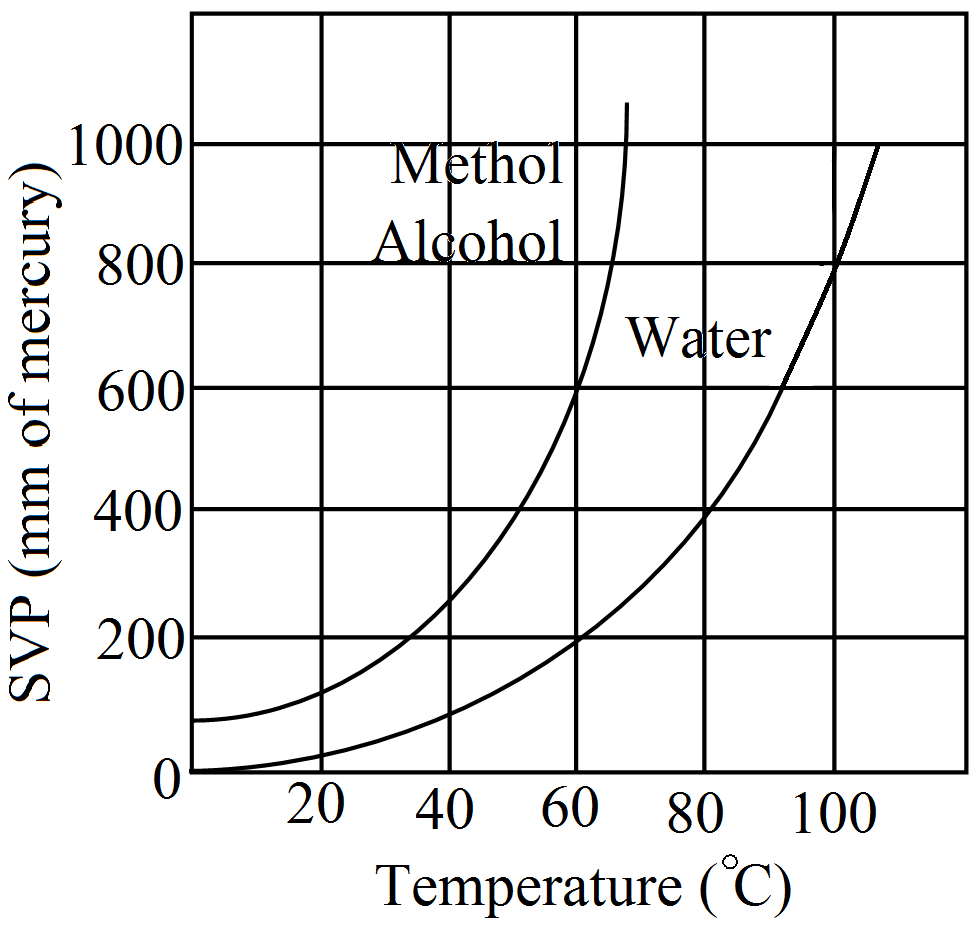
Using figure. of the text, find the boiling point of methyl alcohol at 1atm (760mm of mercury) and at 0.5atm.

Can the voltage drop across the inductor or the capacitor in a series LCR circuit be greater than the applied voltage of the a.c. source? Justify your answer.
Explain Rutherford's argument for scattered $\alpha$-particles.
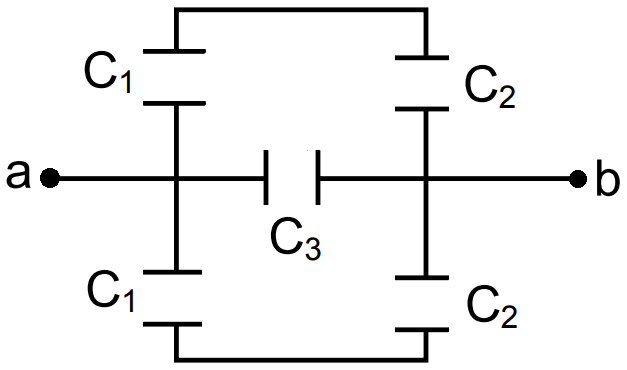
Find the equivalent capacitance of the syatem shown in figure between the points a and b.

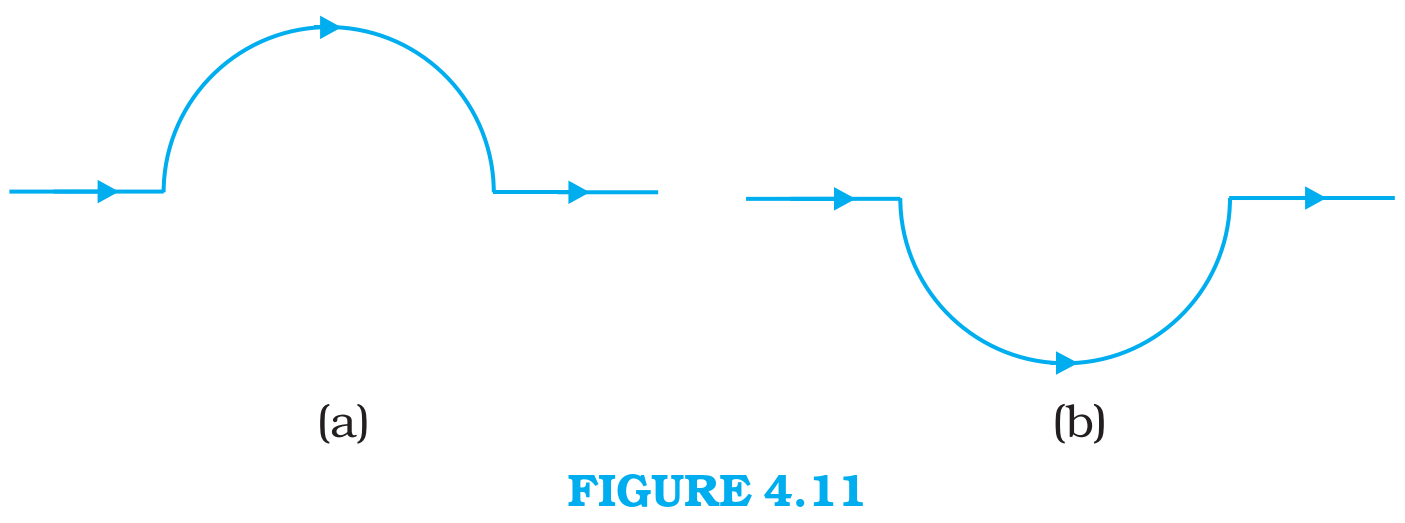
A straight wire carrying a current of $12 A$ is bent into a semi-circular arc of radius $2.0 cm$ as shown in Fig. 4.11 (a). Consider the magnetic field $B$ at the centre of the arc. (a) What is the magnetic field due to the straight segments? (b) In what way the contribution to $B$ from the semicircle differs from that of a circular loop and in what way does it resemble? (c) Would your answer be different if the wire were bent into a semi-circular arc of the same radius but in the opposite way as shown in Fig. 4.11(b)?
Image
The charge on a proton is +1.6 × 10-19C and that on an electron is -1.6 × 10-19C. Does it mean that the electron has a charge 3.2 × 10-19C less than the charge of a proton?
Identify the electromagnetic waves whose wavelengths lie in the range:
  1. 10–11 m < $\lambda$ < 10–14 m
  2. 10–4 m < $\lambda$ < 10–6 m
Write one use for each.
What does the red shift in the spectrum of a galaxy indicate?