Question
Explain Rutherford's argument for scattered $\alpha$-particles.

Answer

In $\alpha$-particle scattering experiment most $\alpha$-particles pass through without being detected.
Only about $0.14 \% \alpha$-particles scatter by more than $1^{\circ}$ and about 1 in 8000 deflect by more than $90^{\circ}$.
For this Rutherford argued that for the $\alpha$-particle to be deflected backwards it must experience a large repulsive force.
This is possible only when almost entire mass of the atom is concentrated in its center and this center is positively charged.
Then incoming $\alpha$-particle could get very close to the positive charge without penetrating it and such a close encounter would result in a large deflection.
This agreement supported the hypothesis of the nuclear atom. This is why Rutherford is credited with the discovery of the nucleus.

Need a full question paper?

Generate a complete, print-ready paper with questions like this in minutes — across 16+ boards, with answer keys.
Start Generating Free

Similar questions

Explain Gauss's law for magnetism
Write the equation of electric potential for electric dipole and discuss its special cases.
  1. Explain the meaning of the statement ‘electric charge of a body is quantised’.
  2. Why can one ignore quantisation of electric charge when dealing with macroscopic i.e., large scale charges?
Two cells of emfs 1.5 V and 2.0 V having internal resistances 0.2 $\Omega$ and 0.3 $\Omega$respectively are connected in parallel. Calculate the emf and internal resistance of the equivalent cell.
Derive an expression for capacitance of the parallel plate capacitor.
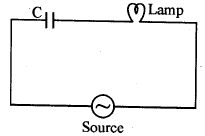
An electric lamp having coil of negligible inductance connected in series with a capacitor and an AC source is glowing with certain brightness. How does the brightness of the lamp change on reducing the (i) capacitance, and (ii) the frequency? Justify your answer.

A wheel is making revolutions about its axis with uniform angular acceleration. Starting from rest, it reaches 100rev/sec in 4 seconds. Find the angular acceleration. Find the angle rotated during these four seconds.
What is the average value of ac voltage
$\text{V = V}_0\sin\omega\text{t}$
Over the time interval t = 0 to $\text{t}=\frac{\pi}{\omega}.$
Any current flowing through a copper wire when passed through an iron wire of same thickness. What will be the effect on its drift velocity?
Two beams, one of red light and the other of blue light, of the same intensity are incident on a metallic surface to emit photoelectrons. Which one of the two beams emits electrons of greater kinetic energy?