Question
Differentiate between the terms strong electrolyte and weak electrolyte (stating any two differences)

Answer

Strong ElectrolytesWeak Electrolytes
Electrolytes which allow a large amount of electricity to flow through them.Electrolytes which allow small amounts of electricity to flow through them.
These are good conductors of electricity.These are poor conductors of electricity.
These almost completely dissociate in the fused or aqueous solution state.These are partially dissociated in the fused or aqueous solution state.
These solutions contain only free mobile ions. These solutions contain ions as well as molecules.

Need a full question paper?

Generate a complete, print-ready paper with questions like this in minutes — across 16+ boards, with answer keys.
Start Generating Free

Similar questions

How electrolysis can be used in extraction of aluminium? Why aluminium cannot be reduced by conventional reducing agents?
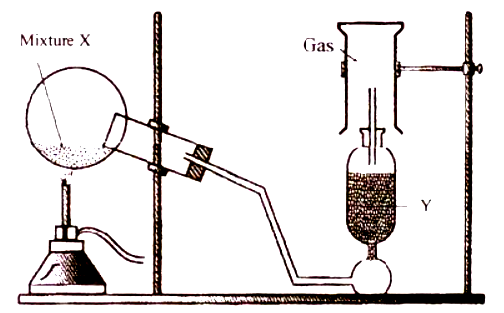
The diagram shows an experimental set-up for the laboratory prepration of a pungent smelling gas. The gas is alkaline in nature.

(i) Nature the gas collected in the jar.(ii) Write the balance equation for the above preparation.(iii) How is the gas being collected?(iv) Name the drying agent used.(v) How will you find that the jar is full of gas?
What are the conditions necessary for the formation of covalent molecule? Give their properties.
Draw the structure of ammonia and give the reason for alkaline nature of aqueous ammonia.
The gases hydrogen, oxygen, carbon dioxide, sulphur dioxide, and chlorine are arranged in order of their increasing relative molecular masses. Given 8 g of each gas at S.T.P., which gas will contain the least number of molecules and which gas the most?
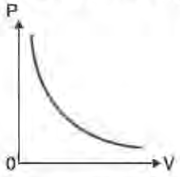
(i) Identify which law is applicable in the given below graph. State the law.
Image
(ii) One mole of hydrocarbon is subjected to combustion. The product obtained is condensed and the resulting gaseous product occupied a volume of 89.6 $l$ at STP. Oxygen required for this combustion is 145.6 $l$ at STP. What should be the molecular formula of X?
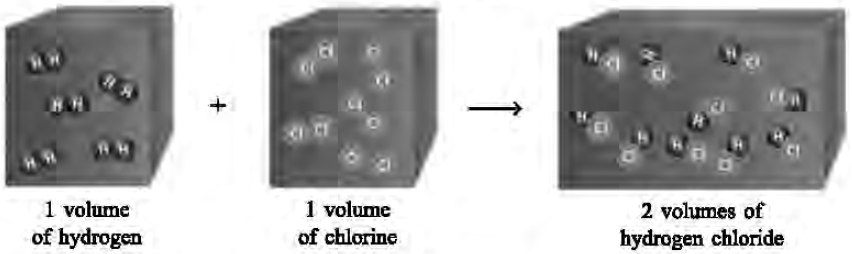
(i) Look at the given figure and identify the law applicable here. State the law.
Image
(ii) 120 cm3 of hydrogen gas is mixed with 120 cm3 of oxygen gas and then exploded. Calculate the composi- tion of the resulting mixture on cooling.
Four elements A, B, C, D and E have the following electron arrangements in their atoms:
A2, 8, 6
B2, 8, 8
C2, 8, 8, 1
D2,7
E2, 8, 2
(i) What type of bond is formed when 'A' combines with 'C'?
(ii) Which two elements will combine to form a covalent bond?
(iii) Which element is not able to form any type of bond?
(iv) Draw electron dot structure of bond formation of 'A' molecule.
(v) Which ion will be formed by 'D' to attain stability? Justify with the chemical equation.
A chemical reaction involving the formation of ammonia (NH3) from nitrogen gas (N2) and hydrogen gas (H2) is conducted in a sealed container at constant temperature and pressure. Initially, the container holds 1.00 mole of nitrogen gas and 3.00 moles of hydrogen gas.
(i) According to Avogadro's law, what can be said about the volumes of the reactant gases and the product gas in the container?
(ii) If the reaction goes to completion, what will be the number of moles of ammonia produced?
(iii) Calculate the volume of the ammonia gas produced at the same temperature and pressure.
(iv) Explain the application of Avogadro's law in this scenario.
(v) Discuss the practical implications of Avogadro's law in chemical reactions
You are provided with two separate colorless solutions. Solution A is suspected to contain either silver (Ag+) or copper(II) (Cu2+) ions, Solution B is suspected to contain either sulfate (SO42-) or carbonate (CO32-) ions.
Design a step-by-step procedure to identify the ions present in both solutions, detailing the reagents you would use, the observations you would expect, and the chemical equations for the reactions involved.