Question
Differentiate between:
a. hypocotyol and epicotyl
b. coleoptile and coleorrhiza
c. integument and testa
d. perisperm and pericarp

Answer

a. Hypocotyl - The portion of embryonic axis between the radical and cotyledon
Epicotyl - The portion of embryonic axis between the plumule and cotyledon
b. Coleoptile - It is a conical protective sheath over the plumule in monocot seeds.
Coleorrhiza - It is a protective sheath over the radical and root tip.
c. Integument is the covering of ovule, while testa is the outer seed coat developed from the outer integuments.
d. Perisperm is the residual persistent nucellus, while the pericarp is the fruit wall derived from the ovary wall.

Need a full question paper?

Generate a complete, print-ready paper with questions like this in minutes — across 16+ boards, with answer keys.
Start Generating Free

Similar questions

What is wildlife conservation? What are its objectives? Name the international organisations regarding the conservation of wildlife.
Why is thalassemia categorised as a Mendelian disorder? State the condition when an individual will suffer from the disease.
What is called retrovirus? Show the replication of retrovirus with the help of diagram.
a. Draw the embryo sac of a flowering plant and label the following:
i. Central cell
ii. Chalazal end
iii. Synergids
b. Name the cell and explain the process it undergoes to develop into an embryo sac.
c. Explain the development of endosperm in coconut.
Read the following and answer any four questions from (i) to (v) given below:

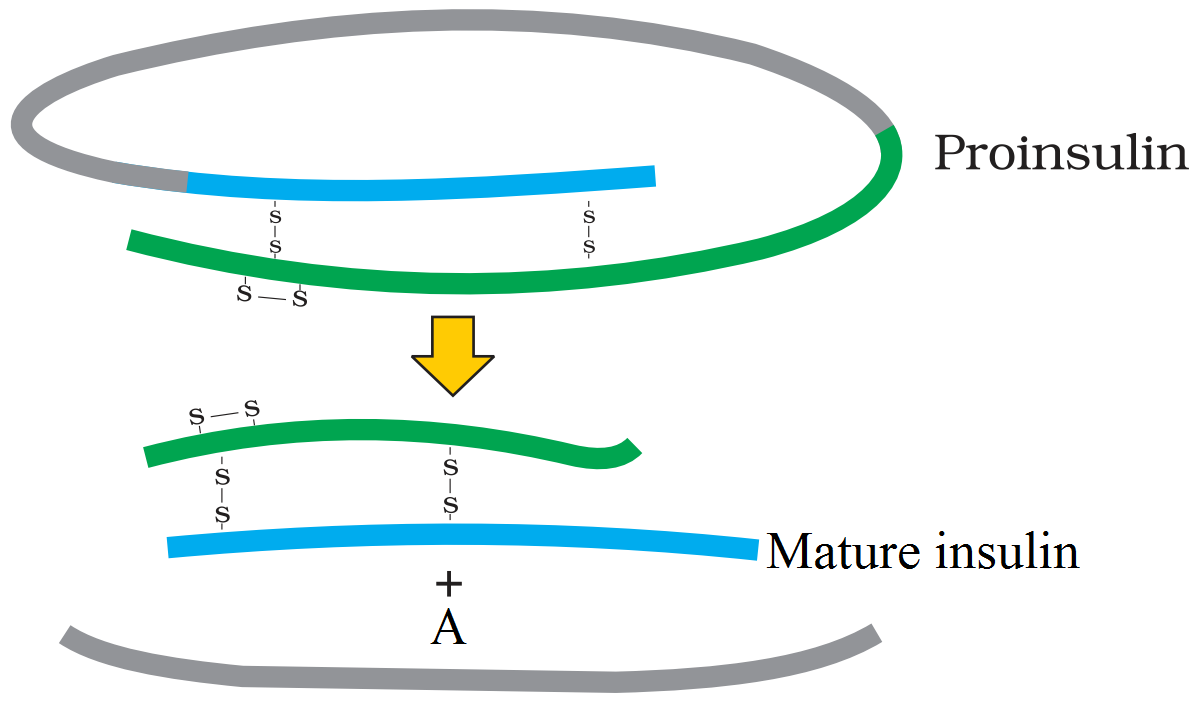
Insulin used to cure diabetes was earlier extracted from pancreas of slaughtered cattle and pigs. Insulin extracted from an animal source, though caused some patients to develop allergy or other types of reactions to the foreign protein. Human insulin consists of two short polypeptide chains : chain A and chain B, that are linked together by disulphide bridges. In mammals including humans, insulin is synthesised as a pro-hormone which contains an extra stretch called the C-peptide. This C peptide is not present in mature insulin and is removed during maturation into insulin.

  1. Identify A in the given figure.

  1. Polypeptide chain A.
  2. Polypeptide chain B.
  3. Polypeptide chain C.
  4. None of these.
  1. The following is a list of some stages involved in producing human insulin from genetically engineered bacteria.
  1. The bacteria are cultured in a fermenter for large scale production.
  2. Recombinant insulin is extracted from the bacterial cells that expresses insulin gene.
  3. The same restriction enzyme is used again to cut the bacterial plasmid for insertion of the human insulin gene.
  4. Bacteria take up the plasmid carrying the insulin gene.
  5. A restriction enzyme is used to cut human DNA to extract the insulin gene.

Select the correct order of these stages.

  1.  1, 5, 3, 4, 2
  2. 2, 4, 3, 5, 1
  3. 4, 5, 3, 2, 1
  4. 5, 3, 4, 1, 2
  1. To insert the insulin gene into bacterial DNA, both the bacterial plasmid and the human chromosome containing the insulin gene are treated with the same restriction enzyme. Using the same restriction enzyme ensures that
  1. DNA ligase is able to join the segments of human and bacterial DNA.
  2. The exact length of nucleotides matching the insulin gene is removed from the plasmid.
  3. Both the bacterial and human DNA will contain sticky ends.
  4. Sticky ends in the cut plasmid and insulin gene are complementary.
  1. Why is the fermentor important for the production of human insulin by transgenic bacteria?
  1. It provides optimal conditions for the transgenic to multiply rapidly.
  2. It facilitates the extraction and purification of insulin from the transgenic bacteria.
  3. It maximise the rate of fermentation of the transgenic bacteria.
  4. It provides the low-oxygen conditions that are important for insulin production.
  1. A bacteriologist carries out his first attempt at engineering E.coli with the gene for human insulin. During the process, he realises that his stock of DNA ligase has depleted but decides to continue anyway. What is a likely consequence of his decision?
  1. Bacteria with the rDNA will not be able to form colonies in a fermenter.
  2. The resulting plasmids are not able to enter the E.coli bacteria even after applying heat shock.
  3. The resulting E.coli bacteria do not contain the human insulin gene.
  4. The bacterial plasmids do not have sticky ends and are unable to accommodate the human gene.
A patient is suffering from ADA deficiency. Can the patient be cured? How?
A bright student of class XI, under peer pressure started taking drugs. He started neglecting studies, misbehaving with parents and friends in school. The principal of school counselled him, but it had no effect. His parents took him to a rehabilitation center. After a few months, he came back recovered.
  1. What is drug abuse?
  2. Name some commonly abused drugs and their source.
  3. What should be the attitude of his parents after his return?
  4. What values did the principal reflect through his initiative?
Explain any three preventive measures to control microbial infections.
Name three species of fungi that cause ringworm. Mention the symptoms of this disease?
  1. Explain a monohybrid cross taking seed coat colour as a trait in Pisum sativum. Work out the cross upto F2 generation.
  2. State the laws of inheritance that can be derived from such a cross.
  3. How is the phenotypic ratio of F2 generation different in a dihybrid cross?