Question
Differentiate: Endocrine gland and Exocrine gland.

Answer

Endocrine glandExocrine gland
(i) These are ductless glands.They may or may not have ducts.
(ii) They pour secretion directly into the blood.The secretion is poured directly at the sight of action or reaches the target.
(iii) They secrete hormones.They secrete enzymes.
(iv) They control long term activities of target organs, e.g., thyroid glands.They control short term activity, e.g., gastric gland.

Need a full question paper?

Generate a complete, print-ready paper with questions like this in minutes — across 16+ boards, with answer keys.
Start Generating Free

Similar questions

Difference between an autotroph and a heterptroph. Give one example of each organism.
State any five functions of blood.
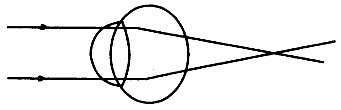
Given below is a diagrammatic representation of a defect of the human eye:

(i) Identify the defect.
(ii) Mention two reasons for the above defect.
(iii) State how the defect can be rectified.
(iv) Name the part of the eye responsible for maintaining the shape of the eyeball.
Draw a neat diagram of the stomatal apparatus found in the epidermis of leaves and label the Stoma, Guard cells, Chloroplast, Epidermal cells, Cell wall and Nucleus.
What is the significance of osmosis? Explain in brief.
What is the popular sign for the Family Planning and Welfare Centres in India?
List four common diseases prevalent in India. What measures have been taken to eradicate them?
What is the significance of meiosis?
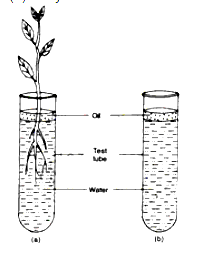
The figure below represents the set-up at the start of certain experiment to demonstrate an activity of plants:
(i) What is the aim of the experiment?
(ii) Why has oil been put in each test tube?
(iii) What will be the observations in the two test-tubes after about 2-3 days?
(iv) Give reasons to explain any change observed as answered in (iii) above.
(v) Why has the test-tube b without the plant, been taken in the experiment?
match the conditions in column A with the cause in column B.
A (Condition) B (Cause)
aDwarfism and mental retardation1shortage of glucose in blood
bDiabetes mellitus2Over secretion of growth hormone
cExcess of glucose in blood 3Insulin shock
dGigantism 4Over secretion of thyroxine
eEnlargement of breasts in adult males 5Hypothyroidism
fExophthalmic goitre 6Over secretion of cortical hormones