MCQ
Dimensional formula of self inductance is __________ .
- A$\left[M^1 L^1 T^{-2} A^{-2}\right]$
- B$\left[M^1 L^{-} T^{-1} A^{-2}\right]$
- C$\left[M^1 L^2 T^{-2} A^{-2}\right]$
- D$\left[M^1 L^2 T^{-2} A^{-1}\right]$
Generate a complete, print-ready paper with questions like this in minutes — across 16+ boards, with answer keys.
$\text{v}_1=\text{v}_2$
$\text{v}_1=13.6\text{v}_2$
$\text{v}_1=\frac{\text{v}_2}{\text{13.6}\cdot}$
$\text{v}_1=\sqrt{13.6}\text{v}_2$
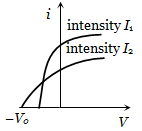
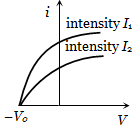
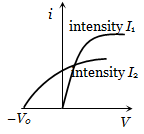
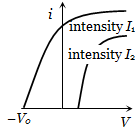
The curves (a), (b) (c) and (d) show the variation between the applied potential difference (V) and the photoelectric current (i), at two different intensities of light (I1 > I2). In which figure is the correct variation shown
|
(a)
|
(b)
|
(c)
|
(d)
|


When the reflecting or refracting rays do not actually intersect but appear to intersect when produced backwards,
The magnetic field to a small magnetic dipole of magnetic moment M, at distance r from the centre on the equatorial line is given by (in M.K.S. system)
|
(a) |
(b) |
(c) |
(d) |
If the resistance of a conductor is 5 W at 50oC and 7 W at 100oC then the mean temperature coefficient of resistance of the material is
|
(a) 0.008/oC |
(b) 0.006/oC |
(c) 0.004/oC |
(d) 0.001/oC |