Question
Discuss the advantages of computerised accounting system over the manual accounting system.

Answer

Computerised accounting offers several advantages vis-a-vis manual accounting, these are summarised as follows;
  • Speed: Accounting data is processed faster by using a computerised accounting system than it is achieved through manual efforts. This is because computers require far less time than human beings in performing a task.
  • Accuracy: The possibility of error is eliminated in a computerised accounting system because the primary accounting data is entered once for all the subsequent usage and processes in preparing the accounting reports. Normally, accounting errors in a manual accounting system occur because of repeated posting of same set of original data by several times while preparing different types of accounting reports.
  • Reliability: The computer system is well-adapted to performing repetitive operations. They are immune to tiredness, boredom or fatigue. As a result, computers are highly reliable compared to human beings. Since computerised accounting system relies heavily on computers, they are relatively more reliable than manual accounting systems.
  • Up-to-Date Information: The accounting records, in a computerised accounting system are updated automatically as and when accounting data is entered and stored. Therefore, latest information pertaining to accounts get reflected when accounting reports are produced and printed. For example, when accounting data pertaining to a transaction regarding cash purchase of goods is entered and stored, the cash account, purchase account and also the financial statements (trading and profit and loss account) reflect the impact immediately.
  • Real Time User Interface: Most of the automated accounting systems are inter-linked through a network of computers. This facilitates the availability of information to various users at the same time on a real time basis (that is spontaneously).
  • Automated Document Production: Most of the computerised accounting systems have standardised, user defined format of accounting reports that are generated automatically. The accounting reports such as Cash book, Trial balance, Statement of accounts are obtained just by click of a mouse in a computerised accounting environment.
  • Scalability: In a computerised accounting system, the requirement of additional manpower is confined to data entry operators for storing additional vouchers. The additional cost of processing additional transactions is almost negligible. As a result the computerised accounting systems are highly scalable.
  • Legibility: The data displayed on computer monitor is legible. This is because the characters (alphabets, numerals, etc.) are type written using standard fonts. This helps in avoiding errors caused by untidy written figures in a manual accounting system.
  • Efficiency: The computer based accounting systems ensure better use of resources and time. This brings about efficiency in generating decisions, useful informations and reports.

Need a full question paper?

Generate a complete, print-ready paper with questions like this in minutes — across 16+ boards, with answer keys.
Start Generating Free

Similar questions

Briefly list the generic considerations before sourcing an accounting software.
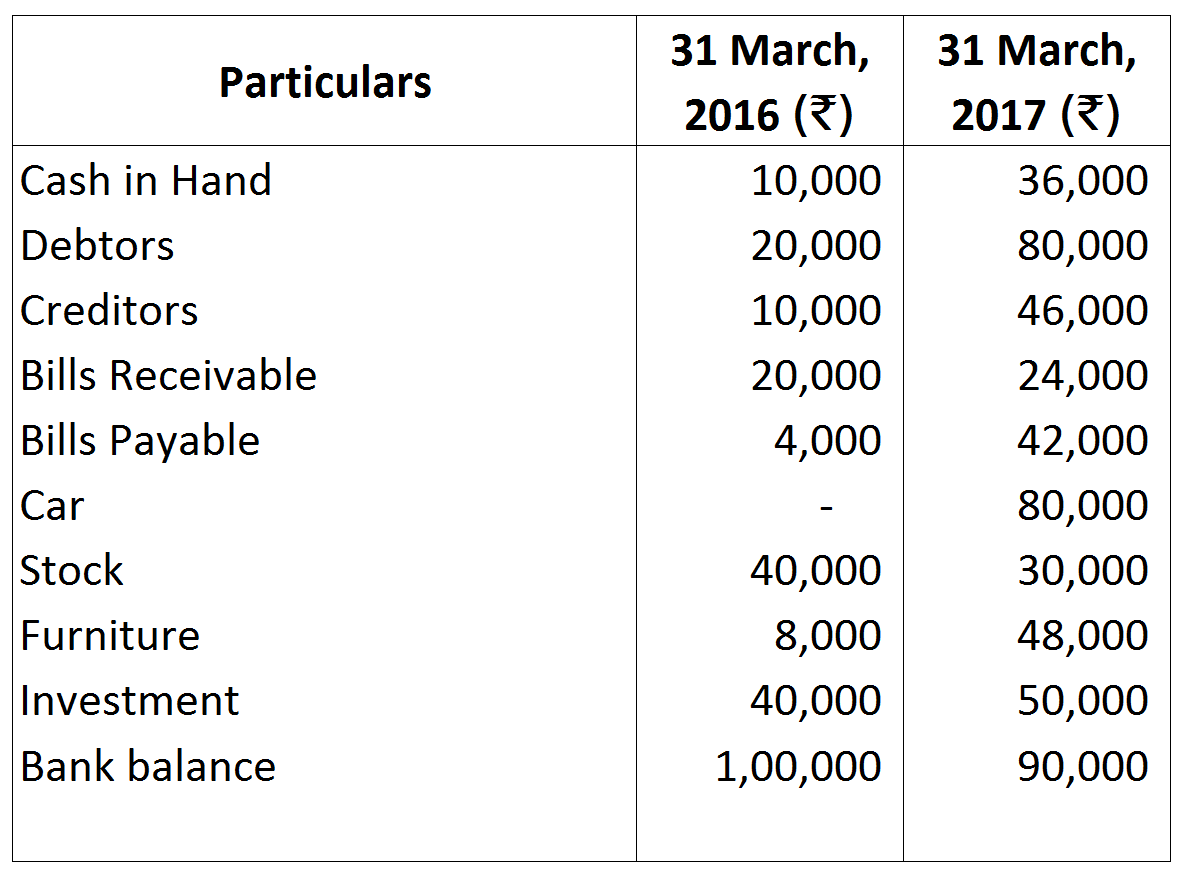
Charu do not keep proper books of accounts. Prepare the statement of profit or loss for the year ending 31-3-2017 from the following information:
The following adjustments are to be made:
  1. Proprietor withdrew cash ₹ 5,000 per month for private use.
  2. Depreciation @ 5% on Car and @ 10% on furniture.
  3. Outstanding Rent ₹ 6,000.
  4. Fresh Capital introduced during the year ₹ 30,000.
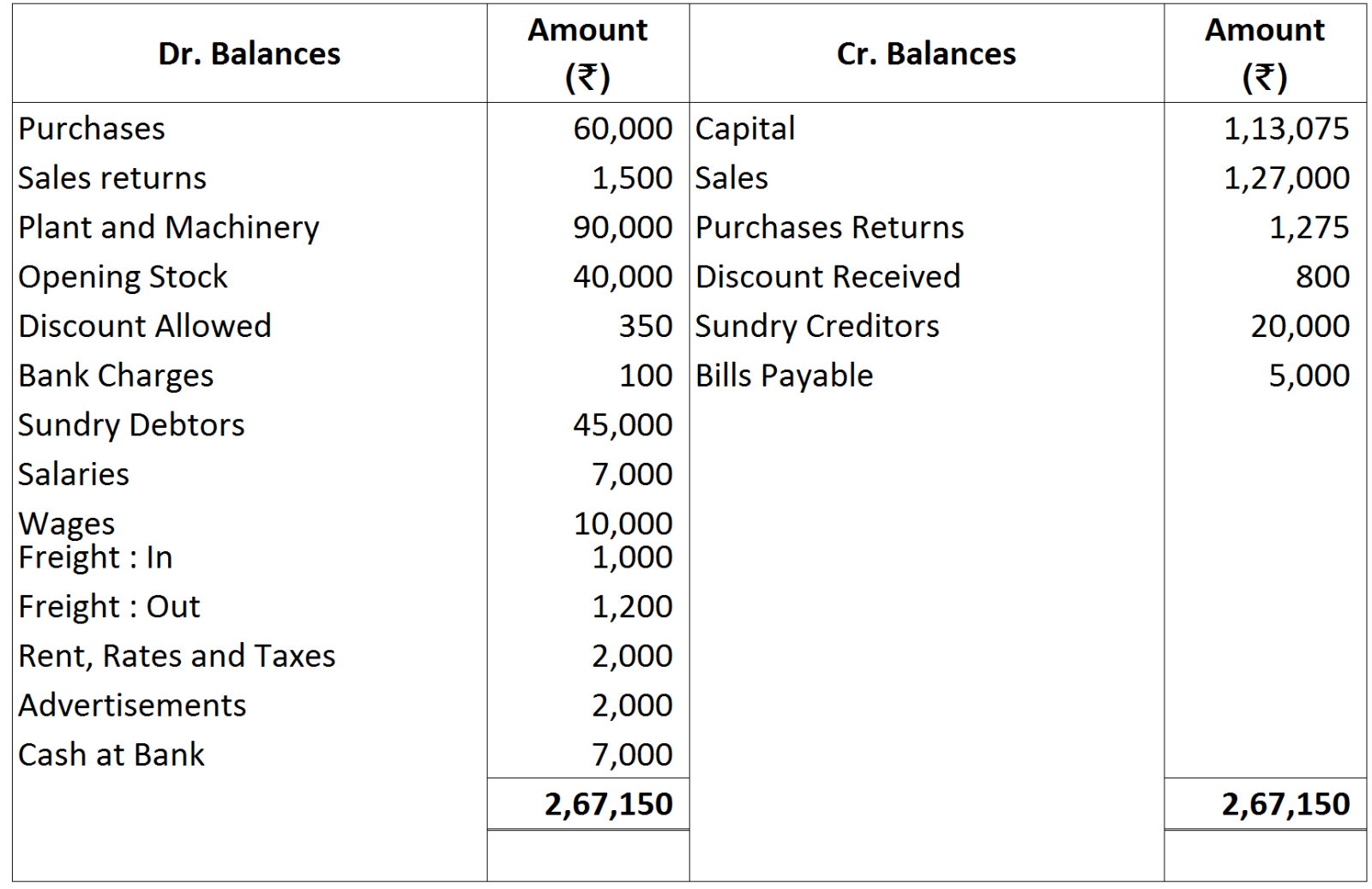
The Trial Balance shows the following balances as at 31st March, 2017:-
Closing Stock was valued at ₹ 35,000. Prepare Trading and Profit and Loss Account for the year ended 31st March, 2017 and Balance Sheet as at that date.
What are the different classes of errors? Which of them do not affect a Trial Balance?
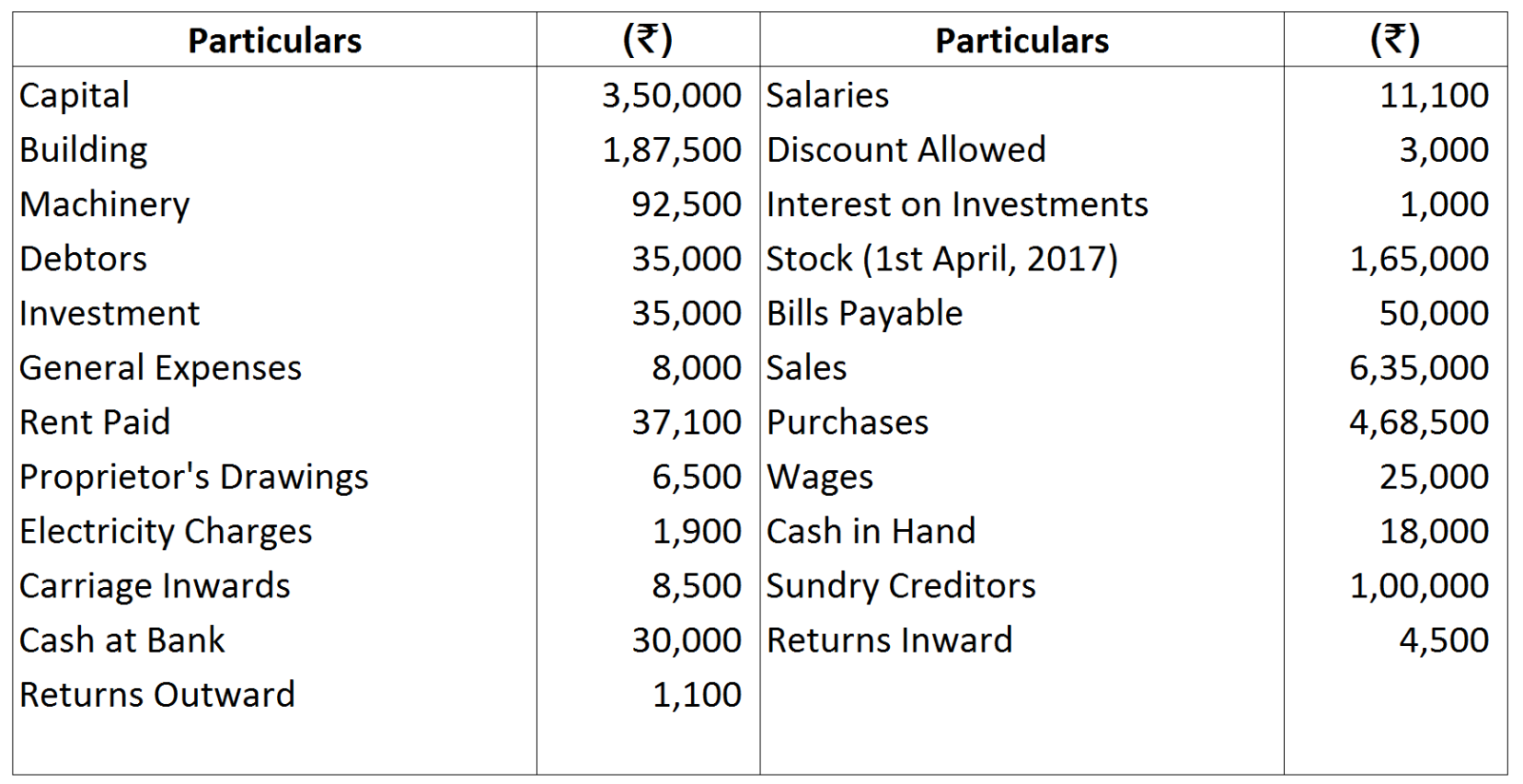
From the following balances taken from the books of Hari & Co., prepare Trading and Profit and Loss Account for the year ended $31^{st}$​​​​​​​ March,$ 2019:$ and Balance Sheet as at that date:

Closing Stock was valued at ₹ 1,82,100.
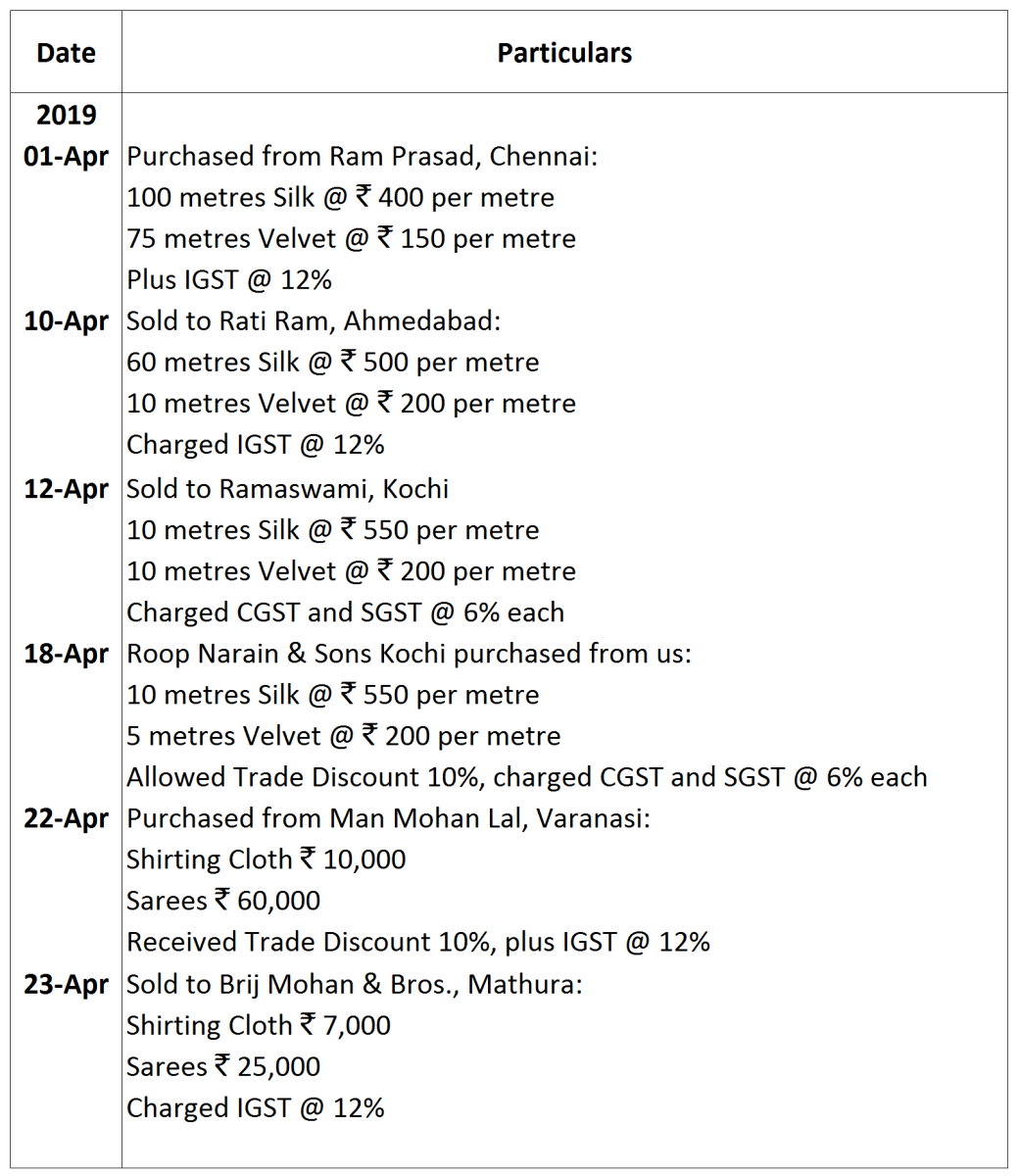
Write up Purchases and Sales Books from the following transactions of Kalyan Silks, Kochi, Kerala given for April, 2019 and post the totals in the Ledger.
Give Journal Entries for the following adjustments in final accounts:
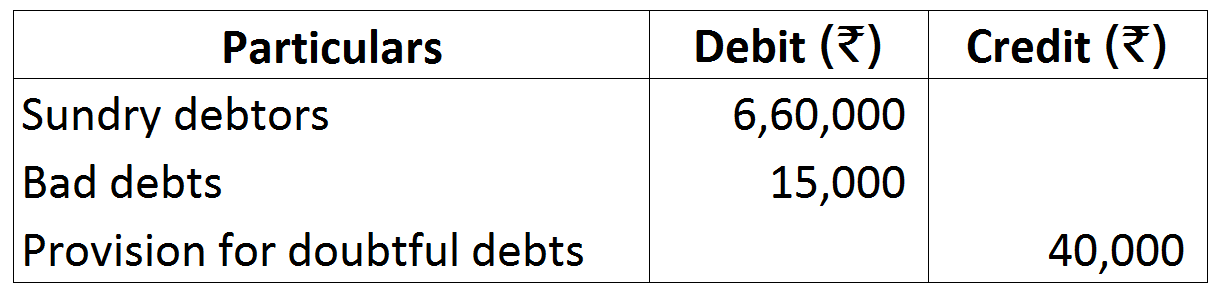
  1. Extract of Trial Balance as on 31st March, 2019

Additional Information:
  1. Additional Bad Debts ₹ 20,000.
  2. Maintain the provision for doubtful debts @ 5% on debtors.
  1. Goods costing ₹ 20,000 were distributed among staff members as free of cost. These goods were purchased paying IGST @ 12%.
  2. Two month's rent @ ₹ 15,000 per month is outstanding. Rent is subject to levy of 12% IGST.
  3. Included in general expenses is annual Insurance Premium of ₹ 10,000 paid for the year ending 30th June, 2019. IGST is levied @ 12%.
  4. Accrued commission ₹ 5,000. IGST is levied @ 12%.
Briefly explain the set of SQL statements to produce the receipts side of a cash book for Model-I.
From the following particulars, find out corrected bank balance as per Cash Book and thereafter prepare a Bank Reconciliation Statement as on 31st March, 2019 of a sole proprietor:
 
 
(i)
Bank overdraft as per the Cash Book.
80,000
(ii)
Cheques deposited as per the bank statement but not entered in the Cash Book.
3,000
(iii)
Cheques recorded for collection but not sent to the bank.
10,000
(iv)
Credit side of bank column casted short.
1,000
(v)
Bank charges recorded twice in the Cash Book.
100
(vi)
Customer's cheque returned as per the Bank Statement.
4,000
(vii)
Cheques issued but dishonoured on technical grounds.
3,000
(viii)
Bills collected by bank directly.
20,000
(ix)
Cheque received entered twice in the Cash Book.
5,000
What is a Cash Book? What are the types of Cash Book? How is it balanced?