Question
What are the different classes of errors? Which of them do not affect a Trial Balance?

Answer

Keeping in view their nature, errors can be classified into following four categories:
  1. Errors of Omission.
  2. Errors of Commission.
  3. Errors of Principle.
  4. Compensating Errors.
Errors not affecting the Trial Balance or Two-sided Errors are those errors which do not affect the agreement of Trial Balance. Such errors are not disclosed by the Trial Balance. Following are the examples of such errors:
  1. Errors of Principle, i.e., errors which arise due to incorrect application of principles of accounting. Suppose on purchase of a typewriter or printer, Office Expenses Account is debited, Trial Balance will still match.
  2. Compensating Errors: If the effect of one error is cancelled by the effect of some other error or errors, Trial Balance will still match. Suppose, an amount of ₹ 10 received from A is not credited to his account and the total of the Sales Book is ₹ 10 in excess, the omission of credit to A's Account will be made up by the increased credit to the Sales Account; the Trial Balance will still match.
  3. Errors of complete omission.
  4. Posting correct amount on the correct side but in wrong account.
  5. Recording wrong amount in the books of original entry (but the recorded amount is correctly debited and credited).
  6. Recording both aspects of a transaction twice in the books of account.

Need a full question paper?

Generate a complete, print-ready paper with questions like this in minutes — across 16+ boards, with answer keys.

Start Generating Free

Similar questions

Prepare Bank Reconciliation Statement as on 30th September, 2016 from the following particulars:
 
 
(i)
Bank Balance as per Pass Book.
10,000
(ii)
Cheque deposited into bank but no entry was passed in Cash Book.
500
(iii)
Cheque received and entered in Cash Book but not sent to bank.
1,200
(iv)
Insurance premium paid directly by the bank.
800
(v)
Bank charges entered twice in the Cash Book.
20
(vi)
Cheque received entered twice in Cash Book.
1,000
(vii)
Bill discounted dishonoured not recorded in the cash book.
5,000
State the meaning of incomplete records?
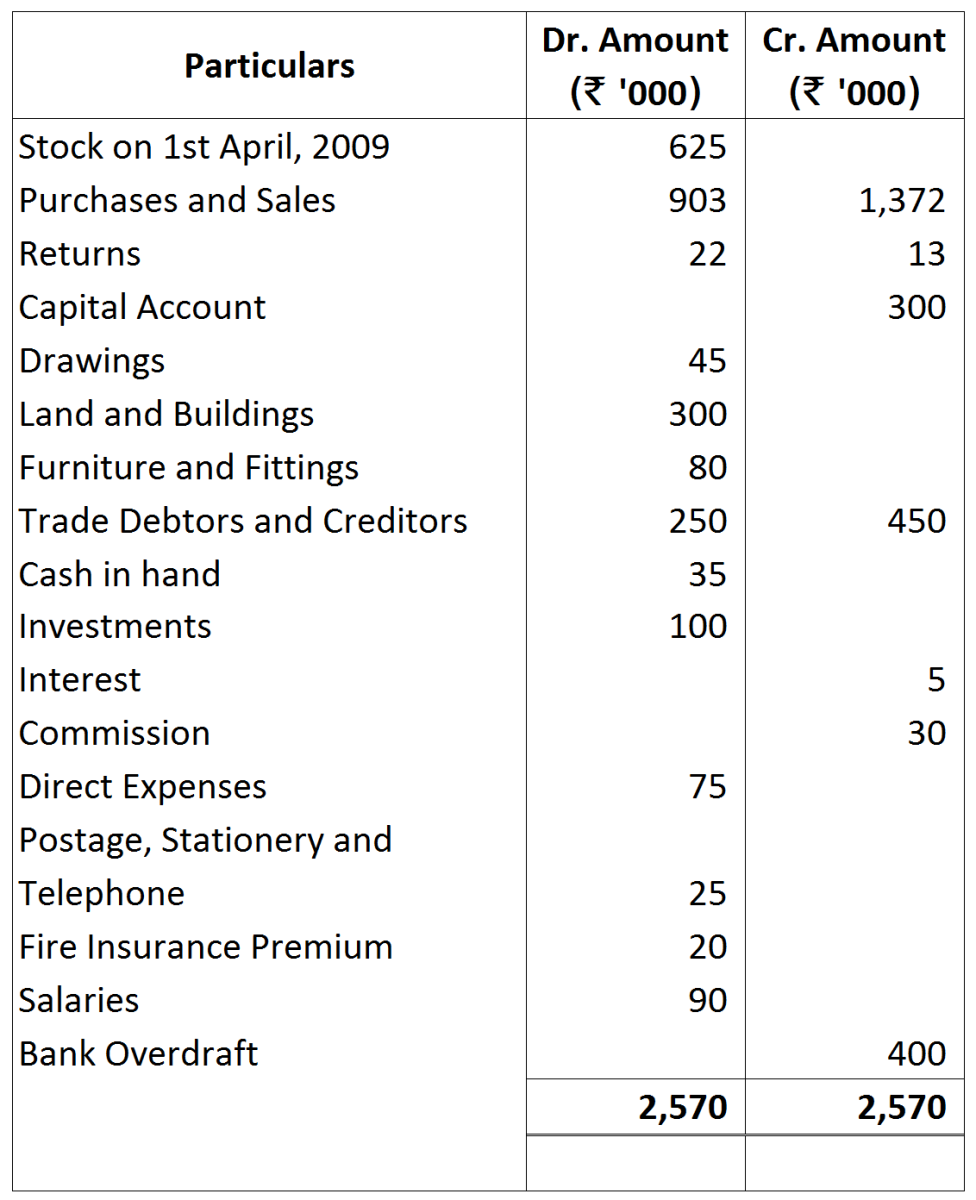
From the following balances extracted from the books of Karan and the additional information, prepare the trading and profit and loss account for the year ended 31st March, 2010 and also show the balance sheet as at that date:

Additional Information:
  1. Closing stock on 31st March, 2010 is valued at ₹ 6,50,000. Goods worth ₹ 5,000 are reported to have been taken away by the proprietor for his personal use at home during the year.
  2. Interest on investments ₹ 5,000 is yet to be received while ₹ 10,000 of the commission received is yet to be earned.
  3. ₹ 5,000 of the fire insurance premium paid is in respect of the quarter ending 30th June, 2010.
  4. Salaries ₹ 10,000 for March, 2010 and bank overdraft interest estimated at ₹ 20,000 are yet to be recorded as outstanding charges.
  5. Depreciation is to be provided on land and buildings @ 5% per annum and on furniture and fittings @ 10% per annum.
  6. Make a provision for doubtful debts @ 5% of trade debtors.
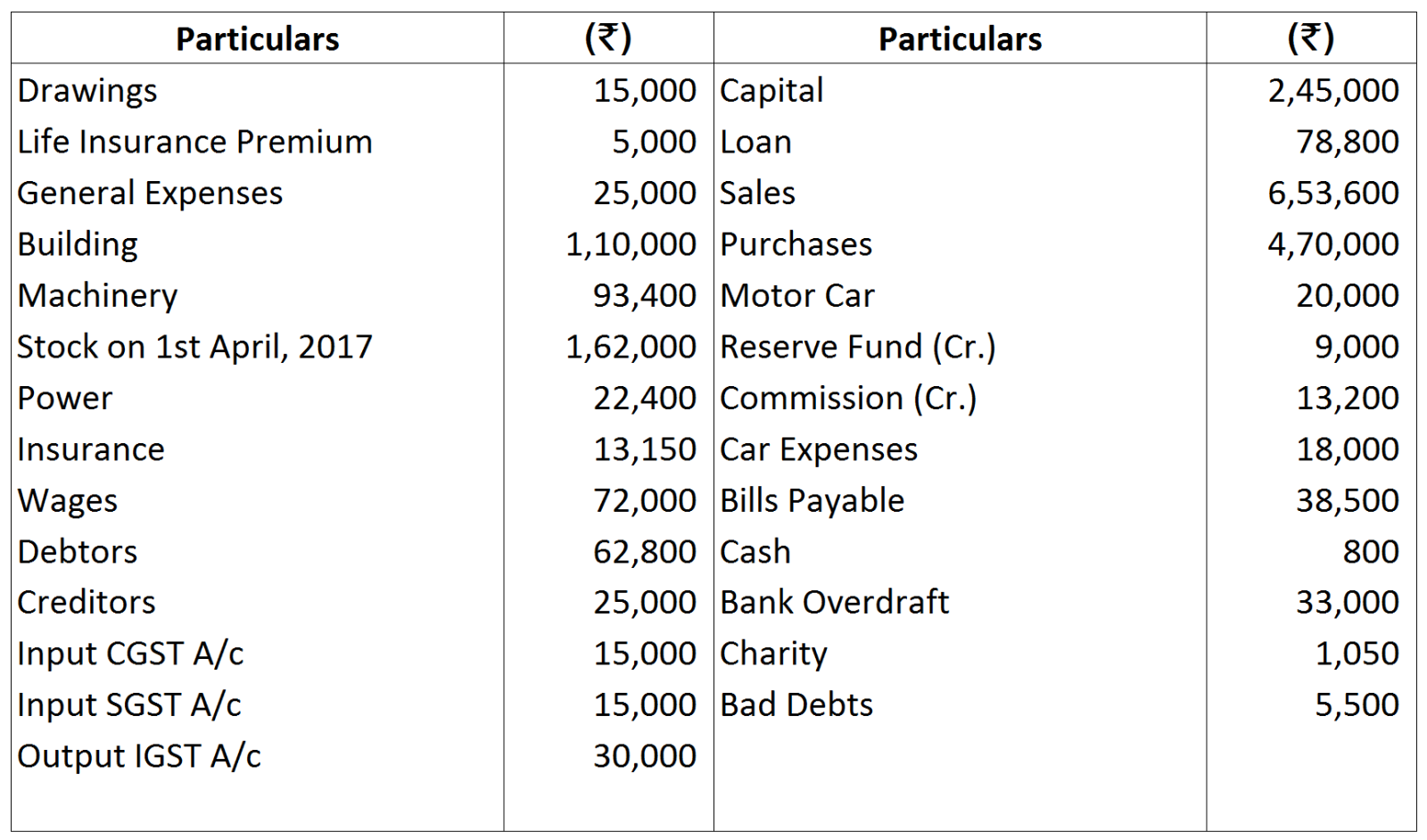
The following balances were extracted from the books of Harish Chandra on$31^{st}$ March,$ 2019:$​​​​​​​

Stock on$31^{st}​​​​​​​$​​​​​​​ March,$ 2019:$ was valued at ₹ 2,35,000.
Prepare final accounts for the year ended$31^{st}​​​​​​​$​​​​​​​ March,$ 2019:$
Babu purchased on 1st April, 2017, a machine for ₹ 6,000. On 1st October, 2017, he also purchased another machine for ₹ 5,000. On 1st October, 2018, he sold the machine purchased on 1st April, 2017 for ₹ 4,000.
It was decided that Depreciation @ 10% p.a. was to be written off every year under Diminishing Balance Method.
Assuming the accounts were closed on 31st March every year, show the Machinery Account for the years ended 31st March, 2018 and 2019.
What is Depreciation? What is the need for providing Depreciation?
Describe the various elements of a computer system and explain the distinctive features of a computer system and manual system.
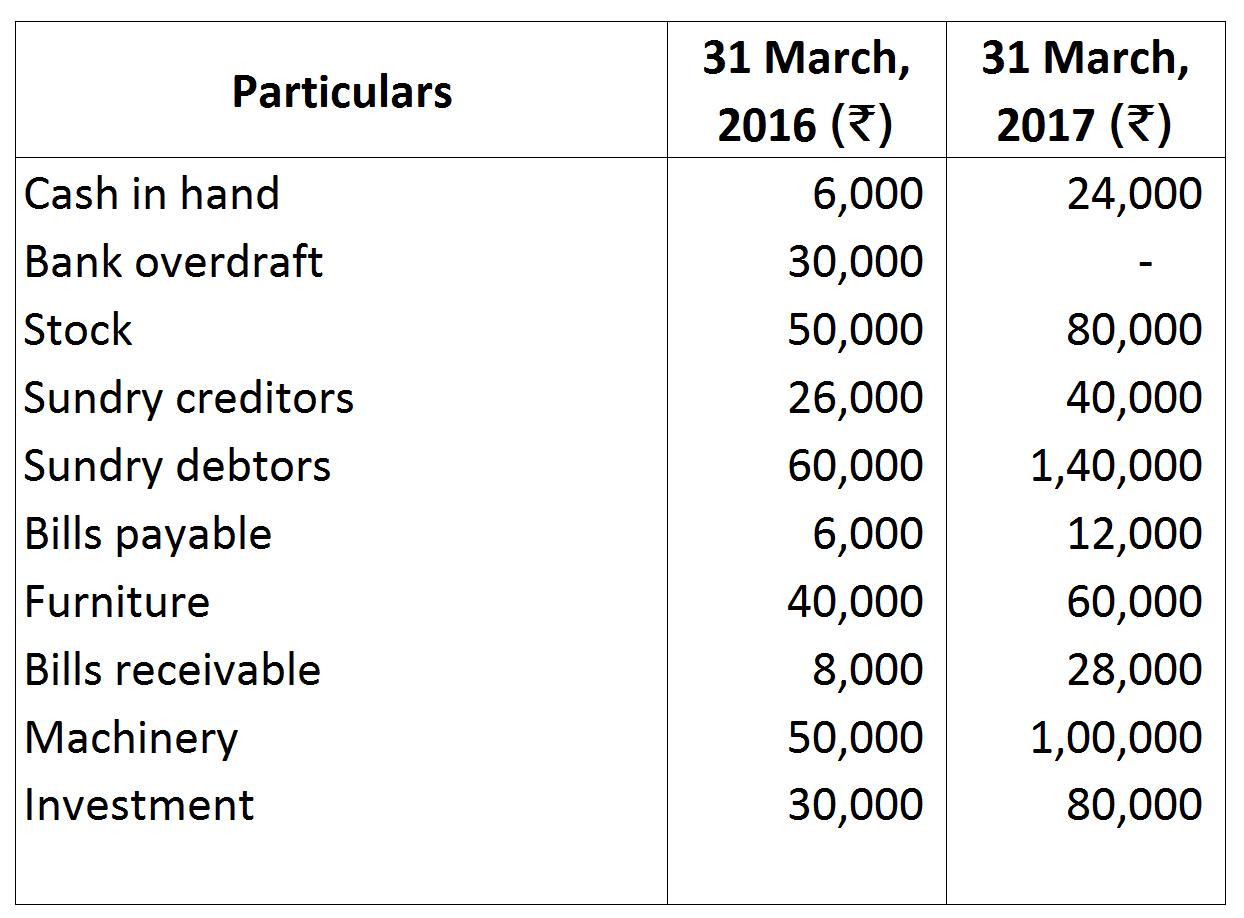
M/s Saniya Sports Equipment does not keep proper records. From the following information find out profit or loss and also prepare balance sheet for the year ended March 31, 2017:

Drawing 10,000 p.m. for personal use, fresh capital introduce during the year 2,00,000. A bad debts of 2,000 and a provision of 5% is to be made on debtors. outstanding salary 2,400, prepaid insurance 700, depreciation charged on furniture and machine @ 10% p.a.
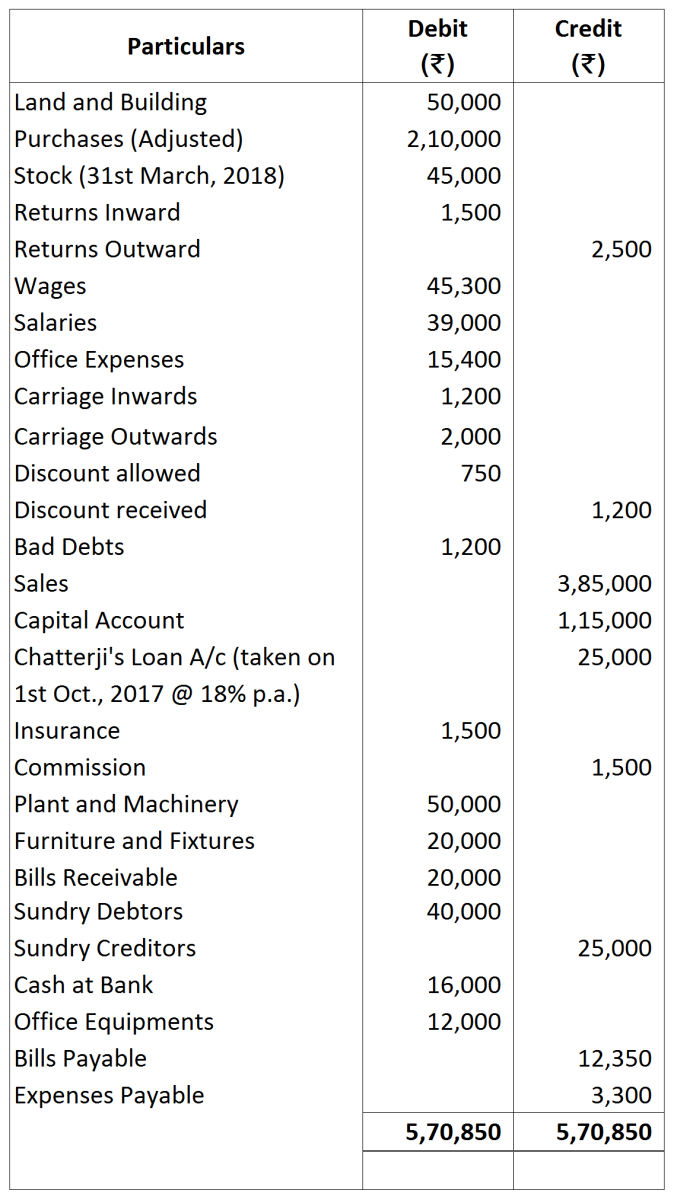
From the following Trial Balance of Shubho, prepare final accounts for the year ended 31st March, 2019 and Balance Sheet as at that date:

The following adjustments be taken care of:
  1. Depreciate Land and Building @ 6%, Plant and Machinery @ 10%, Office equipments @ 20% and Furniture and Fixtures @ 15%.
  2. Calculate Provision for Doubtful Debts at 2% on Sundry Debtors.
  3. Insurance premium includes ₹ 250 Insurance Premium paid in advance.
  4. Provide salary to Shubho ₹ 15,000 p.a.
  5. Outstanding Salaries ₹ 11,500.
  6. 10% of the final profit is to be transferred to General Reserve.