Question
Distinguish between Current Ratio and Quiek Ratio.
|
Distinction between Current Ratio and Quick Ratio
|
|||
|
Basis of Distinction
|
Current Ratio
|
Quick Ratio(or Liquid Ratio)
|
|
|
1.
|
Relationship
|
It establishes a relationship between current Assest and Current Liabilities.
|
It establishes a relationship between Liquid Assets and Current Liabilities.
|
|
2.
|
Formula for computation
|
Current Ratio $=\frac{\text{Current Assets}}{\text{Current Liabilities}}$ | Quick Ratio $=\frac{\text{Liquid Assets}}{\text{Current Liabilities}}$ |
|
3.
|
Obejctive
|
It measures the ability of the firm to meet its current liabilities within 12 months from the date of balance Sheet or within the period of operting cycle.
|
It measures the ability of the firm to meet its current liabilities immediately or within a month.
|
|
4.
|
Ideal Ratio
|
Current Ratio of 2 : 1 is Considered as an ideal ratio.
|
Quick Ratio of 1 : 1 is Considered as an ideal ratio.
|
|
5.
|
True Measurement
|
It is not a true measurement of short-term financial position of the firm as it may include a large amount of inventoires which may not be quickly convertible in to cash.
|
It removes this shortcoming of current ratio by excluding the amount of inventories.
|
Generate a complete, print-ready paper with questions like this in minutes — across 16+ boards, with answer keys.
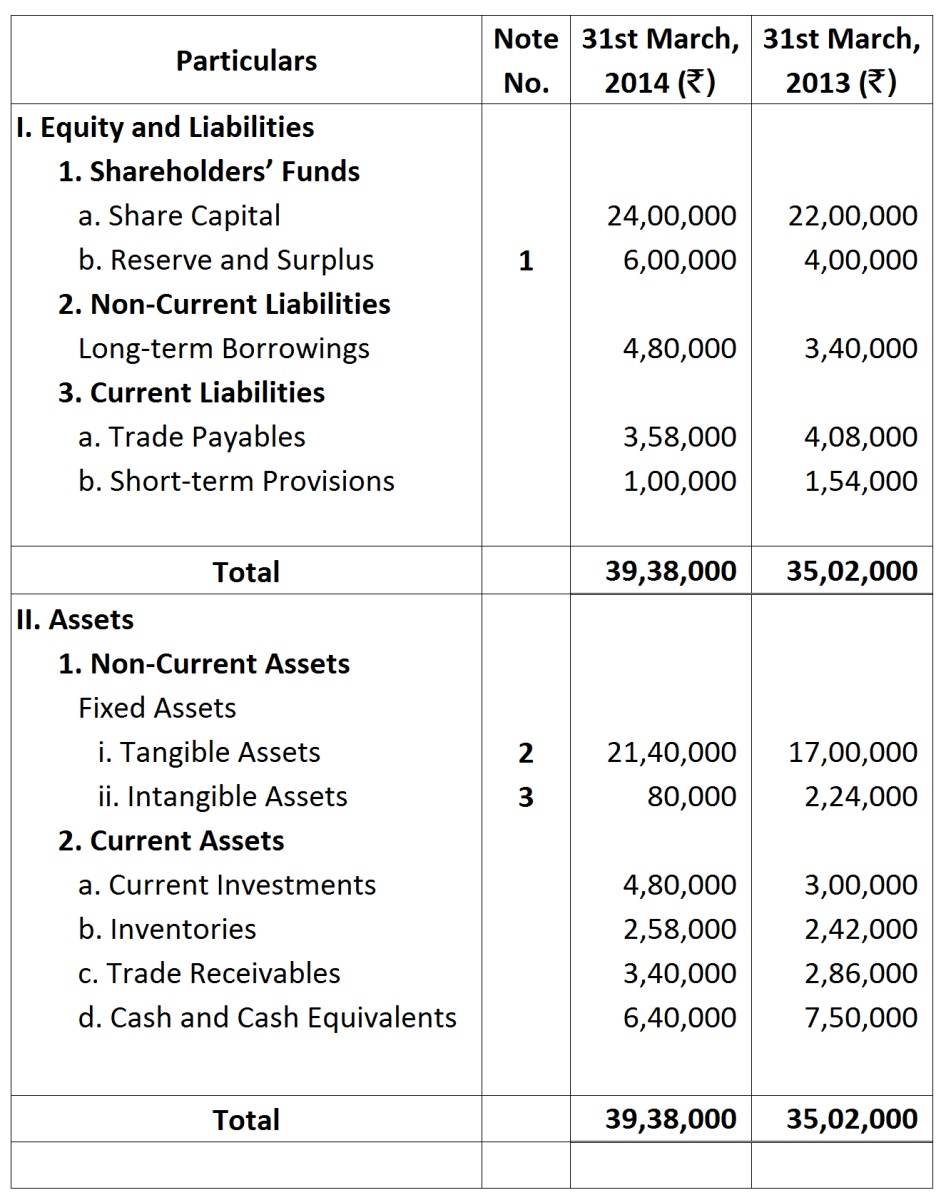
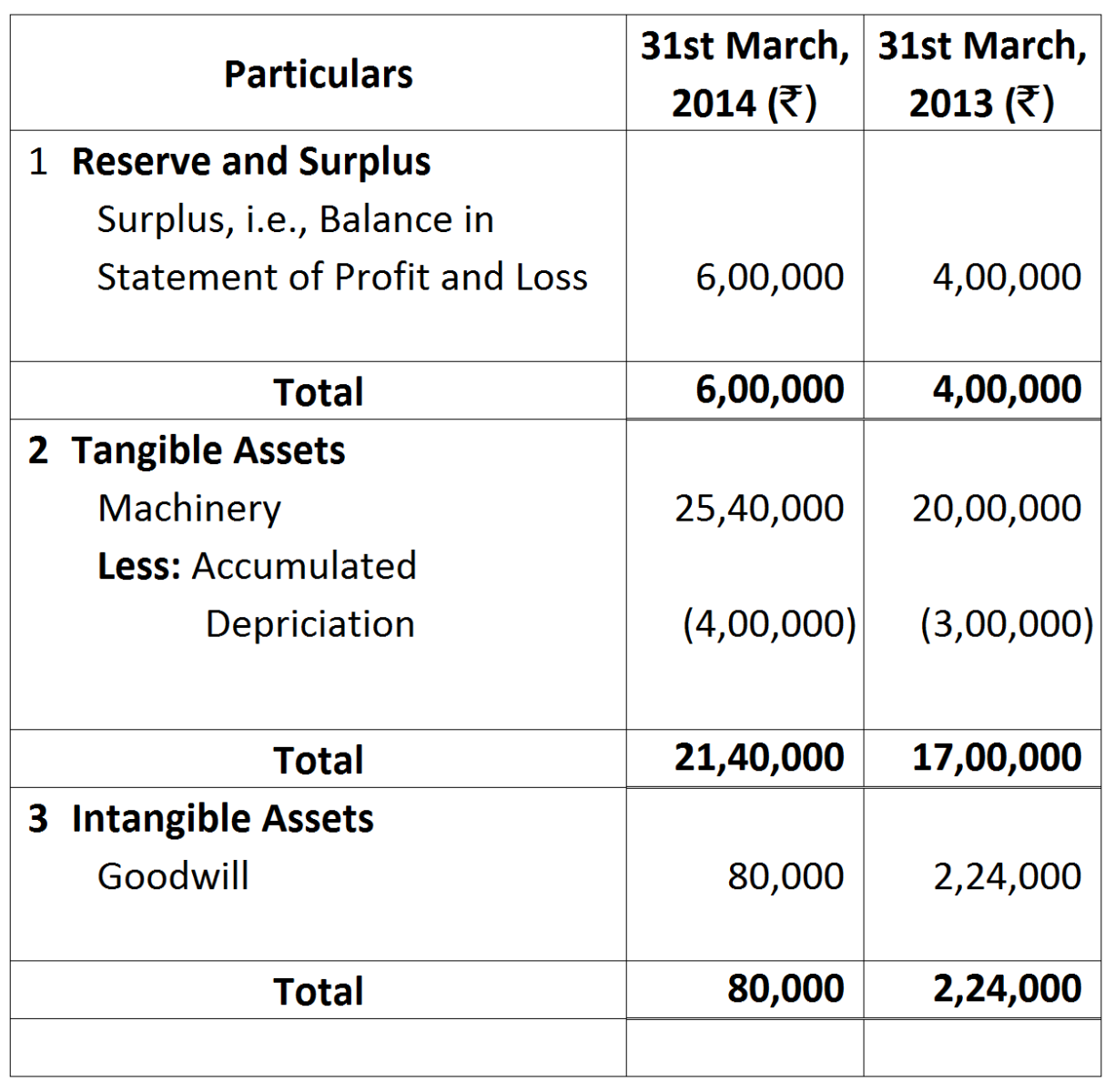 Additional Information: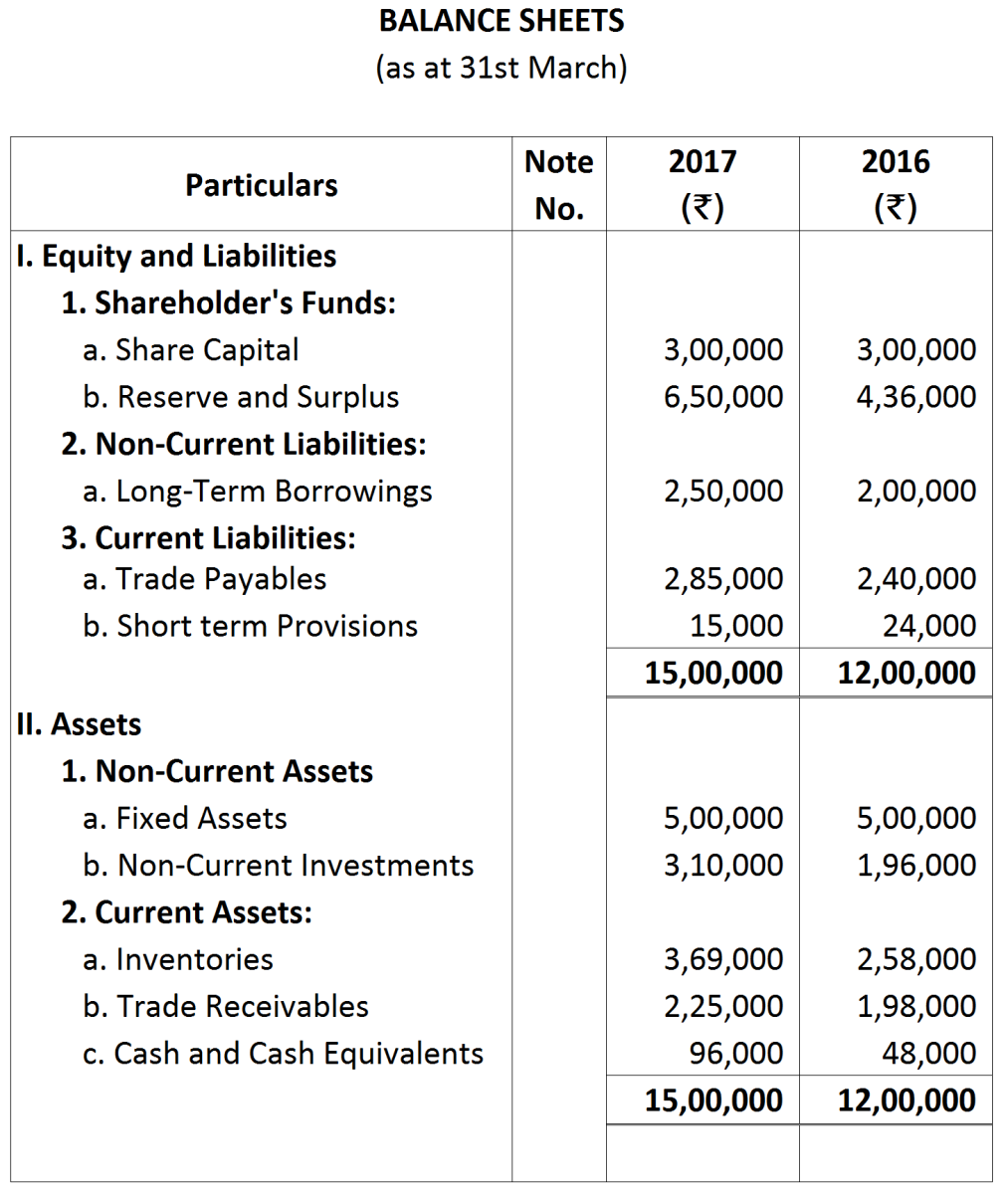
| With Application | - | ₹ 3 per share, |
| On allotment (including premium) | - | ₹ 5 per share, |
| On First call | - | ₹ 2 per share |
| On Second and Final call | - | ₹ 2 per share. |
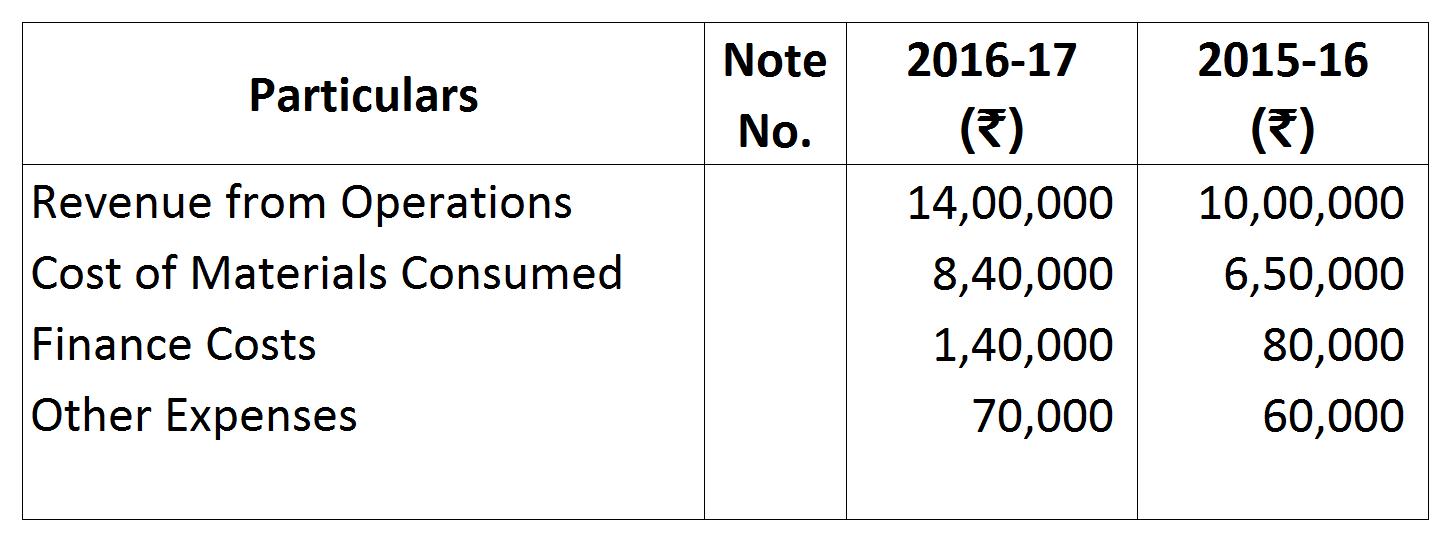
|
|
₹
|
|
Revenue from Operations (Net Sales).
|
5,00,000
|
|
Cost of Revenue from Operations (Cost of Goods Sold).
|
3,00,000
|
|
Current Assets.
|
2,00,000
|
| Current Liabilities. | 1,40,000 |
| Paid-up Share Capital. | 2,50,000 |
| 13% Debentures. | 1,00,000 |