Question
Distinguish between : Inborn immunity and acquired immunity.
| Inborn Immunity | Acquired Immunity |
| 1. Inborn immunity or innate immunity is also called natural immunity. | 1. Acquired immunity is also called adaptive immunity. |
| 2. Innate immunity is present right from the birth. | 2. Acquired immunity is not present at birth, but is acquired during lifetime of the individual. |
| 3. Inborn immunity does not depend upon the previous exposure to a pathogen or foreign substance. | 3. Acquired immunity always depends upon the previous exposure to a pathogen or foreign substance. |
| 4. It is non-specific immunity as it can offer resistance to any pathogen. | 4. It is specific immunity as it can offer resistance only to a particular pathogen. |
| 5. Innate immunity consists of various types of barriers for defence against the pathogens. | 5. Acquired immunity consists of various types of cells which are able to produce antibodies. |
| 6. Inborn immunity shows immediate effect in the body. | 6. Acquired immunity requires several days to become activated. |
| 7. Inborn immunity is seen in all animals. | 7. Acquired immunity is seen only in vertebrates. |
| 8. Inborn immunity is genetic in nature and is heritable. | 8. Acquired immunity is non-genetic in nature and is non-heritable. |
Generate a complete, print-ready paper with questions like this in minutes — across 16+ boards, with answer keys.
| Column A | Column B |
| (1) Neurons | (a) Earthworm |
| (2) Ladder type | (b) Hydra |
| (3) Ganglion | (c) Flatworm |
| (4) Nerve net | (d) Human |
| Column A (Adaptation) | Column B (Type of pollination) |
| (1) Sticky, spiny pollen grains non-fragrant flowers | (a) Anemophily |
| (2) Feathery stigma and versatile anther | (b) Chiropterophily |
| (3) Presence of nectar glands and sweet smell | (c) Ornithophily |
| (4) Dull coloured flowers with strong fragrance | (d) Entomophily |
|
S.no
|
Polynudeotide chains
|
Polynudeotide chains
|
|
(a)
|
Parallel
|
5
|
|
(b)
|
Anti-parallel
|
10
|
|
(c)
|
Parallel
|
15
|
|
(d)
|
Anti-parallel
|
20
|
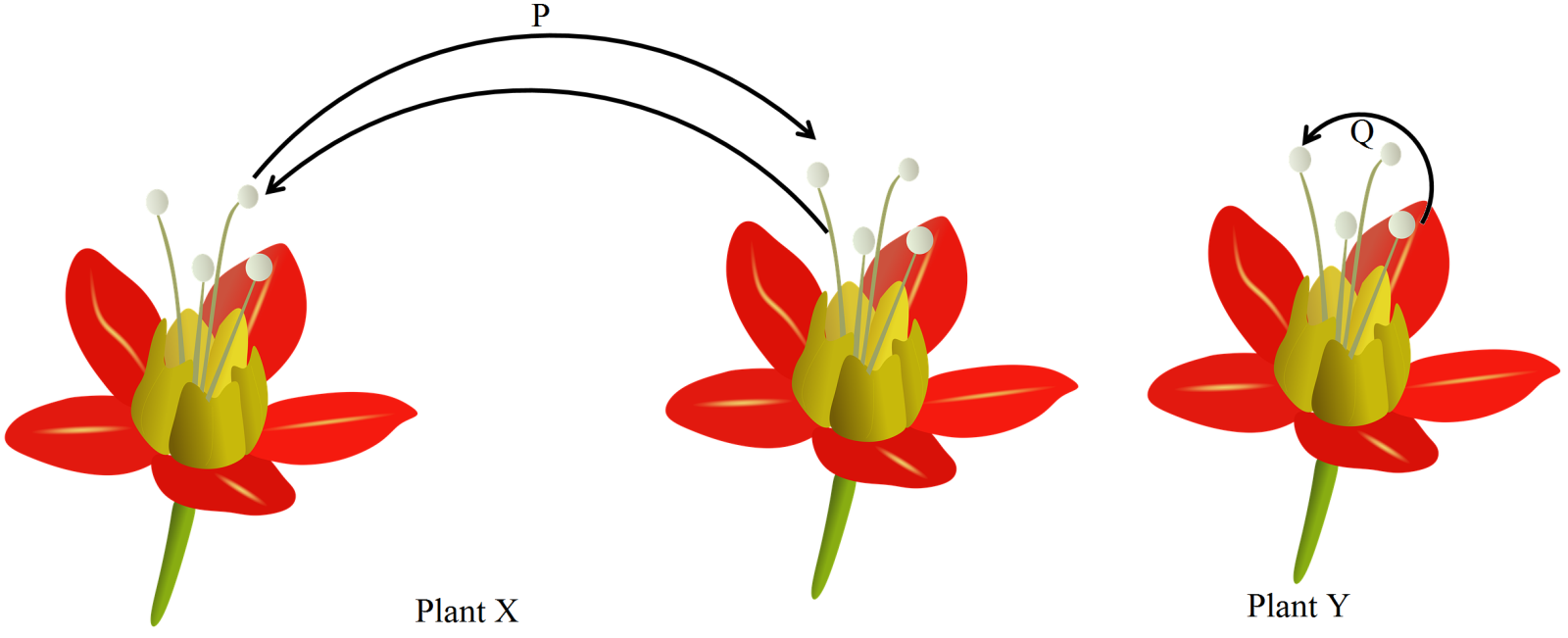
|
S. No
|
P
|
Q
|
R
|
|
(a)
|
Geitonogamy
|
Xenogamy
|
Autogamy
|
|
(b)
|
Allogamy
|
Chasmogamy
|
Cleistogamy
|
|
(c)
|
Autogamy
|
Geitonogamy
|
Xenogamy
|
|
(d)
|
Geitonogamy
|
Allogamy
|
Autogamy
|
| Column I (Organic Acids] | Column II (Microbial source) |
| (1) Citric acid | (a) Rhizopus arrhizus |
| (2) Fumaric acid | (b) Acetobacter aceti |
| (3) Gluconic acid | (c) Aspergillus niger |
| (4) Acetic acid | (d) Aspergillus niger |
| S. No | Column I | S. No | Column II |
| (i) | Gene therapy | 1. | Human insulin. |
| (ii) | Cotton bollworm | 2. | Biopiracy. |
| (iii) | Eli Lilly | 3. | Emphysema. |
| (iv) | Basmati Rice | 4. | ADA deficiency. |
| (v) | $\alpha-1\text{ antitrypsin}$ | 5. | Lepidopteran. |