- Draw a sectional view of the human heart and label on it: Aorta, Pulmonary arteries, Vena cava, Left ventricle.
- Why is double circulation of blood necessary in human beings?
CBSE OUTSIDE DELHI - SET 1 2009
Download our app for free and get started
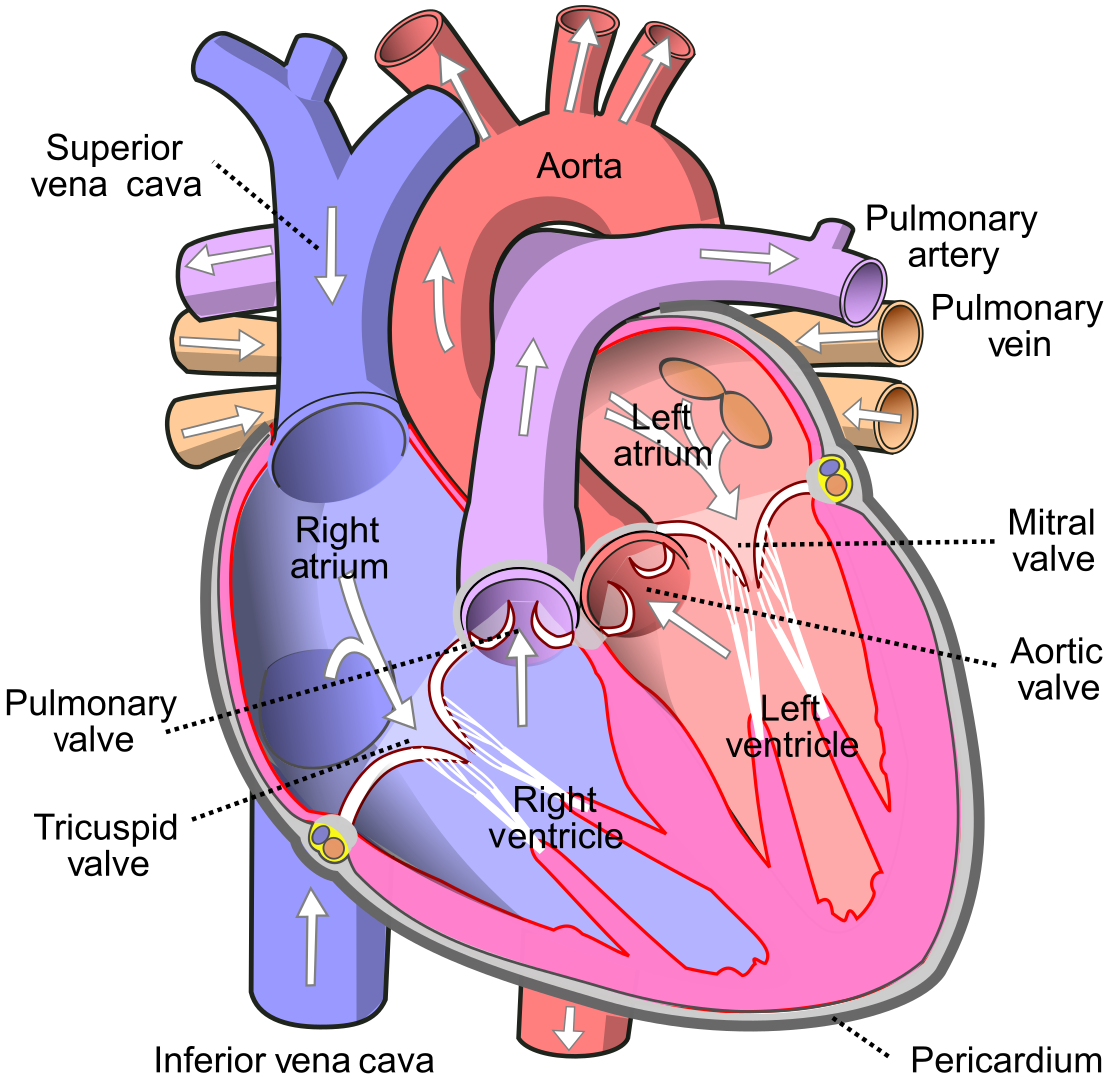
- To transport oxygen to each and every tissue and cell of the body along with circulation of the blood.

Download our appand get started for free
Experience the future of education. Simply download our apps or reach out to us for more information. Let's shape the future of learning together!No signup needed.*
Similar Questions
- 1View SolutionAn organism A which cannot move from one place to another, makes a simple food B from the substances C and D available in the environment. This food is made in the presence of a green coloured substance E present in organs F in the presence of light energy in a process called G. Some of the simple food B also gets converted into a complex food H for storage purposes. The food H gives a blue-black colour with dilute iodine solution.
- What is (i) organism A, (ii) food B and (iii) food H?
- What are C and D?
- Name (i) green coloured substance E, and (ii) organ F.
- What is the process G?
- 2View SolutionDraw a neat labelled diagram of the human excretory system.
- 3View Solution
- Mention any two components of blood.
- Trace the movement of oxygenated blood in the body.
- Write the function of valves present in between atria and ventricles.
- Write one structural difference between the composition of artery and veins.
- 4View SolutionDescribe the structure and functioning of nephrons.
- 5View SolutionIn the artificial kidneys, the tubes are all with semi-permeable lining. Why?
- 6View SolutionThe process of ultra-filtration is essential in urine formation, where does this step occur in nephron?
- 7View SolutionWhat are the different modes of nutrition? Explain with one example of each mode of nutrition.
- 8View SolutionWith a schematic diagram, explain the overall process of respiration in animals.
- 9View SolutionPlants absorb water from the soil. How does this water reach to the top of the tree? Explain in detail.
- 10View SolutionDescribe the working of human blood circulatory system with the help of a suitable diagram which shows all the steps involved.