Question
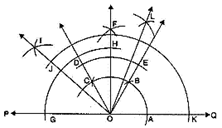
Draw an angle of measure $135^\circ $ and bisect it.
Answer


$i.\ $Draw any line $PQ$ and take a point $O$ on it.
$ii.\ $Place the pointer of the compasses at $O$ and draw an arc of convenient radius which cuts the line at $A.$
$iii.\ $Without disturbing the radius on the compasses, draw an arc with $A$ as centre which cuts the first arc at $B.$
$iv.\ $Again without disturbing the radius on the compasses and with $B$ as centre, draw an arc which cuts the first arc at $C.$
$v.\ $Join $OB$ and $OC.$
$vi.\ $With $O$ as centre and using compasses, draw an arc that cuts both rays of $\angle COB.$ Label the points of intersection as $D$ and $E.$
$vii.\ $With $E$ as centre, draw $($in the interior of $\angle COB)$ an arc whose radius is more than half the length $ED$.
$viii.\ $With the same radius and with $D$ as centre, draw another arc in the interior of $\angle COB.$ Let the two arcs intersect at $F.$ Join $\overline{\mathrm{OF}}$ . Then $\overline{\mathrm{OF}}$ is the bisector of $\angle COB,$ i.e. $\angle COF = \angle FOB.$ Now, $\angle FOQ = 90^\circ .$
$ix.\ $With $O$ as centre and using compasses, draw an arc that cuts both rays of $\angle POF. $ Label the points of intersection as $G$ and $H.$
$x.\ $With $H$ as centre, draw $($in the interior of $\angle POF$ an arc whose radius is more than half the length $HG).$
$xi.\ $With the same radius and with $H$ as centre, draw another arc in the interior of $\angle POF.$ Let the two arcs intersect at I. Join $\overline{\mathrm{OI}}$ . Then $\overline{\mathrm{OI}}$ is the bisector of $\angle POF,$ i.e. $\angle POI = \angle IOF.$ Now $\angle IOQ = 135^\circ .$
$xii.\ $With $O$ as centre and using compasses, draw an arc that cuts both rays of $\angle IOQ.$ Label the points of intersection as $J$ and $K.$
$xiii.\ $With $K$ as centre, draw $($in the interior of $\angle IOQ)$ an arc whose radius is more than half the length $KJ.$
$xiv.\ $With the same radius and with $J$ as centre, draw another arc in the interior of $\angle IOQ.$ Let the two arcs intersect at $L.$ Join $\overline{\mathrm{OL}}$ . Then $\overline{\mathrm{OL}}$ is the bisector of $\angle IOQ,$ i.e., $\angle IOL = \angle LOQ.$

Need a full question paper?

Generate a complete, print-ready paper with questions like this in minutes — across 16+ boards, with answer keys.
Start Generating Free

Similar questions

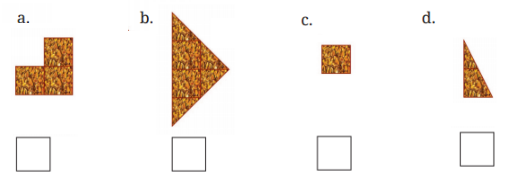
The figure below shows different fractional units of a whole chikki. How much of a whole chikki is each piece?
Image
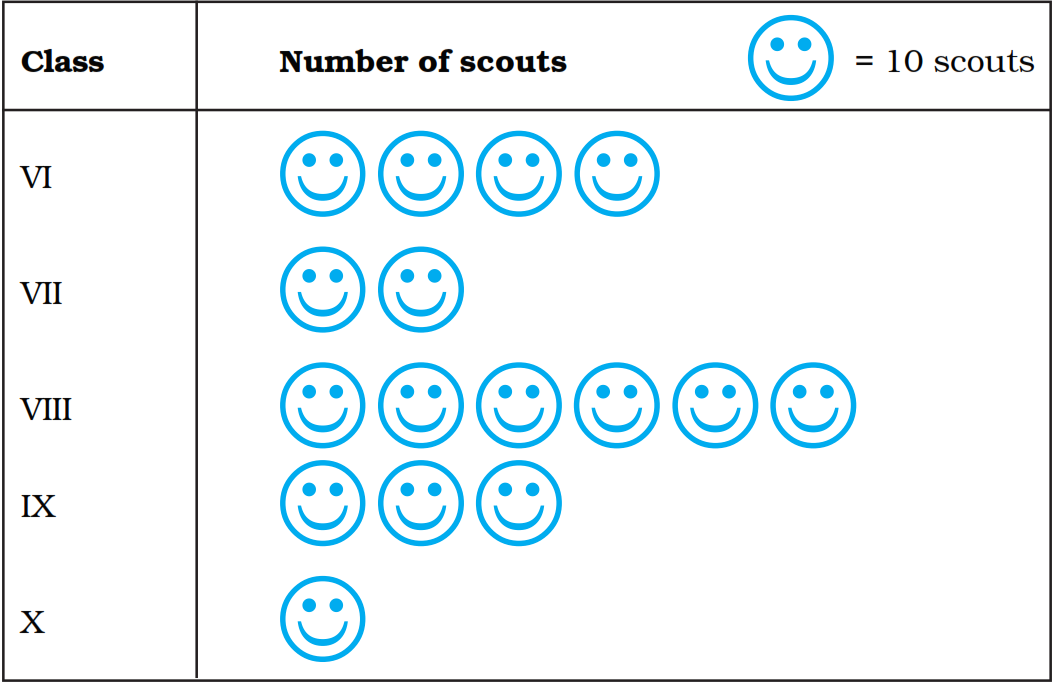
The number of scouts in a school is depicted by the following pictograph:

Observe the pictograph and answer the following questions:
$a.\ $Which class has the minimum number of scouts$?$
$b.\ $Which class has the maximum number of scouts$?$
$c.\ $How many scouts are there in Class $VI?$
$d.\ $Which class has exactly four times the scouts as that of Class $X?$
$e.\ $What is the total number of scouts in the Classes $VI$ to $X?$
Alok purchased $1\ kg\ 200\ g$ potatoes, $250\ g$ dhania, $5\ kg\ 300\ g$ onion, $500\ g$ palak and $2\ kg\ 600\ g$ tomatoes. Find the total weight of his purchases in kilograms.
The following table shows the daily production of $T.V.$ sets in an industry for $7$ days of a week:
Day
Mon
Tue
Wed
Thurs
Fri
Sat
Sun
Number of T.V. Sets
$300$
$400$
$150$
$250$
$100$
$350$
$200$
Represent the above information by a pictograph.
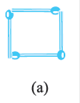
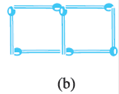
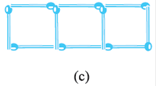
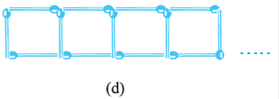
Look at the following matchstick pattern of squares (Fig.). The squares are not separate. Two neighbouring squares have a common matchstick. Observe the patterns and find the rule that gives the number of matchstick in terms of the number of squares. 
(Hint : If you remove the vertical stick at the end, you will get a pattern of Cs.)


Write a pair of fractions whose sum is $\frac{7}{11}$ and difference is $\frac2{11}.$
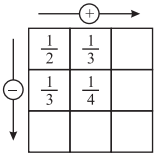
Complete the addition-subtraction box.

Construct $\overline {AB}$ of length $7.8\ cm.$ From this cut off $\overline {AC}$ of length $4.7\ cm.$ Measure $\overline {BC}$.
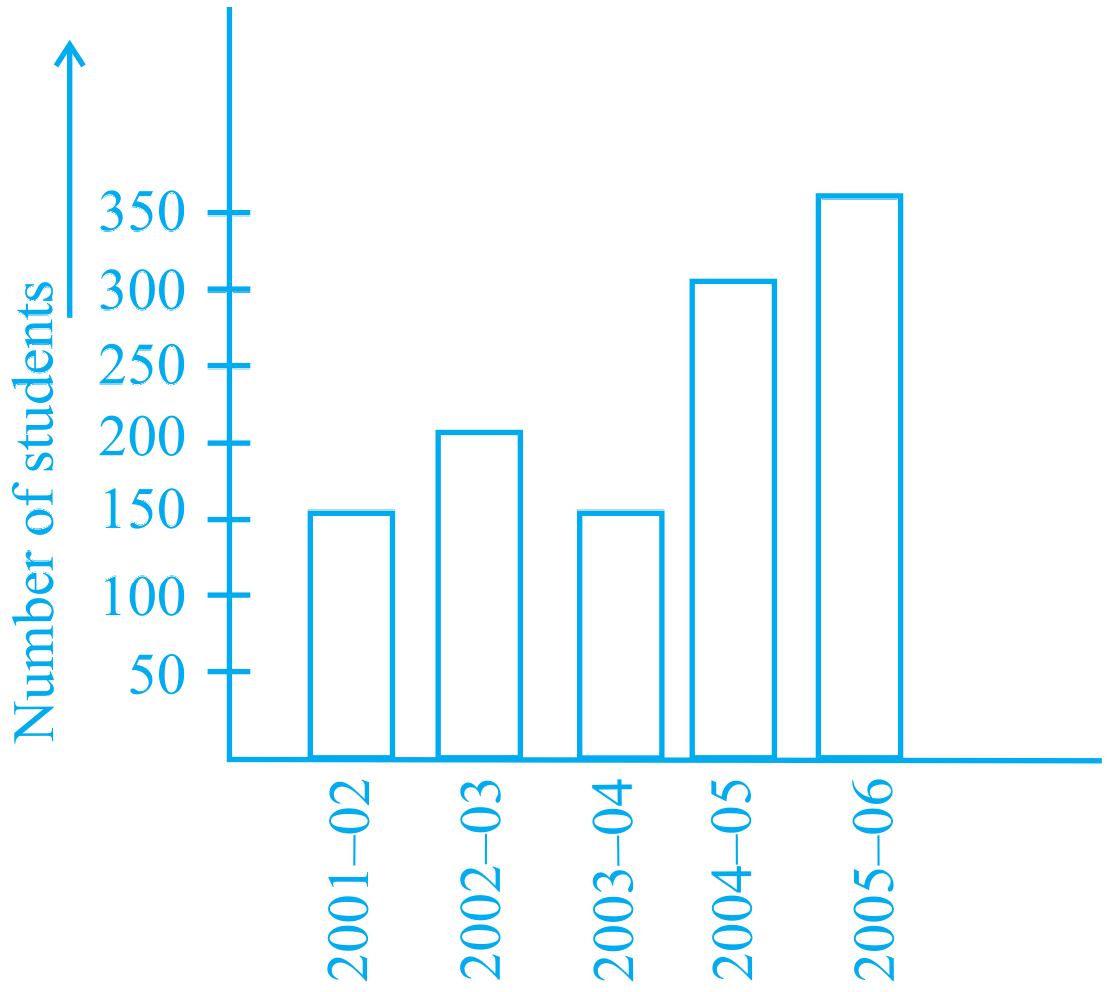
Read the bar graph given below and answer the following questions: Scale: $1$ unit $=\ 50$ students
$a.\ $ What information is given by the bar graph$?$
$b.\ $ In which year is the number of students maximum$?$
$c.\ $ In which year is the number of students twice as that of $2001-02?$
$d.\ $ In which year did the number of students decrease as compared to previous year$?$
$e.\ $ In which year is the increase in number of students maximum as compared to the previous year$?$