MCQ
Electric conduction in a semiconductor takes place due to:
- AElectrons only.
- BHoles only.
- CBoth electrons and holes.
- DNeither electrons nor holes.
Generate a complete, print-ready paper with questions like this in minutes — across 16+ boards, with answer keys.
Unpolarized light of intensity 32Wm–2 passes through three polarizers such that transmission axes of the first and second polarizer makes and angle 30° with each other and the transmission axis of the last polarizer is crossed with that of the first. The intensity of final emerging light will be
|
(a) 32 Wm–2 |
(b) 3 Wm–2 |
(c) 8 Wm–2 |
(d) 4 Wm–2 |
In Fig. X represents time and Y represent activity of a radioactive sample. Then the activity of sample, varies with time according to the curve
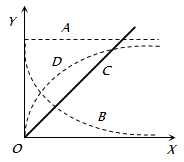
|
(a) A |
(b) B |
(c) C |
(d) D |
The critical angle of a material is the angle of incidence for which the angle of refraction is:
Two ions having masses in the ratio 1 : 1 and charges 1 : 2 are projected into uniform magnetic field perpendicular to the field with speeds in the ratio 2 : 3. The ratio of the radii of circular paths along which the two particles move is
|
(a) 4 : 3 |
(b) 2 : 3 |
(c) 3 : 1 |
(d) 1 : 4 |
When a dielectric material is introduced between the plates of a charged condenser then electric field between the plates
|
(a) Decreases |
(b) Increases |
(c) Remain constant |
(d) First (b) then (a) |
In the Young’s double slit experiment, for which colour the fringe width is least
|
(a) Red |
(b) Green |
(c) Blue |
(d) Yellow |
The photo-electrons emitted from a surface of sodium metal are such that
|
(a) They all are of the same frequency |
|
(b) They have the same kinetic energy |
|
(c) They have the same de Broglie wavelength |
|
(d) They have their speeds varying from zero to a certain maximum |
In a transistor, a change of 8.0 mA in the emitter current produces a change of 7.8 mA in the collector current. What change in the base current is necessary to produce the same change in the collector current
| (a) 50 mA | (b) 100 mA | (c) 150 mA | (d) 200 mA |