Question
Explain errors in sum and in difference of measured quantity.

Answer

Errors in sum and in difference:
$i)$ Suppose two physical quantities $A$ and $B$ have measured values $A ± \triangle A$ and $B ± \triangle B.$
respectively, where $\triangle A$ and $\triangle B$ are their mean absolute errors.
$ii)$ Then, the absolute error $\triangle Z$ in their sum.
$Z=A+B$
$Z \pm \Delta Z=(A \pm \Delta A)+(B \pm \Delta B)$
$=(A+B) \pm \Delta A \pm \Delta B$
$\therefore \pm \Delta Z= \pm \Delta A \pm \Delta B$
$iii)$ For difference. i.e.. if $Z = A – B.$
$Z \pm \Delta Z=A \pm \Delta A)-(B \pm \Delta B)$
$=(A-B) \pm \Delta A \mp \Delta B$
$\therefore \pm \Delta Z= \pm \Delta A \mp \Delta B$

Need a full question paper?

Generate a complete, print-ready paper with questions like this in minutes — across 16+ boards, with answer keys.
Start Generating Free

Similar questions

That are rectangular components of vectors? Explain their uses.
Explain the colour code system for resistors with an example.
What is focal power of a spherical mirror or a lens? What may be the reason for using $P=$ $\frac{1}{f}$ its expression?
A monochromatic ray of light is incident at $37^\circ $ on an equilateral prism of refractive index $3/2$. Determine angle of emergence and angle of deviation. If angle of prism is adjustable, what should its value be for emergent ray to be just possible for the same angle of incidence.
State Newton’s law of cooling and explain how it can be experimentally verified.
Explain the method to determine distance of a planet from the Earth.
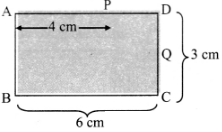
Figure below shows the section ABCD of a transparent slab. There is a tiny green LED light source at the bottom left corner B. A certain ray of light from B suffers total internal reflection at nearest point P on the surface AD and strikes the surface CD at point Question Determine refractive index of the material of the slab and distance DQ. At Q, the ray PQ will suffer partial or total internal reflection?
Image
Time period of a simple pendulum depends upon the length of pendulum $(l)$ and acceleration due to gravity $(g).$ Using dimensional analysis, obtain an expression for time period of a simple pendulum.
Describe the construction of Cavendish balance with the help of neat labelled diagram.
What are derived quantities and derived units? State two examples. State the corresponding S.L. and C.G.S. units of the examples.