Respiration In Plants — BIOLOGY STD 11 Science — Question
Gujarat BoardEnglish MediumSTD 11 ScienceBIOLOGYRespiration In Plants5 Marks
Question
Explain glycolysis.
✓
Answer
Glycolysis:
The term glycolysis has originated from the Greek words, glycos for sugar, and lysis for splitting. The scheme of glycolysis was given by Gustav Embden, Otto Meyerhof, and J. Parnas, and is often referred to as the EMP pathway
In anaerobic organisms, it is the only process in respiration.
Glycolysis occurs in the cytoplasm of the cell and is present in all living organisms.
In this process, glucose undergoes partial oxidation to form two molecules of pyruvic acid. In plants, this glucose is derived from sucrose, which is the end product of photosynthesis, or from storage carbohydrates.
Sucrose is converted into glucose and fructose by the enzyme, invertase, and these two monosaccharides readily enter the glycolytic pathway.
Glucose and fructose are phosphorylated to give rise to glucose-6-phosphate by the activity of the enzyme hexokinase.
This phosphorylated form of glucose then isomerises to produce fructose -6-phosphate.
Subsequent steps of metabolism of glucose and fructose are same.
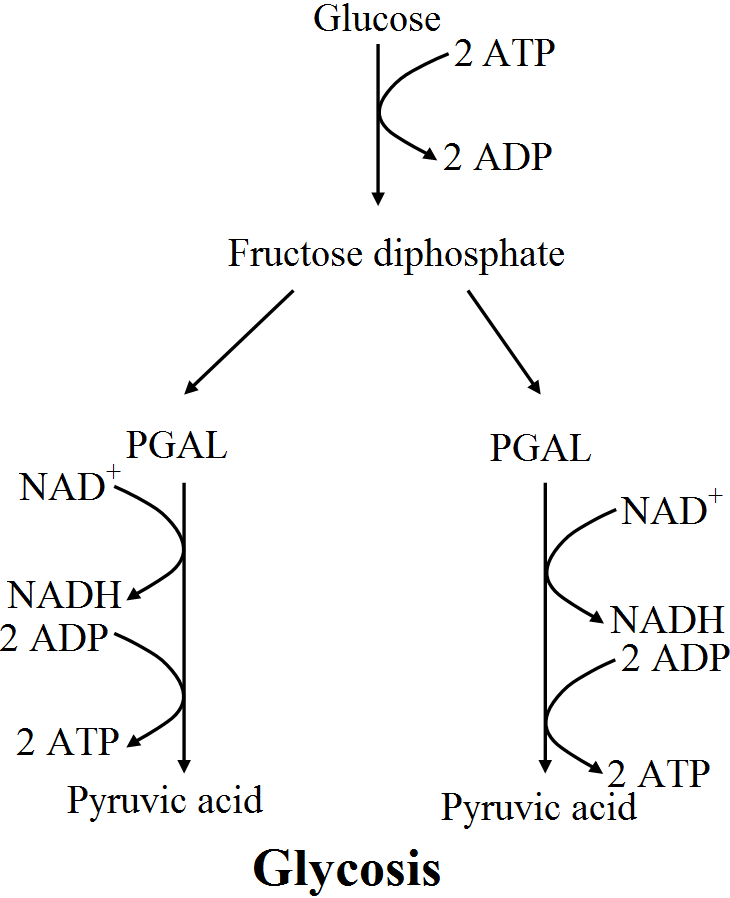
The various steps of glycolysis are depicted in the following figure:
In glycolysis, a chain of ten reactions, under the control of different enzymes, takes place to produce pyruvate from glucose.
Utilisation of ATP During Glycolysis:
During the conversion of glucose into glucose-6-phosphate
During the conversion of fructose-6-phosphate to fructose-1, 6-diphosphate.
Need a full question paper?
Generate a complete, print-ready paper with questions like this in minutes — across 16+ boards, with answer keys.