Question
Explain how harmful chemicals enter our bodies.

Answer

Pesticides are poisonous chemical substances which are sprayed over crop plants to protect them from pests (harmful small animals) and diseases. These chemical pesticides mix up with soil and water. From soil and water, these pesticides are absorbed by the growing plants alongwith water and other minerals. When herbivorous animals eat plant food, then these poisonous chemical pesticides go into their bodies through the food chain. And when the carnivore animals eat herbivores, then the pesticides get transferred to their bodies. Man being an omnivore; eat plant food as well as herbivores. So the pesticides present in plant food and herbivores also get transferred to the man’s body through food. Thus, pesticides enter the food chain at the producer level (plant level) and in the process of transfer of food through food chains these harmful chemicals get concentrated at each trophic level.
Need a full question paper?

Generate a complete, print-ready paper with questions like this in minutes — across 16+ boards, with answer keys.

Start Generating Free

Similar questions

The descriptions of five kinds of images are given below:
  1. Diminished and virtual.
  2. Enlarged and real.
  3. Enlarged and erect.
  4. Real and inverted.
  5. Virtual and the same size.
Which one of these describes the image formed:
  1. On the retina of the eye?
  2. By a magnifying glass?
  3. By a convex driving mirror on a car?
  4. By a plane mirror?
  5. on the screen of a slide projector?
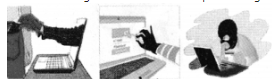
Observe the figure and answer the questions given below.
Image

(a) What do these figures indicate?
(b) Which gadgets can be misused for these?
(c) Give two examples of such events.
(d) Name the act amended by Government of Maharashtra to control such events.
(e) What care should be taken by a person to avoid such events?

Answer the following questions
The observations made by Swarali while doing the experiment are given below. Based on these write answers to the questions;
Swarali found that the light ray travelling from the denser medium to rarer medium goes away from the normal. If the angle of incidence (i) is raised by Swarali, the angle of refraction ( $r$ ) went on increasing. However, after certain value of the angle of incidence the light ray is seen to return back into the denser medium.

i. What is the specific value of $\angle i$ called?
ii. What is the process of reflection of incident ray into denser medium called?
iii. Draw the diagrams of three observations made by Swarali.
With the help of suitable diagrams, explain the mitosis in detail.
5 cm high object is placed at a distance of 10 cm from a converging lens of focal length of 20 cm. Determine the position, size and type of the image.
 Explain the types of reactions with reference to oxygen and hydrogen. Illustrate with examples.
When a black metal compound $XO$ is heated with a colourless gas $Y_2,$ then metal $X$ and another compound $Y_2O$ are formed. Metal $X$ is red-brown in colour which does not react with dilute acids at all. Gas $Y_2$ can be prepared by the action of a dilute acid on any active metal. The compound $Y_2O$ is a liquid at room temperature which can turn anhydrous copper sulphate blue.
  1. What do you think is metal $X?$
  2. What could be gas $Y_2?$
  3. What is compound $XO?$
  4. What is compound $Y_2O?$
  5. Write the chemical equation of the reaction which takes place on heating $XO$ with $Y_2.$
  6. What type of chemical reaction is illustrated in the above equation?
An object is placed (a) 20cm, (b) 4cm, in front of a concave mirror of focal length 12cm. Find the nature and position of the image formed in each case.
In the circuit given below:
  1. What is the combined resistance?
  2. What is the p.d. across the combined resistance?
  3. What is the p.d. across the $3 Ω$ resistor?
  4. What is the current in the $3 Ω$ resistor?
  5. What is the current in the $6 Ω$ resistor?
Why is the essential to get training of first aid?