Question
Explain how radioactive nuclei can emit $\beta-$particles even though atomic nuclei do not contain these particles? Hence explain why the mass number of radioactive nuclide does not change during $\beta-$decay?

Answer

Radioactive nuclei do not contain electrons ($\beta-$particles), but $\beta-$particles are formed due to conversion of a neutron into a proton according to equation.
$^1_0\text{n}\ \rightarrow \ ^1_1\text{p}\ +\ _{-1} ^{0}\beta \ + \ \bar{ \upsilon}\\ \ \ \ \ \ \ \ \ \ \ \ \ \ \ \ \ ^{\beta-\text{particle}}\ \ ^\text{antincutrino}$
The $\beta-$particle so formed is emitted at once. In this process one neutron is converted into one proton; so that the number of nucleons in the nucleus remains unchanged; hence mass number of the nucleus does not change during a $\beta-$decay.

Need a full question paper?

Generate a complete, print-ready paper with questions like this in minutes — across 16+ boards, with answer keys.
Start Generating Free

Similar questions

Define the electric resistivity of a conductor.
Plot a graph showing the variation of resistivity with temperature in the case of a (a) conductor, (b) semiconductor.
Briefly, explain, how the difference in the behaviour of the two can be explained in terms of number density of charge carriers and relaxation time.
Write three characteristic features in photoelectric effect which cannot be explained on the basis of wave theory of light, but can be explained only using Einstein’s equation.
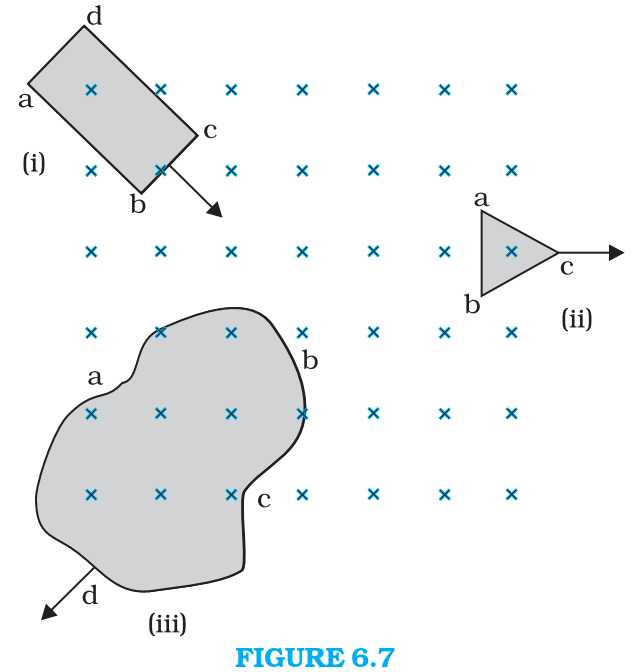
shows planar loops of different shapes moving out of or into a region of a magnetic field which is directed normal to the plane of the loop away from the reader. Determine the direction of induced current in each loop using Lenz's law.
Image
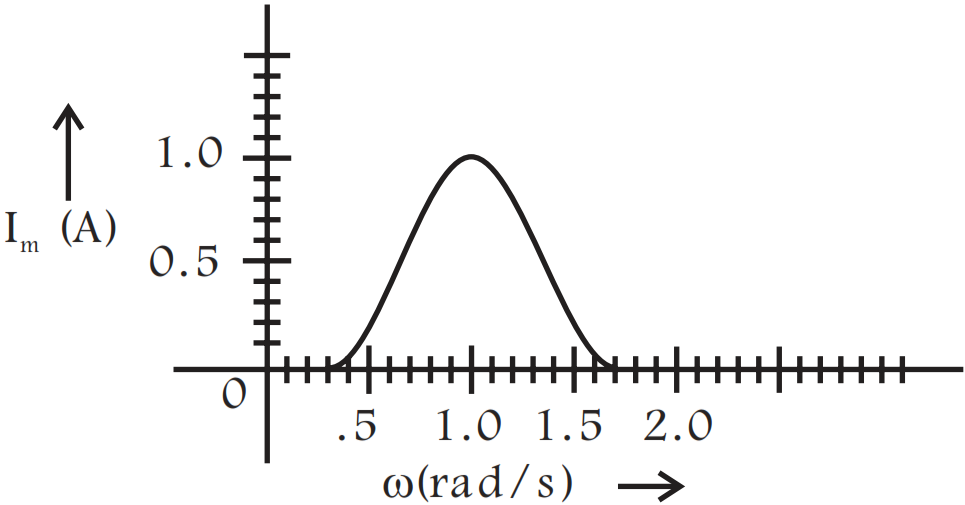
In series $\text{LCR}$ circuit, the plot of $I_{max}$ vs $\omega$ is shown in Fig. Find the bandwidth and mark in the figure.
Calculate the number of states per cubic metre of sodium in $3s$ band. The density of sodium is $1013\ kg/ m^3$. How many of them are empty?
Explain Ohm's law. State factors on which the resistance of any conductor depends. Define specific resistance and state its relation with the conductivity.
A short magnet is moved along the axis of a conducting loop. Show that the loop repels the magnet if the magnet is approaching the loop and attracts the magnet if it is going away from the loop.
The work function of caesium is $2.14 eV$. Find (a) the threshold frequency for caesium, and (b) the wavelength of the incident light if the photocurrent is brought to zero by a stopping potential of $0.60 V$.
A thin prism is made of a material having refractive indices 1.61 and 1.65 for red and violet light. The dispersive power of the material is 0.07. It is found that a beam of yellow light passing through the prism suffers a minimum deviation of 4.0° in favourable conditions. Calculate the angle of the prism.
Characteristic X-rays may be used to identify the element from which they are being emitted. Can continuous X-rays be used for this purpose?