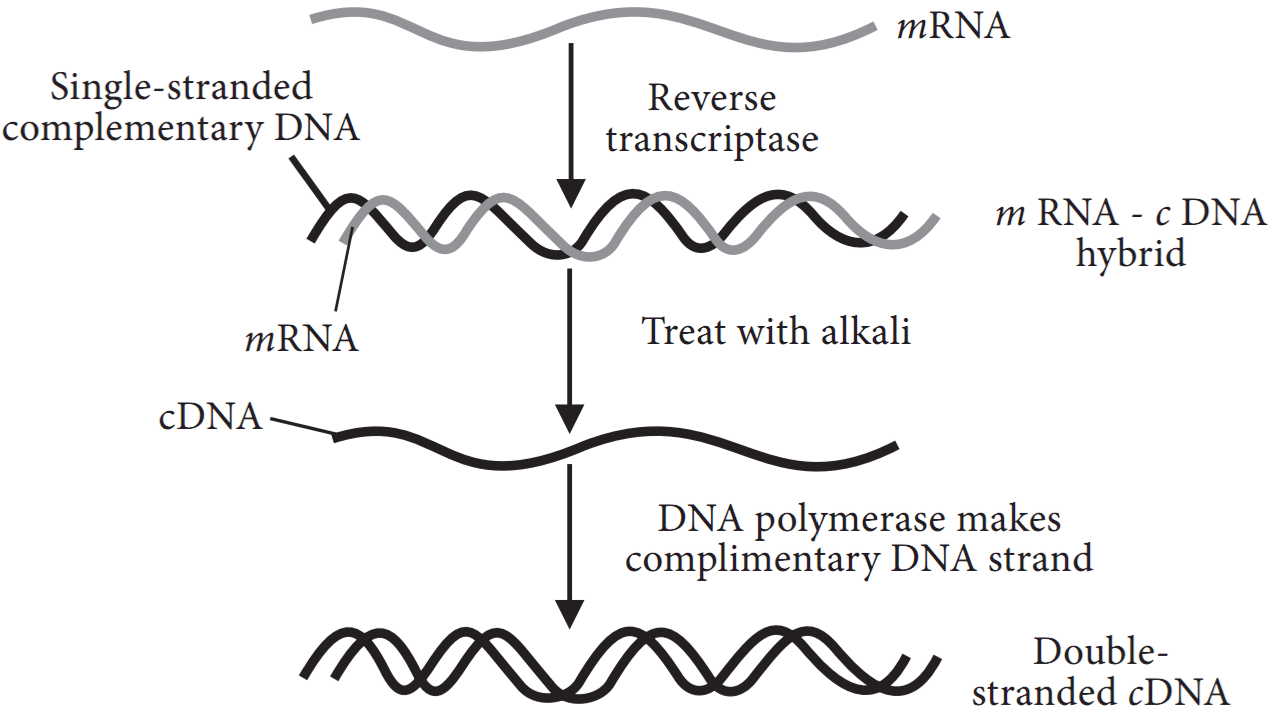
→ The methods involved two major approaches. One approach focused on identifying all the genes that are expressed as RNA (referred to as Expressed Sequence Tags (ESTS).
→ The other took the blind approach of simply sequencing the whole set of genome that contained all the coding and non-coding sequence, and later assigning different regions in the sequence with functions (a term referred to as Sequence Annotation).
→ For sequencing, the total DNA from a cell is isolated and converted into random fragments of relatively smaller sizes (recall DNA is a very long polymer, and there are technical limitations in sequencing very long pieces of DNA) and cloned in suitable host using specialised vectors.
→ The cloning resulted into amplification of each piece of DNA fragment so that it subsequently could be sequenced with ease.
→ The commonly used hosts were bacteria and yeast, and the vectors were known as BAC (bacterial artificial chromosomes); and YAC (yeast artificial chromosomes).
→ The fragments were sequenced using automated DNA sequencers that worked on the principle of a method developed by Frederick Sanger. (Remember, Sanger is also credited for developing method for determination of amino acid sequences in proteins).
→ There sequences were then arranged based on some overlapping regions present in them.
→ This required generation of overlapping fragments for sequencing. Alignment of these sequences was humanly not possible.
→ Therefore, specialised computer based programs were developed.
→ These sequences were subsequently annotated and were assigned to each chromosome.
→ The sequence of chromosome 1 was completed only in May 2006 (this was the last of the 24 human chromosomes - 22 autosomes and X and Y - to be sequenced).
→ Another challenging task was assigning the genetic and physical maps on the genome.
→ This was generated using information on polymorphism of restriction endonuclease recognition sites, and some repetitive DNA sequences known as microsatellites (one of the applications of polymorphism in repetitive DNA sequences shall be explained in next section of DNA fingerprinting).