On the basis of their carbon skeleton, organic compounds are classified into two main groups:
i. Acyclic or aliphatic or open chain compounds:
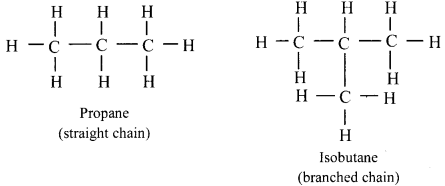
a. Organic compounds in which carbon atoms are joined to form an open chain are called aliphatic compounds.
b. Their structure may consist of straight chains (in which carbon atoms are bonded to one or two other carbon atoms) or branched chains (in which at least one carbon atom is bonded to three or four other carbon atoms).
e.g.
ii. Cyclic or closed chain or ring compounds:
a. Organic compounds in which carbon atoms are joined to form one or more closed rings with or without hetero atom are called cyclic compounds.
b. They are further divided into two types: Homocyclic and heterocyclic compounds.
1. Homocyclic or carbocyclic compounds: The cyclic organic compounds which have a ring made up of only carbon atoms are called as homocyclic or carbocyclic compounds.
They are further divided into:
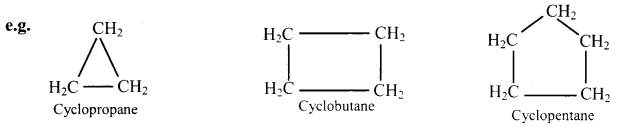
i. Alicyclic compounds: These are cyclic compounds (ring of 3 or more C-atoms) exhibiting properties similar to those of aliphatic compounds.
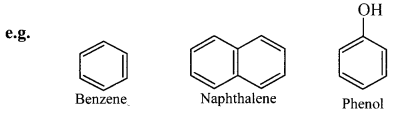
ii. Aromatic compounds: These compounds have special stability.
Aromatic compounds are further classified as benzenoid and non-benzenoid aromatics.
a. Benzenoid aromatics contain at least one benzene ring in the structure.
b. Non-benzenoid aromatics contain an aromatic ring, other than benzene.
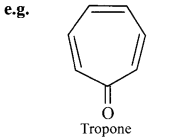
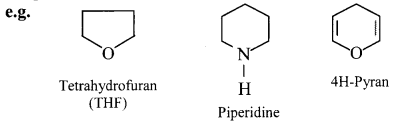
2. Heterocyclic compounds: Cyclic organic compounds which contain one or more heteroatoms (such as O, N, S, etc.) in the ring are called heterocyclic compounds.
They are further divided into:
i. Heterocyclic aromatic compounds: Aromatic compounds which contain at least one heteroatom in the ring are called heterocyclic aromatic (hetero-aromatic) compounds.
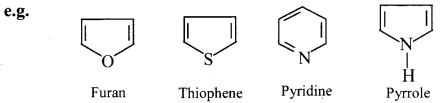
ii. Heterocyclic non-aromatic compounds: Alicyclic compounds, which contain at least one heteroatom in the ring are called heterocyclic non-aromatic compounds (hetero-alicyclic) compounds.