Question
Explain the difference between static friction, kinetic friction and rolling friction.

Answer

self

Need a full question paper?

Generate a complete, print-ready paper with questions like this in minutes — across 16+ boards, with answer keys.
Start Generating Free

Similar questions

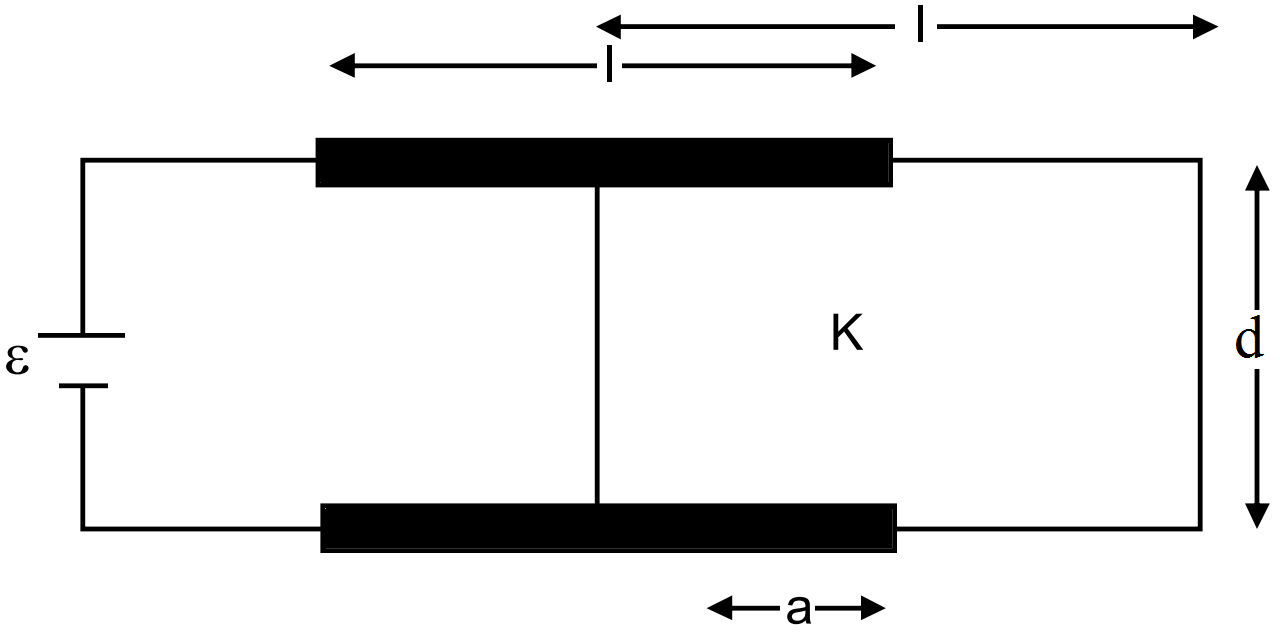
Consider the situation shown in figure. The plates of the capacitor have plate area A and are clamped in the laboratory. The dielectric slab is released from rest with a length a inside the capacitor. Neglecting any effect of friction or gravity, show that the slab will execute periodic motion and find its time period.
Suppose the entire system of the previous question is kept inside an elevator which is coming down with an acceleration a < g. Repeat parts (a) and (b).
A gas undergoes reduction in volume (i) adiabatically, (ii) isothermally. Find the work done in the process.
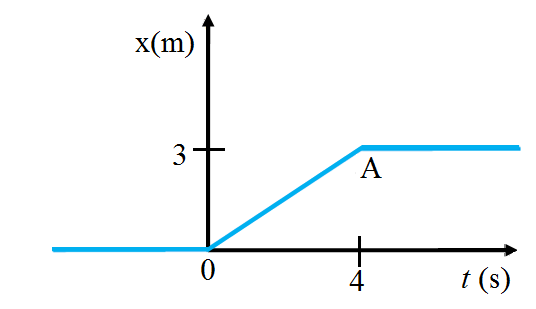
Figure. shows the position-time graph of a particle of mass 4kg. What is the (a) force on the particle for t < 0, t > 4s, 0 < t < 4s? (b) impulse at t = 0 and t = 4s? (Consider one-dimensional motion only).
A cylindrical piece of cork of density of base area $A$ and height $h$ floats in a liquid of density $\rho_l$. The cork is depressed slightly and then released. Show that the cork oscillates up and down simple harmonically with a period $T=2 \pi \sqrt{\frac{h \rho}{\rho, g}}$ Where $\rho$ is the density of cork. (Ignore damping due to viscosity of the liquid).
The convex surface of a thin concavo-convex lens of glass of refractive index $1.5$ has a radius of curvature $20cm$. The concave surface has a radius of curvature $60cm$. The convex side is silvered and placed on a horizontal surface as shown in figure.
  1. Where should a pin be placed on the axis so that its image is formed at the same place?
  2. If the concave part is filled with water $\Big(\mu=\frac{4}{3}\Big),$ find the distance through which the pin should be moved so that the image of the pin again coincides with the pin.
A helicopter of mass 2000kg rises with a vertical acceleration of $15m s^{–2}$​​​​​​​. The total mass of the crew and passengers is 500kg. Give the magnitude and direction of the $(g = 10m s^{–2})​​​​​​​$​​​​​​​
  1. Force on the floor of the helicopter by the crew and passengers.
  2. Action of the rotor of the helicopter on the surrounding air.
  3. Force on the helicopter due to the surrounding air.
A parallel beam of white light is incident normally on a water film $1.0 \times 10^{-4}cm$ thick. Find the wavelength in the visible range $(400nm - 700nm)$ which are strongly transmitted by the film. Refractive index of water = $1.33$.
Two ideal gas thermometers A and B use oxygen and hydrogen respectively. The following observations are made:
Temperature
Pressure thermometer A
Pressure thermometer B
Triple-point of water
$1.250 \times 10^5Pa$
$0.200 \times 10^5Pa$
Normal melting point of sulphur
$1.797 \times 10^5Pa$
$0.287 \times 10^5Pa$
What is the absolute temperature of normal melting point of sulphur as read by thermometers A and B?
What do you think is the reason behind the slight difference in answers of thermometers A and B? (The thermometers are not faulty). What further procedure is needed in the experiment to reduce the discrepancy between the two readings?
A $10g$ bullet with a charge of $4.00\mu\text{C}$ is fired at a speed of $270m/s^{-1}$ in a horizontal direction. A vertical magnetic field of $500\mu\text{T}$ exists in the space. Find the deflection of the bullet due to the magnetic field as it travels through 100m. Make appropriate approximations.